When stories open doors

Impact producing turns film into a catalyst for community reflection. Stories rooted in lived experiences are brought into villages, neighborhoods and schools. After screenings, facilitators create safe spaces for people to reflect on what they’ve seen, speak openly and explore what steps they might take moving forward. By using the emotional force of film to spark conversations that communities often struggle to begin, cinema can move from entertaining an audience to helping people see their world more clearly.

What is impact producing?
Don Edkins: Impact producing is about using film to spark social change. The strongest results come when a film is shown within a community, giving people space to watch, reflect and discuss what it means for their own lives and what actions they can take.
Why is film such an effective tool for this?
Film is both visual and emotional— it’s not a lecture. These are creative documentaries, not message films or NGO campaigns. They don’t tell people what to think. They open a space for people to think for themselves and talk about issues that are often difficult or taboo.
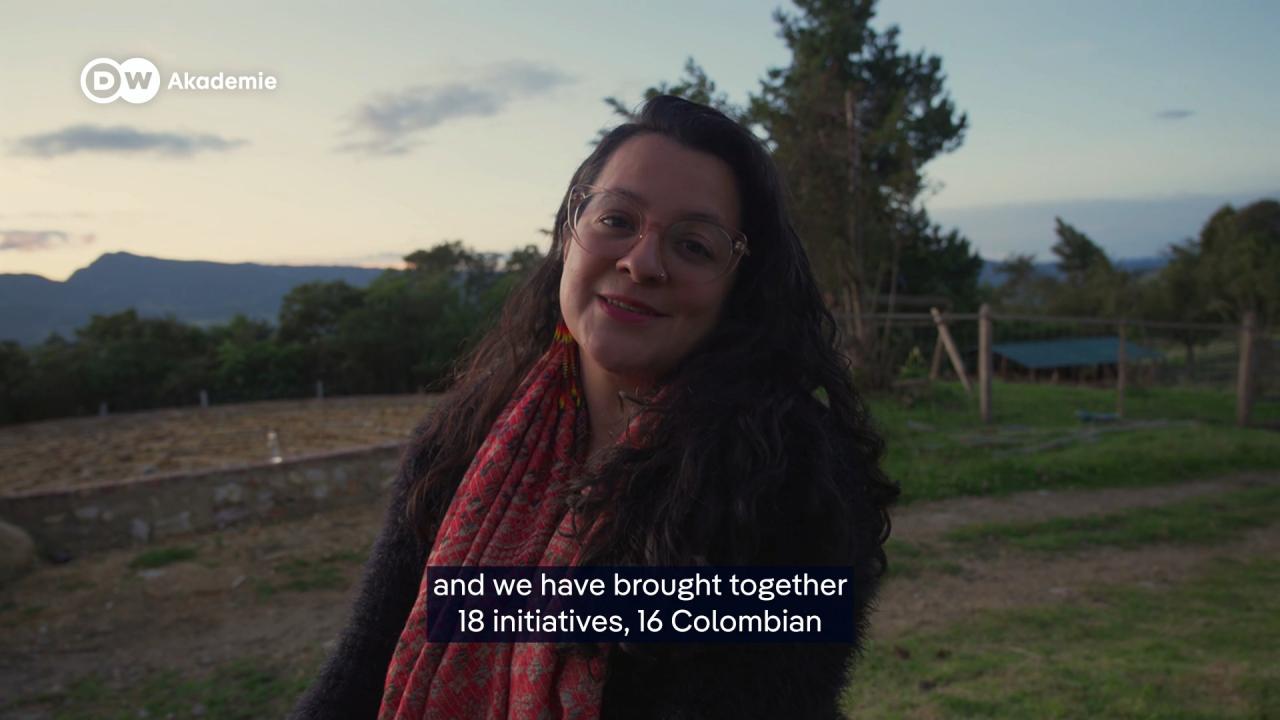
Community Film Exhibition and Lab in Colombia
How does the process work?
Impact planning starts early. Filmmakers ask questions like: what does this story mean to the people in it? Who’s the main audience — a policymaker, students, or a rural community? How will we reach them, and what do we want them to consider? Every film includes a facilitator’s guide with background information and guiding questions for post-screening discussions. The goal is to help local facilitators turn each screening into a dialogue that allows communities to reflect, connect, and imagine solutions together.
What makes impact producing effective?
Local stories have the greatest power — stories people recognize as their own. The more local a story is, the more universal it becomes. When audiences see their culture, language and experiences on screen, they connect emotionally, and that’s when real conversation and change can begin.
Can you share a real-world example of a film creating impact?
In “Home Again”, a Gambian film, a young returnee uses a small fund from the International Organization for Migration to start a business. But despite his efforts, he can’t support his large family and decides to leave again.
After screenings across the country, people began discussing migration openly — its hopes, pressures and its failures. Government officials came to screenings and after one of them, the director of the Gambia Immigration Department said, “This is the real situation. Everyone needs to see this film. We have to change our policy for returnees.” That conversation helped shape new policy acknowledging the challenges of those coming home.
Where filmmaking meets grassroots energy
In rural Colombia, a documentary screening becomes a healing ritual. It’s an example of how the Bogotá-based organization Nodo Sur turns films into catalysts for change.

In the Çxhab Wala Kiwe Indigenous community in Colombia, seventeen women sit with strands of colored yarn spread before them. Blue represents psychological violence. Yellow stands for digital violence. Green for economic violence. Purple denotes physical or sexual violence. But there is also orange for self-care, turquoise for access to rights, indigo for education.
These women have just watched “Steps That Leave No Trace,” a documentary about gender-based violence. Now María Eugenia Tacuello, a psychologist from the Nasa people who appears in the film, sits among them as they begin to weave — each choosing colors representing the violence they’ve endured and the healing tools they’ve found.

“Weaving brings painful memories — things hard to talk about — into the light,” María Eugenia says. “To weave is to heal. Healing doesn’t mean forgetting or staying silent. It means listening to other women who suffer and helping them raise their voices.”
This is the kind of work Bogotá based Nodo Sur does. Under the direction of Marcela Lizcano, organization helps filmmakers turn screenings into action — whether in Indigenous villages, rural film clubs, or city neighborhoods. Over five years of partnership with DW Akademie, they have shaped an audience-first, collaborative approach that explores international collaborations while staying rooted in often-neglected local realities of local communities.

“The system is not created to reach that kind of audience,” she says. “It’s focused on a vision of success that somebody else designed for us — you need to win Cannes, you need to have a certain number of viewers. But this isn’t the only measure of success.”
Nodo Sur co-organizes regional forums where producers swap experiences and launch collaborations. They consult directly with film teams on impact campaign design. Through labs and workshops, Nodo Sur has trained over 120 filmmakers and community leaders across Latin America. Building on this, in 2025 Nodo Sur launched a program training local facilitators to moderate discussions, design activities, and bring campaigns to life in their own communities.
Yeny Roa is one of those who took part in the training. She runs Movie House Colombia, screening Colombian films in people’s homes and community spaces across rural Eastern Cundinamarca — towns like Choachí, Fómeque, and Ubaque — usually overlooked by film distribution circuits. For her, the Nodo Sur lab had both practical and emotional impact.


