Showing posts with label Vance K. Show all posts

Wednesday, July 1, 2026

Obsession, Backrooms and the rise of the YouTube movie

Can saving Hollywood be as simple as this One Weird Trick?

Movies created by YouTubers are having a moment. A very, very lucrative moment.

In January of this year, video game YouTuber Markiplier released his self-financed, $3-million debut theatrical film, Iron Lung, which he mostly promoted by appealing directly to his 40 million YouTube subscribers. In its opening weekend, it looked like it might beat Send Help, legendary director Sam Raimi’s return to the horror genre after his adventures in the MCU. The Walt Disney Company financed, produced, and marketed that movie, with an estimated budget of $40 million, and Oscar-nominee Rachel McAdams played the lead.

In May of this year, Curry Barker, an aspiring actor and director of popular YouTube horror shorts, released his theatrical writing and directorial debut, Obsession, produced for a reported $750,000. It finished third at the box office on its opening weekend, with $17 million. The following weekend, it made even more money, landing in second place with $24 million. On its third weekend, it made even more more money, finishing again in second place, with $27 million. As a rule, movies don’t improve on their opening weekend in their second weekend. And they certainly don’t improve on their second weekend in their third weekend. The last movie to do so was, I kid you not, E.T. The Extra-Terrestrial in friggin’ caveman days back in 1982 (editor’s note: this post’s author saw E.T. in the theater in the caveman days of 1982. Don’t even let him pretend like he didn’t.).

In Obsession’s third weekend, it finished second behind a new release, Backrooms, the theatrical directorial debut of 20-year-old Kane Parsons, based on his YouTube series of the same name. Produced on a budget of $10 million, it grossed over $80 million in its opening weekend, tying the previous weekend's haul for the debut of the latest Star Wars movie. By just its second weekend, Backrooms had already become distributor A24’s biggest release ever, beating the total domestic haul of last year’s Timothée Chalamet Oscar-vehicle Marty Supreme.

So… what’s going on? What does it mean?

Capsule Reviews

The Occam’s Razor answer to why these three movies are doing absolute gangbusters at the box office is, hey, maybe they're all just really good? Let's see.

Iron Lung: Based on a somewhat popular video game, the movie takes place almost entirely inside a small submarine, with only Simon (Markiplier) appearing onscreen. It is over 2 hours long. Markiplier is not an actor, and doesn’t know how to command the screen. But he's the only actor we get. There is a section of the film where we watch water drip. Later, something happens. We don’t know what. Maybe he’s hallucinating it. Maybe there are giant dead aliens outside the sub. It’s not clear. Then there is so much blood. So, so very much blood, and Simon's body begins to disintegrate. I don’t know why. From the blood maybe. This is a bad movie. But you know what? Markiplier stans went and saw it, they had a great time, and I have zero desire to take that away from them. It had a great opening, it made the folks who saw it happy, it made Markiplier a good return on investment, limped across a couple more weekends, and was gone. It’s not looking good for Occam’s Razor.

Obsession: Bear has a crush on his friend Nikki, but doesn’t have the nerve to tell her. She’s about to quit her job at the music store where they both work, alongside friends Ian and Sarah, so Bear buys her a going away present at a New Age store, a novelty toy called a One-Wish Willow. But Bear chickens out before he can give it to her, and makes his own wish on it—that Nikki would love him more than anything in the world. He gets his wish. Inspired by the Monkey’s Paw vignette in The Simpsons’ Treehouse of Horror anthology, it’s also the basic setup of a Twilight Zone episode, a million other things, and the aphorism “be careful what you wish for.” Sounds kinda derivative. But in execution, this movie is flawless. It’s not just that Inde Navarrette gives an all-time horror movie performance as Nikki, but the writing and the implications for things taking place just outside the frame of the movie’s point of view will stick with you for days after you leave the theater. It’s a phenomenal film.

Backrooms: This movie has a lot going for it. First, you’ve got a small cast led by magnetic Oscar nominees Chiwetel Ejiofor and Renata Reinsve. Second, there is something primal and dreamlike in the basic premise of finding another room that somehow you’ve always missed before in a space you are intimately familiar with, maybe even living in. This is eerily similar to the closest thing I’ve ever had to a recurring dream. So when Ejiofor’s Clark finds a secret, permeable section of the basement wall in the furniture store he owns that opens into a seemingly never-ending network of (mostly) empty rooms, I for one felt a profound sense of uncanny recognition. But moments later, I realized that if this actually happened to me in real life, I would nope out of there so fast I’d leave vapor trails through the portal. So even though the direction is competent and the producers brought in a veteran TV writer to handle the screenplay, there’s a fundamental disconnect between the characters in this movie and believable human behavior. I think it’s a good movie, but it’s a good movie that feels like a talented young filmmaker with a lot of support trying to find their way. And, it must be said, once we do see the monster of the backrooms, it’s pretty derpy.

Despite a strong (for January) opening, Iron Lung wound up with only $50 million in worldwide grosses. Backrooms has, at the time of this writing, made over $300 million worldwide, but its week-over-week drop-offs have been massive. Obsession has made almost $400 million, and when I saw it last weekend on a Sunday at 5 pm, the theater was sold out. So with the exception of Obsession, I don’t think these are great movies where word of mouth is driving their success in theaters.

A Grand Theory

So not Occam’s Razor, then. What's the next simplest explanation? Probably that these creators were successful on YouTube and just brought their audiences out to the theaters. Let's check that one.

Markiplier is one of the most successful YouTubers on the platform, with nearly 40 million subscribers. He made multiple webseries for YouTube as his popularity expanded, and Iron Lung is a video game adaptation, which feels at home with his core content of the video game play-through. Massive YouTuber brings $17 million of ticket sales to the box office by hyping the movie on his channel throughout production, editing, behind-the-scenes, and as it neared release. Cool. Seems reasonable.

As of today, as I type this—even after the success of the movie—the Backrooms YouTube channel has 4 million subscribers. Obsession’s Curry Barker‘s channel—again, even after the black swan success of the film—has a little over 1 million subscribers. It seems implausible that these creators ported their vastly smaller YouTube audiences over into the multiplex seats in the same way that Markiplier did to multiples of that success. So what gives?

I think it’s actually really simple. You know who has always gone to the movies? At least since the 1950s, anyway? Teenagers. Young people. You know whom studios have been trying to lure into the theaters for the last 20 or so years? Families. “Four-quadrant pictures” that appeal to everybody, where parents can take their kids. The conglomerate-owned studios justify $200-400 million investments in IP and sequel-driven four-quadrant pictures by wagering that these are safe bets. But you know who doesn’t want to sit with their parents at the movies? Teenagers. These massive tentpole pictures have spent 20 years teaching young people that going to theaters is boring and for old people or little kids.

These three directors have something in common that I think is much more powerful than their shared YouTube origins—they're young people. Markiplier is the oldest—he's in his thirties, but he's been on YouTube since 2012 (same year this blog started. James Wan, call me).

These are young people making movies for young people. Where have we heard that before?

A… ahem… New Hope?

Earlier this year, Timothée Chalamet got in trouble during his Oscars blitz because he said he was worried that the theatrical experience was moving toward niche entertainment, like the ballet or opera. I found his comments utterly unobjectionable, but lots of folks got Big Mad. Not that Timmy C needs me in his corner, but box office has been down for years, never bouncing back from the pandemic closures, and the rise of streaming has led to so much hand-wringing and so, so many op-eds about whether or not this is the End of Cinema.

It's not. It never is. But as I wrote at the end of last year, Hollywood will become something different. It has to, and it always does.

The studio system collapsed throughout the 1950s, and in the 1960s young people like Dennis Hopper, Peter Fonda, Francis Ford Coppola, Martin Scorsese, and other young filmmakers who either got their start or a significant boost from Roger Corman (my man, the GOAT, whom I interviewed in 2017). The thing that Corman gave them was an opportunity to get reps, to make things, to learn the ropes as storytellers, and to introduce themselves to other producers who could give them work on bigger platforms. It sure seems like YouTube gives today’s creative folks the same opportunities.

As the 1970s reached their back half, suddenly Stephen Spielberg gave us Jaws and George Lucas gave us Star Wars—both previously unimaginable box office and cultural successes. Lucas was 32 or 33 when he directed Star Wars, his third feature film. Spielberg was 29 when he made Jaws, his third theatrical feature and fifth or sixth overall including made-for-TV movies. These were all young guys. Spielberg and Lucas went on to be responsible for most of the top-10 highest grossing movies of the 1980s.

Moving forward in time, Spike Jonze was 30 when he made Being John Malkovich after a career in successful music videos. M. Night Shyamalan was 29 when he made The Sixth Sense. Quentin Tarantino was 31 when he made Pulp Fiction, which essentially invented an entire genre of 90s action movies by mashing up things Tarantino grew up with into a distinct package that appealed to young moviegoers and other young filmmakers.

So Hollywood will probably learn the wrong lesson from this year, because it usually does. Back in the early aughts, blogs and Twitter feeds were the new hotness, especially after blogger Diablo Cody’s script for Juno turned into such a beautiful movie. Hollywood signed everybody with a blog or a Twitter feed, resulting in utterly forgettable (or worse!) shows like Shit My Dad Says and movies like I Hope they Serve Beer in Hell. So they'll probably sign folks who have big YouTube channels, regardless of their storytelling ability, and some of them will never make anything, and some creators behind breakout hits (remember The Blair Witch Project? Remember?) will fizzle.

But others will not. Other creators will go on to write and direct movies that we will talk about forever. The nice thing is that the success of this year’s smaller movies will create a permission structure for not only distributors like A24 and NEON, but also for studios to take chances on more and smaller movies. And if they’re made by young people for young people, in a way that excites young people, or scares them, or reflects back to them a world that they recognize or dream of, then that’s what movies do best, and that’s what brings people together to experience them together.

I know Toy Story 5 just made all the money in the world this weekend. But if you are rooting for the future of movies in theaters, go see Obsession. Or if you’re squeamish, go see Backrooms. Don’t dismiss them because their filmmakers came from YouTube. In the end, these particular movies might not be for you, exactly, but their success will open the door to more movies in theaters that don’t start with the word “Avengers” or end in a number.

Posted by Vance K - co-founder of nerds of a feather, flock together, and Emmy Award-winning writer, director, and producer.

Thursday, December 11, 2025

Hollywood is Dead. Long Live Hollywood.

Netflix's Potential Purchase of Warner Bros. and the End of Hollywood (As We Know It… Now)

Last week, on December 4, 2025, news broke that Netflix had prevailed over Paramount and/or Comcast Universal to acquire Warner Bros. As I write this, news has just broken on December 8, 2025, that the Ellisons and Paramount have initiated a hostile takeover bid to prevent the Netflix purchase and bring Warner Bros. under the recently-expanded Paramount/CBS/Skydance umbrella. So we'll see what happens.

But whoever wins, the rest of us lose.

There will be different ramifications if Netflix buys Warner Bros. or if Paramount Skydance's shenanigans work out in their favor, but either way, the sale of Warner Bros. is the definitive closing of a chapter in Hollywood history. People have written "the end of Hollywood" pieces since before The Jazz Singer introduced talking pictures to the mainstream film audience in 1927, and yet Hollywood has managed to live on for another 100 years, so this piece will not be one of those. Movies and TV shows will persist as forms of entertainment moving forward, but this is the end of something, and what comes next will look different from what came before. The biggest questions in my mind are "What will be lost?" and "For what?"

What Will Be Lost?

First of all, a lot of people are going to lose their jobs. When Disney bought Fox in 2019, there was some chatter that the majority of the job losses were going to be administrative, as the two studios merged their business operations. But the notion of relatively minimal job losses and the two studios' creative slates remaining independent was a fiction from the start. Disney immediately began shuttering specialty film groups like Fox 2000, which had been releasing cultural touchstone films like Fight Club, The Devil Wears Prada, and Hidden Figures since 1996.

So that brings us to what the audience is losing: the movies and TV shows that will never be made, the voices we will never hear, and maybe the spaces to share them.

When I moved to Los Angeles in 2005, there were six studios that could buy your project—Universal, Warner Bros., Disney, 20th Century Fox, Sony (formerly Columbia), and Paramount. There were other, smaller outfits that could buy projects because they had distribution deals with a studio or for straight-to-DVD releases, since DVD revenues were just absolutely insane at the time, and cable television channels that produced original content and were either wholly-owned subsidiaries or joint ventures between the major studios. Going a little farther back in time, MGM and United Artists used to be their own studios, too. So at one time, there were a lot of buyers, a lot of places that were mounting productions and employing crews, studio development departments shepherding feature film scripts, an entire pilot season apparatus where TV studios were making full pilots for shows that may or may not ever air, and an attendant set of opportunities for writers, actors, and directors to potentially break in or break through.

The loss of DVD revenue was transformative as the home media bubble burst alongside the advent of streaming, and industry contraction followed, alongside runaway production away from Los Angeles. There was a writers' strike, MGM folded, indie producers went under, but then Netflix jumped into original programming, and audiences soon found Peak TV dropped into their living rooms. Networks like AMC made must-watch programming like Breaking Bad and The Walking Dead, and suddenly Netflix had a bottomless appetite for original programming, with Amazon and Apple jumping in, and the glut of new streamers from Disney+ to FreeVee making new content specific to their own new platforms.

And then Peak TV peaked. For years, the number of theatrical feature films had been declining, but the explosion of TV and streaming productions led to an employment boom, particularly for writers. But under the surface, things were sketchy as hell. The unfair employment practices led to the concurrent 2023 WGA and SAG-AFTRA strikes (which I wrote about here). The face of that employment battle was David Zaslav, CEO of the recently-merged Warner Bros. Discovery, who was on the receiving end of a quarter-billion-dollar compensation package and had recently dropped into town acting like the second coming of legendary studio head Robert Evans (even buying Evans's fabled home). As it stands today, the Writers' Guild reports TV employment has fallen by 42% and Zaslav's Frankenstein monster of Warner Bros. Discovery is being split back apart and sold off. Good work if you can get it—$250+ million to destroy a company in three years.

So either Netflix or Paramount is going to roll Warner Bros. up under its corporate umbrella, and what will result are job losses, fewer movies, and fewer TV shows.

If Paramount prevails in its hostile takeover bid, the films and TV shows it does wind up producing going forward are likely to bend toward Trump-friendly, fascist-curious content. Exhibits A through D: A) firing Stephen Colbert, B) installing heterodox blogger (and higher ed grifter?) Bari Weiss as the head of CBS News, C) greenlighting Rush Hour 4 after credibly-accused sex pest and director Brett Ratner made a Melania Trump documentary, and D) Jared Kushner's involvement in Paramount's hostile takeover bid. In the last year, Warner Bros.' current studio heads Mike De Luca and Pam Abdy oversaw Ryan Coogler's Sinners, Zach Cregger's Weapons, and Paul Thomas Anderson's One Battle After Another. Say goodbye to movies like those. After Disney bought Lucasfilm in 2012, I weighed in along similar l ines, lamenting how the acquisition would shrink the range of releases that Disney would produce. Time has more than borne out that prediction, but it didn't have the ideological corollary, which makes the prospect of a shrinking media landscape even more troubling.

If Netflix's bid holds, a lot of smart industry watchers think it will mean the beginning of the terminal decline of movie theaters. Many speculate that Netflix only wants this acquisition in the first place as a way to remove the second-largest supplier of theatrical content (Warner Bros. lags behind only Disney) from the marketplace entirely. Last week, box office analyst Scott Mendelson told The Bulwark's cultural editor Sonny Bunch:

"Something that Netflix has done a lot of in the last few years is it seems like every time there’s this big, buzzy, crowd-pleasing festival flick that might theoretically do well in theaters, Netflix flies in, drops a $20 million check on it, grabs distribution rights, and then it dies in the algorithm. And I think, I would argue, that they are doing that at least partially intentionally because the worst thing that can happen for Netflix is for that film to be successful in theaters."

The argument here is that Netflix's entire business model is for you to watch movies at home, and anything that lures you out of the house to watch a movie is competition. Netflix co-CEO Ted Sarandos recently said almost as much, prompting pushback from arguably the most commercially-successful film director of all time, James Cameron.

I go to movies a lot these days. I probably see more movies in theaters now than I have at any point since high school, when a typical Friday night was just going to the megaplex and seeing whatever was new that week. But the catch is that I almost never see first-run movies in the theaters these days. I am an annual member of the amazing American Cinematheque non-profit organization in Los Angeles, and live around the corner from the revitalized Vidiots, so a couple times a month I'll be in a theater seeing an animation retrospective with the animator in person, or a 70-mm restoration of a sci-fi or western classic, or introducing my kids to samurai movies, or a midnight screening of a bizarre French film, or… or… or. And that's a future we might all be heading for.

Will movie theaters vanish? No. Could the multiplex? Yeah. We've only had movie theaters for about a hundred years. That's nothing. They are not immutable. If Netflix prevails in a push to keep new movies out of theaters and force first-run films into the algorithmic churn of a decreasing number of streamers willing to vanish $90-million-dollar movies because David Zaslav needs a tax write-off because of his dipshit merger decisions, then we're all stuck with the consequences as a audience. We might all need to find, or create, our local repertory film screening series if we want to see anything at all projected on a screen in community. We might be looking at the very real possibility that the theatrical experience becomes akin to the way most of us experience live theater here in 2025: some small number of people see a ton, most people see none.

And for what?

In the beginning, movie studios made movies. That's what they did, and they did it like factory work, with actors, directors, writers, technicians all under contract. If they made enough movies that brought in enough people, the movie studios made money. Then Howard Hughes decided Jane Russell should be a star, so he got involved in Hollywood as a producer. Hughes had more money than he knew what to do with, but wanted to spend it. So he built the Spruce Goose, and he bought RKO Pictures, one of the major Hollywood studios, and brought it under the umbrella of the Hughes Tool Company. This was about the time that James Stewart decided to skip a studio contract and struck out on his own, under the guidance of his agent Lew Wasserman of MCA. This shift in the business model ruptured the studio system that had been in place since the nineteen-teens, and Hollywood was never the same.

Hughes sold RKO to the General Tire and Rubber Company, of all places. The manufacturing conglomerate Gulf+Western bought Paramount Pictures for some reason in the 1960s, and Lew Wasserman's MCA wound up buying Universal. Ever since, the movie studios have been chips in higher-and-higher-stakes corporate merger poker games. Amazon owns MGM (and MGM+, which is different from Prime Video). Disney owns Hulu (which is different from Disney+), Comcast owns Universal, and before Zaslav and Discovery came in and bought Warner Bros. and HBO, for some reason AT&T owned HBO. The studios don't make movies. They don't make TV shows. They "return value to the shareholders." If releasing a surefire IP-based hit like The Minecraft Movie returns value to the shareholders, they'll do that. If *not* releasing Batgirl returns value to the shareholders, then they'll do that instead. If installing an opinion journalist and blogger over their news division greases the wheels for governmental approval of a merger, they'll do that. It's all just corporate bullshit to make line go up after quarterly investor calls. The audience isn't even the product, like we were during the network TV days when networks were selling our eyeballs to advertisers.

So who benefits from any of this? Not the fans, not the audience, not the creators. Netflix is a tech company. Amazon is a tech company. Apple is a tech company. Apple makes their TV shows at a loss for a reason that they'll figure out some day but for now just seems like as good a way to set a billion dollars on fire as any. If Amazon decides that the MGM brand is a better fit for, I don't know, a line of dog and cat food, then we'll all be getting MGM Leo the Lion Pet Food on Prime Day and no more James Bond movies.

I recognize the Old-Man-Yells-At-Cloud vibe here, I do. But what I really want to emphasize is that these mergers didn't have to happen. These studios, provided a madman like Howard Hughes didn't systematically destroy them, probably could've kept going as they rebuilt after the fall of the studio system in the 1950s. Talking pictures came in the 1920s, and what came next was never the same. Television came, introducing a new medium and forcing filmmakers to innovate 3D and widescreen and VistaVision and CinemaScope and the R rating, and what came next was never the same. The studio system collapsed, but Blaxsploitation films, risk-taking visionaries like Robert Evans who gambled on Francis Ford Coppola, and upstarts like Peter Fonda and Dennis Hopper saved Hollywood in the 1960s and 70s, and what came next was never the same. A real estate boom in the 1990s led to the creation of the multiplex, and suddenly theater owners needed more, more, and more movies to fill their screens. So the independent cinema boom of the 1990s (seriously—just banger after banger after banger) changed the types of stories being told and the storytellers who had the opportunity to tell them, and what came next was never the same. The explosion of creativity that I got to witness at the megaplex in the 1990s on those Friday nights wasn't because there was something in the water, or everybody just got narratively hip all of a sudden, or because they took the lead out of the gasoline finally (OK, maybe that, a little bit), but it was because more people got to tell more stories that only they could tell.

The diversity of voices and opportunities gave us all better art, and created meaning in countless lives. How many people out there do you think have tattoos inspired by The Matrix? You ever had a case of The Mondays? I've got one right now. How many times have you looked at a rug and thought, "That rug really ties the room together"? My friend named his kid after a character from The Fifth Element. Suddenly the need for movies to put on all those screens made room for weird, idiosyncratic stories, queer filmmakers, more women, more people of color telling stories that spoke to individuals and communities and moments that would have not been seen or recognized before.

But that's the point, right? These days? Tighter control over who gets to tell their story? Fewer outlets? There are still a ton of cinema screens, but they're all showing the new Marvel movie, every half hour. On the apps, the algorithm serving up what the owner of the algorithm wants you to see? Hiding what it wants you *not* to see?

So, look. Whichever corporate entity prevails in this Warner Bros. buyout, it is the closing of a chapter. Not the closing of a book, I don't think, but whatever comes next will never be the same.

Hollywood is dead. Long live Hollywood.

Posted by Vance K -- Emmy Award-winning producer and director, cult film reviewer, and co-founder of nerds of a feather, flock together.

Monday, October 27, 2025

Book Review: EC Comics Library: Weird Science Vol. 1 (Taschen)

 The Rolls-Royce Collection of Era-Defining Sci-Fi Comics

Photo: Taschen
 When you close your eyes and think of 1950s comics, you're probably thinking of EC Comics. From 1950 to 1955, they published iconic horror comics, some of whose titles will still be familiar today: Tales from the Crypt, The Haunt of Fear, and Vault of Horror. Never a superhero house like DC or Marvel (previously known as Timely Comics, then Atlas Comics), EC specialized in original genre comics that coincided with broader trends in popular entertainment, such as crime comics that evoked film noir, war comics, and Westerns. But EC's publisher, Bill Gaines, said at the time that they were most proud of their flagship "Weird" titles, Weird Fantasy and Weird Science, which evoked the popular sci-fi short stories and radio dramas of the time.

This gigantic collection from art-book publisher Taschen collects the first 11 issues of Weird Science, and complements them with an informative introduction by jazz guitarist and EC collector/superfan Grant Geissman, credits for each of the collected issues, and biographical sketches of the artists and personnel involved in the issues.

These comics are collected elsewhere, in far more wallet-friendly versions. I personally own digital copies of several Fantagraphics EC collections, but those are black-and-white, line-art only collections organized by theme, artist, or style. They're great for what they are and I personally dig them a lot, but they don't present the full issues of the comics as they originally appeared. Dark Horse has published these comics in digitally-recolored editions that are even less expensive. I've looked at these, and they're not for me. I find the digital recoloring pretty clinical and I don't get the same feel from them as I do from the original halftone prints with all the little ink dots and offset printing that gives such a very particular look. But if you just want to read these comics, you have options that will allow you to do so for less than the steep Taschen price tag.   

But the pre-order announcement for this book came at a particular moment where I was able to treat myself, so I pulled the trigger. And months later when the book arrived, I was... shocked. Guys, this is a BIG book. I mean, it's literally the biggest book I own. It's the size of my teenage daughter:


I can caveat this whole book with the acknowledgement that these are comics made for predominantly male audiences and created almost entirely by dudes from 1950 to 1952. There's a lot of sexism, and if you're looking for a comic that passes the Bechdel Test, you're not going to find it in any of these (gigantic) pages. I don't want to hand-wave that away, because it does effect the experience of reading this book today. There are moments that had me cringing, for sure, but one thing I will say is that it's not that the female characters are flat and one-dimensional, it's that all the characters are flat and one-dimensional. Ray Bradbury didn't write these stories, you know? But at least in my experience of this collection, the stories themselves weren't really the main draw.

Experiencing these comics, printed exquisitely on high-quality paper at a size that far exceeds their original dimensions, in the format they were originally presented, gave me a ton of joy. The collection lays out each issue as it originally appeared, including with ads, reader correspondence, and the two-page throw-away short stories in the middle of each issue that qualified as enough "print material" to give the issues access to the second-class postage rate. It's learning details like that that really heighten the experience. 

Photo: Taschen
 The supplemental materials offer other details, as well. Both through included process photos, draft vs. final comparisons, and the introductory essay, I learned things I always wanted to know about how these books were actually produced in an entirely analogue age. I discovered how the covers were colored and those choices communicated to the offset printers, and behind-the-scenes information on the editorial and art process that went into each issue. I found myself having flashbacks to Michael Chabon's The Amazing Adventures of Kavalier and Clay, as I learned the story of how publisher Bill Gaines inherited a comics company from his father that had chiefly only printed illustrated Bible stories, and experienced a rocket ship launch of success, scrambling with a small group of artists and editors to put out an expanding catalogue of titles that took the public by storm.

Line-art and hand-colored cover to be sent to the engravers. Photo: Taschen
 

One thing that this volume doesn't go into -- and maybe it's a more natural fit for a Vol. 2, should it ever come along -- is why the EC story came crashing down two years after the end of this collection. Due to the early-1950s moral panic over "juvenile delinquency" and the junk-science work of the previously trailblazing child psychologist Fredric Wertham, a Senate subcommittee led by Estes Kefauver hauled EC publisher Bill Gaines in front of them in the opening salvo to censor comic books, which led to the end of the "pre-code" comics period, a collapse in jobs for comics illustrators, and decades of self-censorship across the industry. Gaines himself would pivot and go onto create MAD Magazine after the fallout.

This story has been covered elsewhere, as have the groundbreaking efforts of EC Comics to address and combat racism through its science fiction comics (which probably didn't help endear Gaines to the U.S. Senate of 1954). 

In the end, then, I agree with the decision to focus the supplemental material in this collection on processes and people. It helped inform my appreciation of the books themselves. And I can't speak highly enough about the actual printing of these pages. In the book's notes, it discusses the restoration process, which eschewed digital recoloring -- even with advanced tools available today that can create period-specific results. Instead, original copies of each issue were photographed at extremely high resolutions, and then errors such as line smudging and misalignment of the original four-color plates were corrected digitally. 

The results are truly breathtaking.

If you are a fan of pre-code comics and are able to splurge $200 on a high-quality volume, I would encourage you to take a look at Weird Science, Vol. 1. Taschen has outdone themselves with the restoration, and I have to be honest -- if Vol. 2 does come along, I'm going to have a hard time not squirreling away my nickels and dimes to try to get my hands on that one, too. And, like I learned from the 1950s ads in this book and an inflation calculator, back in 1951 this book only would've cost $14.95.

 --

Posted by Vance K - cult film reviewer and co-founder of nerds of a feather, flock together.     

Thursday, October 9, 2025

Cult Film Review: In The Mouth of Madness (1994)

Cosmic horror without the Lovecraft


This month, just in time for Halloween, the Criterion Channel launched a John Carpenter retrospective. I took the opportunity to revisit 1994's In the Mouth of Madness, one of the strangest John Carpenter films... and I feel like that's saying something.

Fresh off of Jurassic Park in 1993, Sam Neill went to work for John Carpenter, playing insurance investigator John Trent. We meet Trent ranting and raving as orderlies at an insane asylum drag him into a padded room. The next morning, when asylum psychiatrist Dr. Wrenn visits Trent to get his story, he opens the door to find Trent has drawn symbols all over his room, clothes, and face, and he begins to unfold his tale of madness.

John Trent was not always the raving maniac Dr. Wrenn sees before him. No, indeed. Trent was once a successful, can't-bullshit-a-bullshitter insurance investigator. The popular horror author Sutter Cane, Arcane Publishing's biggest literary star, has disappeared, and Arcane wants Trent to find him. Trent reluctantly accepts the assistance of Cane's editor, Linda Styles, but believes from the start that this whole thing is a fakeout—an elaborate publicity stunt designed to generate headlines for Cane's new novel, In the Mouth of MadnessTrent tries to do his research, grabbing copies of all of Cane's novels, but they're too scary. They wind up getting inside his dreams, and maybe even into his waking reality. Maybe everybody's waking realities. A spike in violent crime seems to be tied to people who read Cane's books. And it comes home for Trent while he sits at a restaurant and a man wielding an axe smashes through a plate glass window, coming for Trent before the police shoot the attacker. It turns out this madman was Cane's agent, and right before he raised the axe over Trent's head, he asked a question everyone seems to be asking:

"Do you read Sutter Cane?"

In the same way that Stephen King sets much of his work in the fictional town of Derry, Maine, in the film Sutter Cane sets his work in the idyllic New England town of Hobb's End. Trent realizes that design elements consistent across Cane's various novel covers fit together and form a map to the fictional town. So he and Styles set off to follow the map and see where it takes them. After trading off behind the wheel, Trent falls asleep in the passenger seat, and while Styles drives, things get weird. A figure looms up out of the darkness, the road seems to vanish, the figure returns, but different, then again, then there's a crash, or is there? The radio distorts, goes out, the night seems to bend around Styles, and then... poof. It's daytime and they're in Hobb's End.

That's all the plot summary you get, because after that, the film begins playing with reality in very interesting and increasingly labyrinthine ways. If you haven't seen the film, I don't want to take any of the fun out of it. But extremely telling is the exchange about Cane's books that Trent and Styles have on the road right before he hands over the wheel:

Trent: What's to get scared about? It's not like it's real or anything.

Styles: Well, it's not real from your point of view, and right now reality shares your point of view. What scares me about Cane's work is what might happen if reality shared his point of view.

Trent: Whoa, we're not talking about reality here. We're talking about fiction. It's different, you know?

Styles: But reality is just what we tell each other it is. Sane and insane could easily switch places if the insane were to become the majority.

I have to be honest: that line hit a little closer to home these days than it probably did in 1994. I do remember renting this movie (on VHS!) when it came out, and when it ended, I felt so perplexed, so surprised by the final moments of the film, thinking that I must have missed something, that I rewound it back to their arrival in Hobb's End and watched it again. Watching it this time, having vaguely remembered that experience from 30 years ago, I was a little more prepared to simply go on the journey that Carpenter and writer Michael De Luca wanted to take me on.

If you are a fan of Carpenter and/or Stephen King, this movie is a ton of fun. Carpenter throws in a number of signature visuals that are reminiscent of The Thing, and the movie really nails the Stephen King vibe, not only with the setting but down to the author font on the paperbacks. But one of the most enjoyable aspects of the film is the way it manages to give the viewer a full-on cosmic horror experience without H.P. Lovecraft. Sure, there are a ton of homages to Lovecraft, but it's not his mythos, not his settings, and not his baggage.

Like many people, I can no longer enjoy the work of Lovecraft—certainly not the way I could at maybe 13 years old, reading paperbacks with evocative titles full of odd, elliptical stories that hinted at a hostile cosmos and latent dangers outside of the realms of our perception. But Lovecraft's racism and eugenicist views, which revealed themselves in tropes I wasn't equipped to fully understand at that age, make the experience of reading him one I can no longer find much joy in. And while there are a couple of good ones, Lovecraft film adaptations tend toward the schlocky and cheap, as name-recognizable IP in the public domain might lead you to believe.

So I'm grateful to John Carpenter for In the Mouth of Madness. It scratches the cosmic horror itch in a satisfying way, and wraps it in something of a puzzle box narrative that's akin to a film like Mulholland Dr. but very much in the horror genre. I'm happy to recommend this without having to caveat it.

In the Mouth of Madness is currently streaming on the Criterion Channel (October 2025), and Tubi with commercials.

Monday, September 15, 2025

Book Sale Finds: Mental Hygiene by Ken Smith

I haven’t had this much fun with a book in quite some time 


I first heard about this book, which chronicles the many hundreds of classroom educational films produced from the late 1940s through about 1970, on a podcast about the evolution of the American teenager, and I tracked down a copy at a used book sale. Used copies are readily available online, and if you have even the slightest interest in independent filmmaking, ephemeral films, or retro pop culture, I can’t recommend it highly enough. 

You know these educational films from their endless parodies on The Simpsons, usually starring Troy McClure, or featured appearances on Mystery Science Theater 3000. But you probably don’t know the people responsible for making these movies, the reasons they became so prevalent, and the way in which, taken as a whole, they chronicle almost the entire postwar American experiment. 

Ken Smith profiles hundreds of these films, along with the individuals and companies responsible for making them. But beyond that, Smith weaves this information into a broader story told with a lot of insight and humor. In fact, the longest section of the book is a catalogue of hundreds of titles with blurbs about each of them. When I first got my copy, I figured I’d read the narrative chapters and probably skip the catalogue, or just look at it as a reference source. Instead, Smith’s descriptions were so entertaining and in many cases the choices the films made were so bizarre that I found myself reading the whole thing, and often subjecting my family to the descriptions after I broke up laughing while reading on the couch.

At the time this book was written, these films were not available to the public. Smith combed university archives and relied on the assistance of icons in the film preservation field like Rick Prelinger to screen these films privately and subsequently write about them. Thankfully for big ol’ nerds like me, many of these films are now available on YouTube or archive.org. I put together a playlist if you want to dive in.

Classroom Social Guidance Films

During World War II, the U.S. government relied heavily on filmmaking for the first time to aid in the war effort. Famously, directors like Frank Capra and William Wyler left Hollywood to create pro-Allied propaganda films. Disney and Warner Bros. also contributed cartoons that had some type of training angle or rallied viewers to the cause. The government realized that you could train thousands of soldiers all at once, all across the globe, by showing them a film. The military produced a ton of films on different topics, and one of the most widely seen was Sex Hygiene, directed by John Ford and starring George Reeves of the Superman TV show fame, educating servicemen about how to not get syphilis.
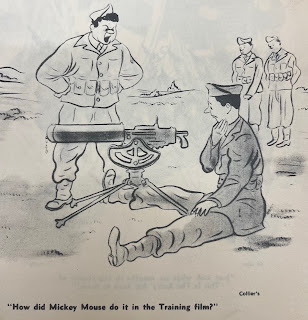
1943 Collier's cartoon
 

Immediately after the war, progressive educators saw an opportunity to use this same idea to benefit kids in school. My cursory understanding of these films before reading the book was that they were a method for enforcing conformity across society, but the truth is far more complex. 

Smith breaks up the bulk of Mental Hygiene into three sections: The Genres, The Producers, and The Films.

The Genres include Fitting In, Cautionary Tales, Dating, Girls Only, Drugs, Sex Education, Bloody Highways, and Sneaky Sponsors. Each genre contains a spectrum from “kinda good” to “mostly ok” to “wow, that’s cringe” to “oh no” to “what the hell did I just watch??”

The Drugs and Bloody Highways categories are the most likely to make your skin crawl. Many of the anti-drug films, which really emerged in the 1960s, rely on exploitative scare tactics and have almost no relation to the reality of drug use. Seduction of the Innocent, for instance, claims that marijuana is a powerful hallucinogenic. That movie’s 11 minutes of full-on batshit crazy. The Bloody Highways collection, which famously scarred generations of drivers-ed students by including real footage of mutilated bodies at accident scenes, is worse. These films remain grisly and disgusting – they are essentially snuff films – and Smith references other reporting that suggests that the producers of these films were giving kickbacks to police and ambulance companies to get out to accident scenes first, and that larger bribery and corruption scandals arose out of those arrangements.

I expected the “Fitting In” and “Dating” categories to be oppressive in their encouragement of rigid conformity, and some of that is definitely there (Control Your Emotions essentially advocates not having any emotions), but I found something else that I didn’t expect – actual good advice.

Isolation, a lack of community, and difficulties making meaningful connections plague our current moment, here in 2025. I have heard countless people online and in person talk about the challenges of just knowing what to do in social situations. What’s expected on a date? Should you pay for your date, or no? Is sex expected, or no? How do you make friends? How do you keep them?  What do healthy relationships look like? Check the YouTube comments on a number of these social guidance films, and you’ll find modern viewers relating to the feelings of these characters and taking comfort in the fact that people have always had these social anxieties.

In Shy Guy, a young Dick York (later of Inherit the Wind and Bewitched) plays a high school student in a new town who loves tinkering with radios and doesn’t know how to make new friends. His father suggests just going to where other students hang out, not making a big deal of it or putting too much pressure on himself, but just putting himself out there where it’s at least possible to meet people. So Dick heads to the hang out at the malt shop or wherever, and watches how people interact. He notices that the people who have the most friends seem to be good listeners, ask questions, and take a sincere interest in other people. This is still good advice. If you meet a new person, you’re much more likely to grow that relationship by asking questions and listening to them than by plowing over them and talking about yourself the whole time.

Other social guidance films, like More Dates for Kay, take this too far. Kay basically knows everything about everybody and constantly reminds every other student she sees about their upcoming tests or doctor’s appointments and everything else, to the complete elimination of her own personality, or any personal wants or needs. So don’t be like Kay. But Dick York thinks everybody will laugh at him fixing radios, until he’s at a party and overhears another kid talking about building a radio. The 1950s didn’t have language for “finding your people,” but that’s basically what Dick does in Shy Guy.

The moral of other films is sometimes totally inscrutable. My daughters and I watched Are You Popular? in which all the boys have gone out with Jenny and so they think she’s a tramp, but they’re all also going out with Caroline every night, and she’s great. We were unable to determine a difference between Jenny and Caroline, or why Caroline wound up at the dance and Jenny wound up standing by a bus bench crying one perfect tear.

Before the rise of the anti-drug scare films, these social guidance films were intended to be a progressive resource for kids, providing them with a framework for understanding expectations in new situations. In the postwar economic boom, millions of Americans were moving from rural to suburban communities, many families had stable economic resources for the first time, and the rise of the automobile and commuter culture were changing the fabric of society. These films were an effort to help kids adapt to new environments, and some actually managed to do so successfully. Some less so. Like Cindy Goes to a Party, where little Cindy’s fairy godmother comes to her in a dream with tips for how to behave at her first party at a friend’s house, including the rock-solid advice, “Don’t Break Things,” which is optically printed onscreen when Cindy looks at a lamp that she presumably would’ve been fine with breaking.

Recontextualizing Conformity

However much fun I had reading this book, though, I don’t want to gloss over the actual, profound effect it had on me and my broader understanding of America in the 20th century. I have always had an appreciation for both educational and marketing films of the 1950s. Animated educational films from production companies such as John Sutherland (Destination Earth, Rhapsody in Steel, A is for Atom) were produced in partnership with commercial firms and industry groups, while companies like General Motors (Design for Dreaming) made consumerist fantasies designed to sell housewives on new kitchen technology and commuters on the latest automobiles. 

These films were stylistically adventurous, especially the animated ones, and provide a truly unique time capsule of a period where innovation was happening rapidly, and the American middle class was exploding in size. Against the backdrop of the dawning Cold War, the films equate the ideas of American patriotism with being a good consumer, and promise a future of ease and contentment. But until Mental Hygiene, I never fully realized that classroom social engineering films were a distinct category, separate from the types of industrial/educational films I was already familiar with. And it’s the story of these mental hygiene films that really allowed me to recontextualize much of my understanding of the 1950s.

For many people, the prevailing impression of the 1950s that lingers today is one of forced conformity. The image of the nuclear family – the breadwinner father, the homemaker mother, the two clean-cut kids staying out of trouble and getting good grades – is central to the iconography of the era. For too many people, that iconography is the only thing they know of the time. This leads to a misguided sense that “everything was better” in the 1950s – that it was an ideal time we should harken back to and try to somehow recapture. That misunderstanding (or willful misrepresentation) obscures several realities of life at the time (off the top of my head):

  • The horrors of segregation and the Jim Crow South
  • Polio
  • The Red Scare
  • The Lavender Scare
  • The forced exclusion of almost everyone but white men from the workforce
  • The extraordinary prevalence of alcoholism and emergence of medications in pill form (and subsequent rise of both acceptable –  “Mother’s Little Helper” (Valium) to help women forced to stay in the home battle anxiety – and unacceptable – teen – drug abuse)
  • The untold levels of trauma in World War II veterans who had returned home
  • The collapse of extended family support networks as large corporations began relocating workers to brand new communities around the country
  • The unbelievable amount of death caused by motor vehicles that had yet to implement safety protocols, and
  • The creeping cultural anxiety of the Cold War and possible nuclear holocaust.

But the successes of the New Deal and the defeat of global fascism (…at the time) created a sense of open horizons and limitless possibilities. Social guidance classroom films played a part in that and presented an opportunity for educators to try to build a better educational system that benefited the children and broader society, as well. The origin of these social guidance films was rooted in progressive education, and an anti-fascist focus on community. These films were largely good-faith efforts to help kids and reinforce a community-centric worldview that had helped defeat the fascist threat in Europe.

But here’s the rub: without anyone realizing it, the world had already moved on.

The people who were making the films – the writers, directors, and educational consultants – had endured all of that history…but the kids had not. These children, the Baby Boomers, were born into maybe the greatest economic upswing in human history, but at school they were being preached a wartime-rationing way of being in the world when it was no longer necessary and General Motors was telling them that to be good Americans they had to be good consumers. 

Even the projectors themselves were products war. The armed forces had pioneered the practice of using films to train thousands of soldiers quickly. The projectors in school classrooms used to play these social guidance films had been used first to train soldiers, and then given to the schools as war surplus. This gave progressive educators what they thought was a golden opportunity to teach kids using these same, industrialized approaches.

Then many of these kids came of age into a draft and multiple, new foreign wars. They'd grown up told by a cartoon turtle to hide under their desks in case the Soviets dropped a nuclear bomb on their town. They were being taught pro-social messages and told that if they followed these rules, they’d be happy, well-adjusted, and they’d fit in. But why? To grow up a drunk like dad, or take Valium like mom, or go fight Koreans and Vietnamese who never did anything to them? 

Traffic Safety films blamed teenagers for the massive fatalities on the road, when it had far more to do with a lack of basic safety features in cars, paired with increasingly powerful engines in vehicles built by manufacturers that didn’t - any of them - have a safety department. Ralph Nader’s Unsafe at Any Speed did what no scare-all classroom film could do – it got Congress to mandate safety features in cars. Only then did traffic fatalities begin to decline. In 1951, the rate of vehicle fatalities per 100 million miles driven was over 7. Since 1991, it's never been above 2. Yet teens had to watch films like Last Date (another Dick York role) that shared the concept of “teenicide,” where kids kill themselves before they can turn twenty by driving recklessly. It’s all your fault, kids!

Sponsored films were sneaky, although sometimes playing an important role. Tampon manufacturers were the only ones willing to make menstruation films, which was a positive, but they did so while promoting their own branded products. Many other companies produced pro-consumer propaganda films hoping schools would show them as educational films and not notice or not mind the product placements. Jam Handy, who was possibly the most prolific producer of these kinds of films, said they were intended “for people whose minds are to be reconditioned.” Oof.

I have to believe that the teenagers of the 1950s and 60s saw through this. The counter-cultural revolution of the 1960s seems inevitable as a reaction to the forced conformity of the 1950s that definitely was emphasized. But learning about these films showed me it’s also possible that the rebellion stemmed also from a generational divide, with parents and children talking past each other against the backdrop of unprecedented economic abundance and ever-intensifying cultural inequality and uncertainty.

The 1950s Indict the 1950s

With all this longing for the halcyon 1950s being so popular these days, it’s valuable to ask what folks in the 1950s thought about all that.

Two films stand out. The first is 1955's The Sound of a Stone, directed by Herk Harvey for Centron Pictures in Lawrence, Kansas. Harvey made hundreds of films for Centron, but is best remembered for directing the ghost story film Carnival of Souls. A careful reading of Carnival of Souls reveals a male director and male screenwriter working in 1962 acutely aware of the hazards young women faced. In the film, Mary begins to experience frightening visions, but they are in some ways depicted as less menacing than the reckless challenges of drag-racing boys on the road, the advances of her aggressive male neighbor, or the powerlessness she experiences as a church organist under the gaze of the pastor, who can throw her out of the congregation and rob her of her livelihood simply for playing the wrong music. I think Harvey picked up this sensitivity by making films for young people in a deeply troubled time.

In The Sound of a Stone, a young English teacher assigns a book to his class, but when a student’s father discovers the name of the book on a list of “subversive titles,” the English teacher and his wife begin suffering under a reign of terror from the community. Soon, even students who worked with the teacher on the school paper are also swept up, and they begin receiving threats. It isn’t commented on, but one of the actors has a severe limp in the film – most likely the result of Polio (see above). Soon the boy’s father actually reads the book he was so quick to condemn, and stands up at a school board meeting and recants. He does the right thing, and everybody learns their lesson about blind censorship the Un=American Activities Committee the McCarthy hearings jumping to conclusions. Or so it seems, until the final scene in the movie when somebody else throws a brick through the teacher’s window, almost hitting his infant son, and letting them know that they’d still better leave town. It remains a genuinely compelling film today, but it’s not uplifting.

Then there’s 1959's What About Prejudice? In this film, none of the other students like the new kid – Bruce Jones. They accuse him of stealing things they misplace, or of starting fights, and attribute his behavior to “his kind,” an idea their parents all reinforce. But then two of the gang crash their car into a bridge, and the only witness to the accident is Bruce, who receives horrible burns all over his body while rescuing the two other kids. This causes the gang to rethink their blind hatred of Bruce, and reflect on how maybe they should’ve looked at Bruce as a person first, and not just as a member of a group they didn’t like. Here’s the conceit of the film, though – as much as Bruce is clearly presumed to be Black, the filmmakers intentionally never show him, so that the audience can insert Bruce into their own personally disfavored group. Maybe Bruce isn’t Black. Maybe he’s Jewish. Or Catholic. Or Hispanic. Or any kind of immigrant. Hell, maybe Bruce just has long hair. The film chooses not to say. The fact that in 1959 the producers of an educational film about prejudice for high schools intentionally didn’t show the object of that prejudice so the audience could fill up that mental space with any number of widespread societal hatreds is itself a horrible indictment of the society that produced it.

Mental Hygiene? Five stars, good book, very fun, thought-provoking. 

The 1950s? One-star, would not go back.   

__

Posted by Vance K - co-founder and cult film reviewer for nerds of a feather, flock together since 2012. Sometime public service announcement and educational film professional. 

Wednesday, July 9, 2025

Film Review: Lost in Starlight

 This Korean animated film on Netflix straddles rom-com and space adventure


Lost in Starlight begins on Mars, with an astronaut in a busy, vibrant housing facility for the team members recording a message to her daughter back on Earth. On the wall of her bunk, she has a small crayon drawing of an astronaut that her daughter made for her, and a vinyl record hanging up. But during the recording, a tremor shatters the entire facility, collapsing it on all of the astronauts inside, killing the entire crew.

Fast-forward some 25 years, and we meet the now-grown daughter who was to receive that message -- Nan-young. Despite losing her mom in that tragedy on Mars, Nan-young has pursued a career at NASA, as well, and she plans on being a member of the crew that will make humanity's first return voyage to the Red Planet since her mom and the others were lost. But her supervisors are worried about her -- not because she seems to emotional, but because she doesn't seem emotional enough.NASA removes her from the mission, believing that she never fully processed the loss of her mother, and that the psychological effects of arriving on Mars might prove overwhelming or unpredictable.

Upset by losing her spot on the team, Nan-young begins going through some of her mother's things, and finds an old, broken record player that she had decorated with crayon drawings as a child. She tries to find a repair shop that can tackle the record player, but has no luck until she literally bumps into Jay as she's going into a store and he's coming out. The record player falls to the ground, and Jay says he repairs machines like that. Some coincidence.

As Nan-young and Jay begin spending more time together, she opens up to him about how much she loves music, and one song in particular really helped get her through the long nights of studying in college. But she got the song off of a file-sharing site, and never knew who the artist was. She begins playing the song, and Jay confesses that he actually wrote the song with his old band, and he never knew anyone had heard it. Again, some coincidence.

As Nan-young continues her scientific work at NASA, she encourages Jay to get back with his old band and explore writing and performing again. He's reluctant to do so, but does reconnect with his old band mates, and agrees to play guitar live. Then suddenly, Nan-young makes a breakthrough involving plant-life on Mars, and earns a spot back on the crew. The public announcement goes out before she can tell Jay, and his feelings are hurt, leading to a rift before the mission.

Once the Mars mission begins, the film begins intercutting between their two narratives. Nan-young has to do a reconnaissance mission on the surface, and a windstorm comes up, seeparating her from the rest of the crew, shorting out her coms, and threatening her oxygen supply. Back on Earth, Jay has agreed to play and sing with the band at a festival date, and since he hasn't sung on stage in years, he's really nervous.So, one character is literally fighting for her life on an alien planet, and the other...has stage fright. 

This is where the movie lost me. The stacking up of coincidences early in the film was a little clunky, but I could get over it. For a good portion of the movie, it does play much more like a romantic comedy with a bit of sci-fi flavor on the periphery, so if it hewed a little more closely to rom-com meet-cute conventions, it didn't feel out of place. And the movie does a couple interesting things with the idea of the bifurcation of self in the face of past trauma, and finding ways out of that. But the climactic juxtaposition of a literal life-or-death, high-drama space adventure vs. taking a deep breath and singing a song in front of what looks to be about 100 people...it just didn't track for me.

In the end, I found myself reminded of movies that plowed similar ground, but which I enjoyed much more. Movies like The Martian or Your Name, where in the former dealt with survival on Mars and the latter with romantic partners trying to communicate across impossible distances, felt like they were big inspirations for a lot of the action of the film, and though I was reminded of them, Lost in Starlight never resonated with me the way those films did. Even First Man, about Neil Armstrong trying to compartmentalize his child's death while embarking on the moon mission, felt a little more emotionally impactful while dealing with very similar material.

--

Nerds coefficient: 6/10

Posted by Vance K - resident cult-film reviewer and co-founder of nerds of a feather, flock together 

Monday, October 14, 2024

Film Review: Woodlands Dark and Days Bewitched

A sprawling, exhaustive (and exhausting?) documentary about folk horror films


This three-plus hour documentary was not what I was expecting. I went into the 2021 documentary Woodlands Dark and Days Bewitched: A History of Folk Horror expecting something along the lines of a modern-day Haxan, the Danish/Swedish silent 1922 documentary/dramatization discussing the roots of local legends surrounding witches and witchcraft, dating back to the Middle Ages.

Instead, what I got was a survey of some nearly 200 films from (one of my favorites) Robin Hardy's The Wicker Man (1973) all the way through contemporary films like Ari Aster's Midsommar (2019). How they managed to license clips from so many films, from so many countries, to visually tell the story of folk horror films in this documentary is a wonder. I say in all seriousness, hats off to the distributor's legal team. Without the absolute waterfall of clips included in this documentary, the proceedings would be extremely dry and I don't think the film would offer the viewer anything approaching the same level of engagement.  

Written and directed by Kier-La Janisse, the film begins with the "Big Three" of folk horror, Witchfinder General, Satan's Claw, and The Wicker Man. The film touches on the actual events that inspired the first two films -- a depraved religious zealot who exploited the societal breakdown of a civil war in England to amass power to himself and torture people he deemed "witches," and a true-crime case of a child who committed murder and was rumored to be involved in demonic cult, respectively. The popular conception of folk horror films begins with these, and in the minds of most casual viewers familiar with the subgenre, hews mostly to stories set in the British Isles, and usually involving some type of ancient pagan practice persisting unnoticed into the modern day.

But over the next three hours, Wilderness Dark and Days Bewitched then widens the lens beyond the British Isles, and I think this is the real mission of the documentary. It explores films either produced in or set in England, the United States broadly -- its previous colonial incarnation and various Native cultures, New England, and the American South -- Australia, Brazil, Mexico, Russia, Japan, the Philippines, and within Nazi Germany's occult fascination (while gesturing at by not including the Indiana Jones films explicitly). 

The central conversation of folk horror is one between the present and the past. One aspect is that change itself is frightening, both because of the unknown looming on the horizon, but also because of what has been forgotten from the past. There may be traps set, there may be poisons latent in the land itself, in the primordial soup from which modern culture evolved that lie in wait or, worse yet, bear us ill will. The horror comes from our inability to resist these things because we are ignorant of their possibility. This tension exists in every culture, it seems, and so the film makes a compelling argument that folk horror is a global phenomenon.

The film does stumble, however. In some ways, it falls beneath its own weight. Even at 3+ hours, it feels like it merely scratches the surface, and films are mentioned in a clause of a sentence and then gone before much can be done to link them to a larger thought. The documentary may have benefited from a closer look at fewer films in order to tell a more focused story. That lack of focus manifests in another quirk of the film, as well -- the writer/director is one of the interviewees featured throughout, and she is not identified onscreen as the filmmaker. I found myself wondering at the creative choices that led to the author being presented as one of many, rather than a guiding presence. I think the film may have benefited from a stronger authorial voice, rather than the presentation it ultimately went with. 

The breadth of films included also, I think, weakens the central argument of the movie. Here is a sampling of just some of the movies I've seen personally that were excerpted in this documentary: Witchfinder General, The Wicker Man, Burn Witch Burn, Night of the Demon, Dunwich Horror, Lair of the White Worm, Suspiria, The Witch, Let’s Scare Jessica to Death, Texas Chainsaw Massacre, Messiah of Evil, The Lottery, Deliverance, The Shining, Poltergeist, I Walked with a Zombie, Serpent and the Rainbow, Ganja & Hess, Candyman, Hour of the Wolf, Midsommar, Black Sabbath. At a certain point, it starts to feel like if everything is folk horror, nothing is folk horror.

The overall impression is of a film that is both too much and not enough, one that introduces compelling ideas but leaves them largely unexplored. Here is a nice YouTube examination of some of the specific areas in which it does that. That said, the steady stream of titles and concepts does propel the documentary, and I found myself not regretting, or even really noticing, the long running time, which I spread out over two evenings.

--

The Math

Highlights: If you like folk horror, or the even-more-specific category of daylight horror, this doc is a revelation of film recommendations; a specific focus on widening the lens to be more inclusive and thoughtful about traditions that are often excluded in film discussions

Nerd Coefficient: 7/10

Posted by Vance K—resident cult film reviewer and co-founder of nerds of a feather, flock together

Monday, October 7, 2024

Book Review: Glamour Ghoul by Sandra Niemi

A compelling, moving chronicle that over-performs on every level

Do you know Vampira? If so, maybe you know her, like me, from Tim Burton's 1994 film Ed Wood, in which she is never referred to by her actual name—Maila Nurmi. Or maybe you know her from the Misfits song. Or maybe you know of her only vaguely, from the gauzy way in which her name has been attached to that of Elvira.

It is hard to overstate just how famous Vampira was for one vanishingly brief window of time in 1954. The creation of an essentially unknown actress, Maila Nurmi, Vampira was the host of a late-night program on Los Angeles' local ABC affiliate ABC 7, in which she showed public domain horror films starring the likes of Bela Lugosi and offered innuendo-laced commentary. From the launching pad of local late-night television, she wound up on live, nationally broadcast variety shows, and was featured in national magazines and papers across the country. And then a contract wasn't renewed, and... poof. Later, in the 1980s, there was a new spark of interest in the name, but soon it was attached dismissively to a failed lawsuit against Elvira, and the connotation was that some has-been was trying to cash in cynically on a new performer's success.

Maila in Vampira garb in a famous 1954 photo from Life magazine

I have written on this site many times about the impact watching (and re-watching ad infinitum) Ed Wood had on me and the direction of my professional and creative life. So I feel like going into this book I knew maybe as much about Vampira as anybody who didn't know Maila Nurmi personally. She was the actual character model for Disney's Maleficent, in addition to her TV show. But after the limelight of the 1950s faded, she was reduced to dire poverty, living by herself in an apartment that sometimes didn't have basic utilities. In her later years, Maila sold jewelry on Melrose Avenue in Los Angeles, made friends with a few people, like the comedian Dana Gould, who both helped her as her physical ailments overwhelmed her, and also were sometimes on the receiving end of her mercurial and curmudgeonly temperament. When she passed, there were online fundraisers, in the days when MySpace still stalked the Earth, for her interment and headstone, in which I participated. About ten years ago, an excellent documentary called Vampira and Me came out, which includes the only surviving kinescope footage from her TV show. I knew all of this going into Glamour Ghoul, but friends, I was not prepared.

This book was written by Maila's niece, Sandra Niemi, the daughter of Maila's estranged and never-reconciled brother. She and Maila only met once, when Sandra took a sightseeing trip to Los Angeles. Sandra is neither a writer, historian, nor researcher, so I have to admit, my expectations going into the book were pretty low. As it happens, Maila had been working off-and-on at an autobiography for many years. She kept stacks of notes and diaries, and some cassettes on which she'd recorded aspects of her story. Sandra worked through all of this material to tell a profoundly engaging story with a final emotional punch that I won't spoil, but recounts a circumstance that simply wouldn't have ever happened if the author had not undertaken the writing of this book.

Maila Nurmi grew up in a Finnish immigrant community where her most likely prospect for the future was working in a fish canning factory. So in 1941, at age 18, she got on a bus for Hollywood. A stunning beauty, it didn't take her long to catch the attention of people like Orson Welles, who impregnated her and then vanished from her life. In interviews in later years, Maila would discuss being seduced by Welles, and claim that he gave her the clap. This book reveals that instead, this was Maila's little personal code for "child," and a way to throw shade at Welles without revealing the true nature of their relationship, and the pain involved in giving her child up for adoption.


Maila Nurmi, 1947

As the decade rolled over into the 1950s, Maila became a fixture of Googie's diner, which was both a social scene and the inspiration for an architectural style. She became close friends with Marlon Brando (the book does not discuss whether or not their relationship exceeded the bounds of friendship, but given Brando's reputation, it seems like a reasonable conclusion), and was perhaps closer to James Dean than anyone else. His death destroyed Maila, and left her feeling completely unmoored, coming in close proximity to the loss of her show. Brando seems to have done all he could to help—paying for her to go to therapy and paying her phone bill for years so the two of them could stay connected and Maila could stay connected to the outside world, from which she was withdrawing.

After sliding deeper and deeper into poverty, the book discusses the afternoon where four weird-looking guys showed up at her apartment and peered through her window. When Maila went to chase them off, she discovered they were... The Misfits. They adored Vampira, and asked her to come make an appearance at their record release show that night in Hollywood. This began a return to the spotlight, and kicked off new interest in the character.

This is where the book does a tremendous service to the memory of Maila (and Vampira). Sandra dives deep into the circumstances leading up to the lawsuit against ABC 7 and Elvira, and the lawsuit itself. Contrary to the popular understanding of the suit, ABC 7 actually approached Maila and Cassandra Petersen about launching a new version of the Vampira show, in which Vampira would be Elvira's grandmother. Negotiations went on for some time, contracts were signed, but then ABC 7 decided to go ahead with the show without Maila. Cassandra Petersen became Elvira and continues her success with the character to this day. Sandra reveals through documentation that Maila was the victim of her own poverty, having to rely on ineffectual lawyers who missed deadlines and misfiled paperwork, leading to the dismissal of the suit (did didn't lose on the merits) and her being cut out of participation in the Elvira show that she was entitled to.

Even though Maila never truly rose out of the poverty that dogged her, the resurgence of Vampira's name recognition, coupled with the attention to Edward D. Wood, Jr. that came about largely as a result of the Tim Burton movie, did allow Maila to make meaningful connections with a younger generation of fans and friends. After she passed and Sandra received all of her papers and recordings, Sandra did some digging into things that Maila never had access to, and uncovers a truly powerful revelation that literally left me in tears as I finished the book.

In the end, this book is a gift to fans of old horror movies, fans of Hollywood history, and in a very real sense, to a few specific individuals who have a greater understanding of themselves in the world as a result of this book.


The Math

Highlights: A loving but nuanced portrait of a complicated individual, amazing 1950s old Hollywood vibes, unequalled context added to a pop culture mystery that seemed straightforward

Nerd Coefficient: 9/10.

Reference: Niemi, Sandra. Glamour Ghoul: The Passions and Pain of the Real Vampira [Feral House, 2021].

Posted by Vance K—resident cult film reviewer and co-founder of nerds of a feather, flock together