

This 590-mile Train Route Is One of North America’s Most Scenic—With Historic Landmarks, Mountains, and Panoramic Views


Key Points
The two-day First Passage to the West follows a historic railway route between Vancouver and the Canadian Rockies, with an overnight stay in Kamloops.
Daylight-only travel and panoramic glass-domed coaches provide views of rivers, canyons, forests, mountain peaks, and possible wildlife.
The train operates from April through October.
Luxury train travel is having a moment, and few itineraries are as iconic as Rocky Mountaineer‘s First Passage to the West. Following the historic Canadian Pacific Railway route between Vancouver and the Canadian Rockies, the two-day itinerary retraces the western leg of Canada’s first transcontinental railway, completed in 1885—an engineering feat that fulfilled British Columbia’s condition for joining the Canadian Confederation and helped unite the country from coast to coast. An overnight stay in Kamloops breaks up the trip, while longer vacation packages pair the rail journey with hotel stays and visits to destinations such as Banff, Lake Louise, Jasper, and Calgary.
Along the way, the train runs more than 590 miles through the fertile Fraser Valley, the Coast Mountains, and the dramatic Fraser Canyon before climbing toward the Canadian Rockies. Panoramic glass-domed coaches and onboard storytelling help bring the landscapes to life.
Here’s what you need to know before riding Rocky Mountaineer’s First Passage to the West.
Best Time to Ride
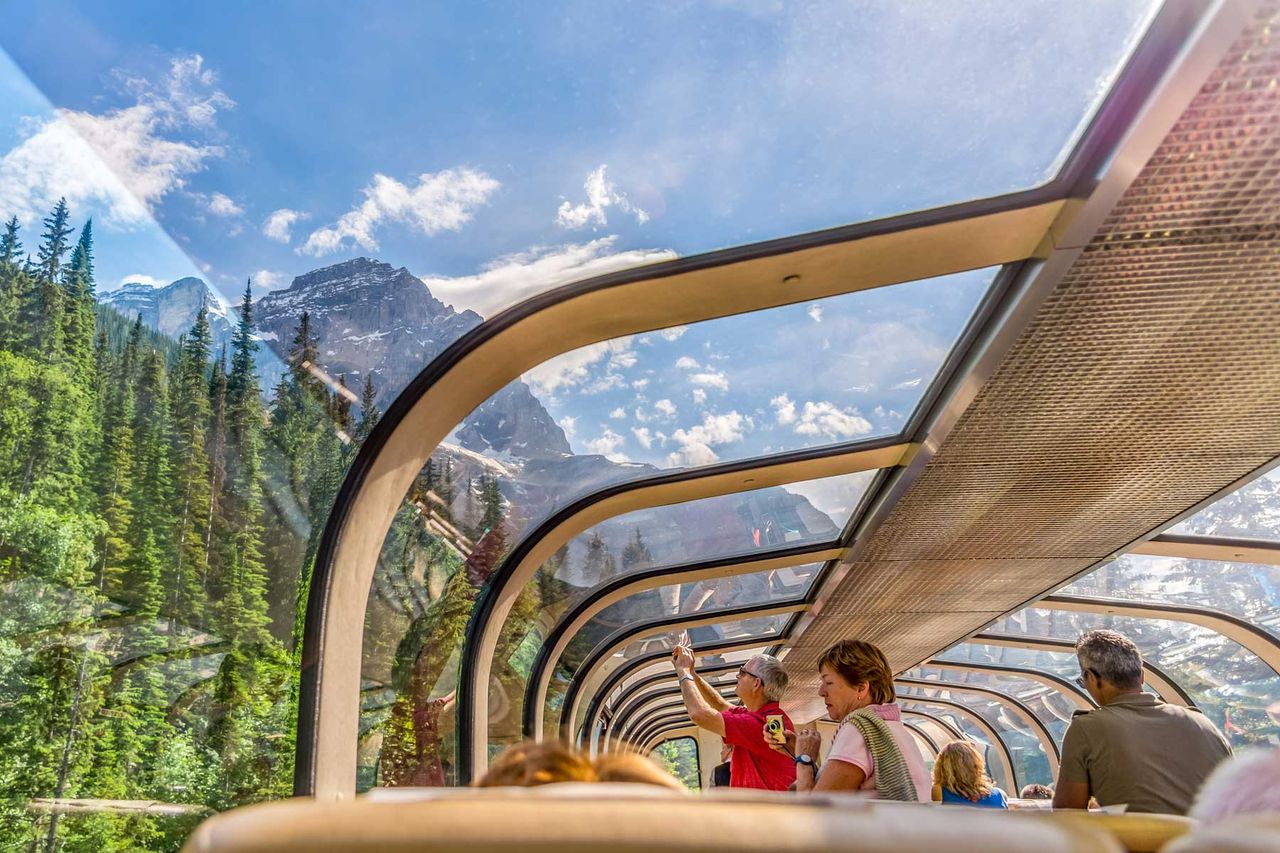
First Passage to the West operates seasonally from April through October, with each part of the season offering a different perspective on the Canadian Rockies. Spring (April and May) brings rushing waterfalls, snow-capped peaks, and fewer crowds. Summer (June through August) offers the warmest weather, long daylight hours, and lush alpine scenery, while fall (September and October) transforms the forests into brilliant shades of gold. Wildlife sightings—including bears, elk, and bald eagles—are possible throughout the season.
Know Before You Go
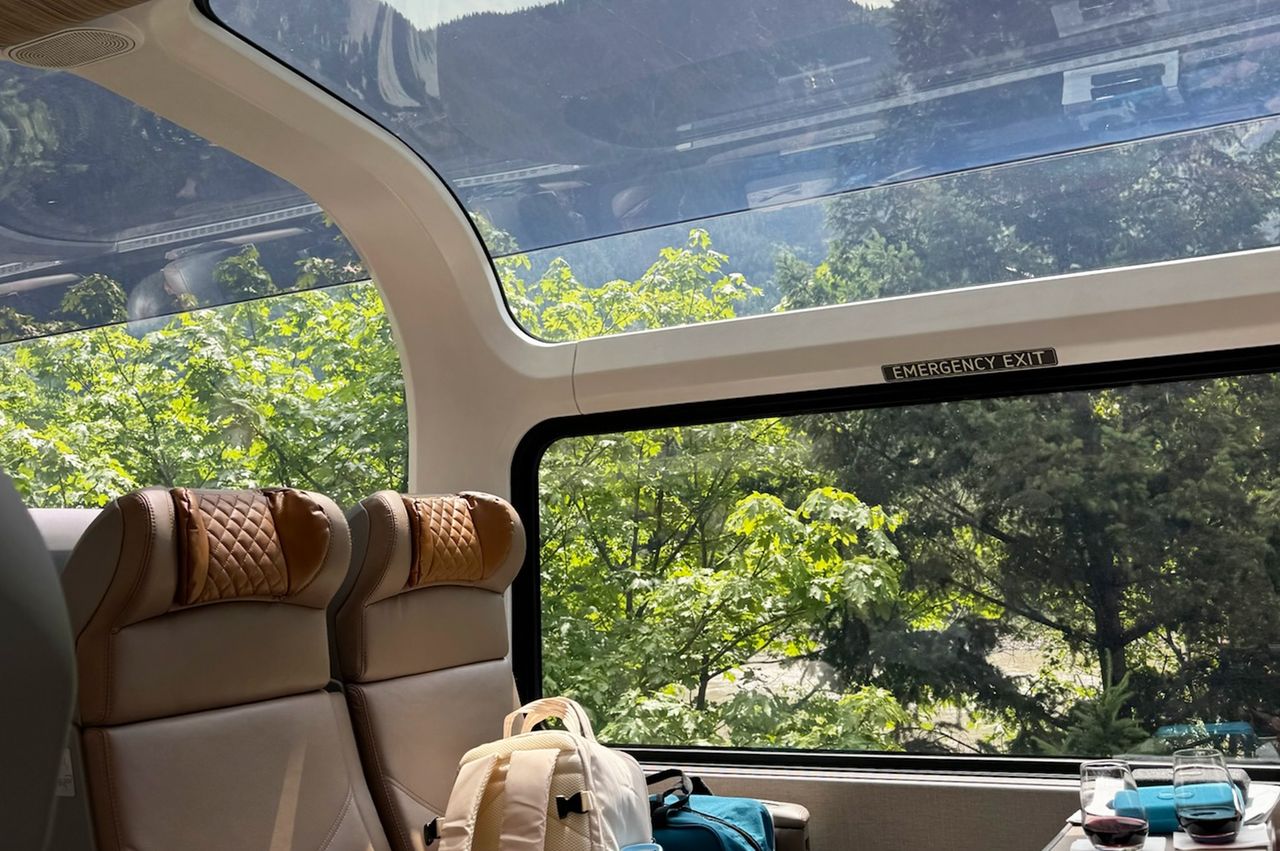
Because the train operates only during daylight hours, passengers never miss the scenery, whether it’s rushing rivers, mountain peaks, or wildlife along the tracks. After leaving Vancouver, the route follows the Fraser River through the fertile Fraser Valley and into the Coast Mountains, passing Hell’s Gate, where the river squeezes through a narrow canyon, before arriving in Kamloops for the night. The next morning, the journey continues through British Columbia’s Shuswap region, then enters the Canadian Rockies and ends in Banff or Lake Louise, depending on the itinerary.
Travelers can choose between SilverLeaf and GoldLeaf service, with GoldLeaf offering a bilevel glass-dome coach, a separate dining room, and an outdoor viewing platform.
Advertisement
Stops Along the Route
Vancouver
Plan to arrive in Vancouver at least a day before departure. That leaves time to walk or cycle the Stanley Park Seawall, browse the shops and cafés in Gastown, or spend an afternoon at Granville Island Public Market. Compact and easy to get around, Vancouver is worth exploring before the train heads east into the Canadian Rockies.
Kamloops
Kamloops is the overnight stop on the two-day trip, giving passengers a chance to rest before continuing into the Canadian Rockies the following morning. Set in British Columbia’s Thompson Valley, the city is surrounded by rolling hills, rivers, and grasslands—a noticeable change from the coastal forests seen earlier in the day.
Lake Louise
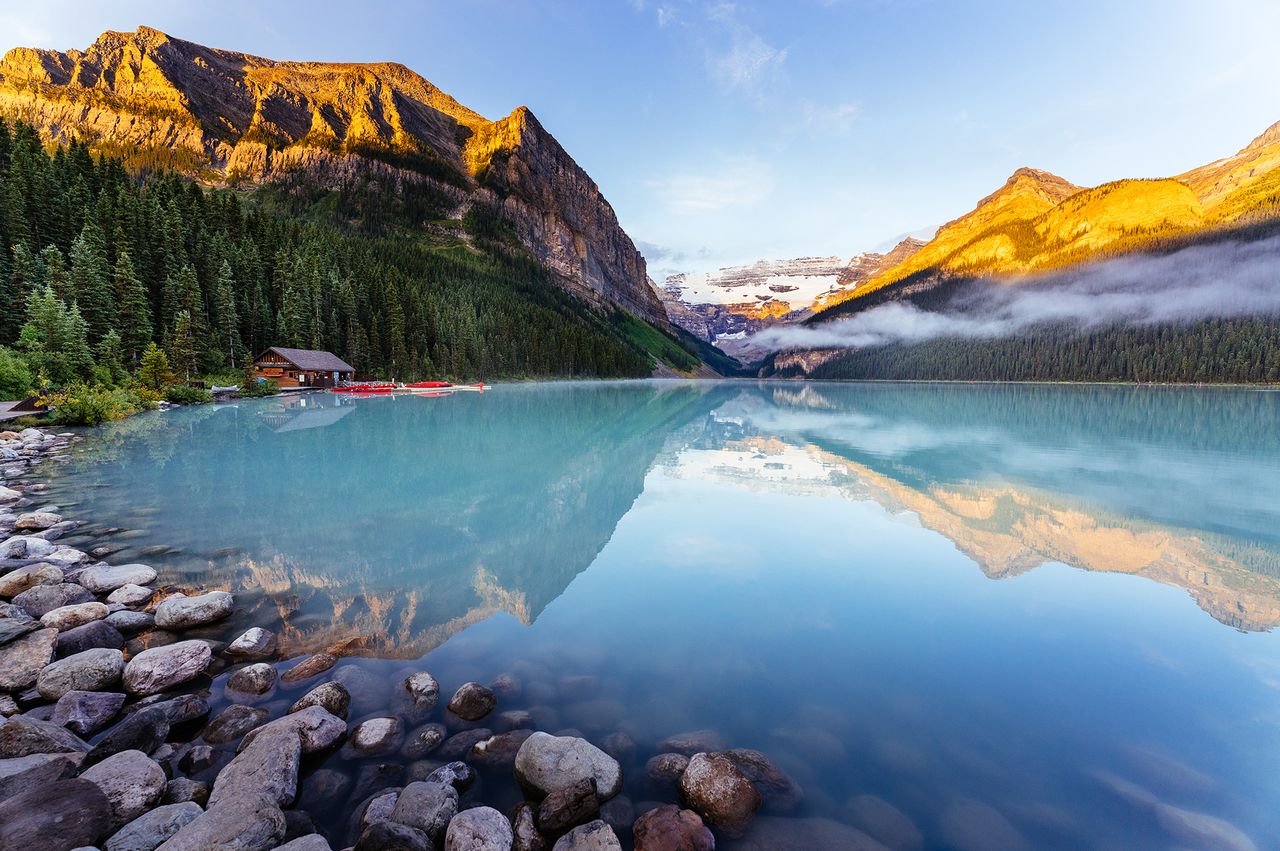
Some First Passage to the West itineraries end in Lake Louise, a small mountain village named for the glacier-fed lake that has become one of Canada’s most photographed landscapes. Spend some time walking the shoreline or rent a canoe during the summer months. In winter, the lake freezes over, with skating, snowshoeing, and skiing all nearby. If time allows, stop by the Fairmont Chateau Lake Louise for a bite or a drink overlooking the water—it’s one of the best places to soak up the scenery.
Banff
Other itineraries end in Banff, about a 40-minute drive from Lake Louise. The town is easy to explore on foot, with restaurants, cafés, galleries, and shops lining Banff Avenue. It’s also a convenient base for visiting the Banff Gondola, Banff Upper Hot Springs, nearby hiking trails, and, of course, the namesake national park.
Editor’s note: The standard First Passage to the West journey concludes in either Lake Louise or Banff, depending on the itinerary, so not every passenger will necessarily visit both as part of this rail experience.
Read the original article on Travel & Leisure


