Bomba Viral: Bolivian board game boosts critical dialogue

Political polarization is echoed in Bolivia's media and pervades Bolivian society. Between January and August 2025 alone, Bolivia Verifica, a non-profit fact-checking organization, identified more than 440 pieces of false or misleading information related to the electoral process and that were spread primarily via TikTok and Facebook. Disinformation is affecting people's lives there, generating mistrust and fuelling hate speech.
To counter this, the Muy Waso Foundation, a DW Akademie partner in Bolivia, has developed Bomba Viral – an innovative board game that promotes critical thinking, dialogue between diverse sectors and knowledge sharing. The game’s fun approach brings Media and Information Literacy (MIL) to communities otherwise traditionally marginalized.

Mijaíl Miranda Zapata is Muy Waso’s strategic and editorial director, and has overseen the game’s conceptual design – everything from the game’s mechanics to its operation to its goal: to develop people's MIL and digital skills. These, he says, are essential.
DW Akademie: How did Bomba Viral come about?
Mijaíl Miranda: We had assessed the state of communication and journalism in Bolivia, and many fellow journalists and activists told us that they were struggling to navigate the digital world and no longer benefitted from traditional training courses. So, we decided to create a tool that would facilitate dialogue in any context, and without formal classes.
What sets it apart from other board games?
Bomba Viral doesn’t just aim to educate players but also incorporates characters from Bolivia’s wildlife, some critically endangered, and reflects our country's geographical diversity. We wanted to generate a sense of identity and to make the game fun, so it also breaks stereotypes and characters don't have a defined gender. Young artists were very involved in the game’s design, adding a freshness and creativity to the process.

What has been the public's response?
So far, more than 300 people have played the full game, and if we count the shorter adapted versions, as many as 700 people have taken part. For many, it's the first time they've confronted issues such as disinformation and hate speech, and although these are latent problems in their lives, they have never really reflected on them. The game has opened up spaces for dialogue and also inspired other creators in Bolivia to develop educational games.
Have lessons emerged since the game’s launch?
Yes, and one of the most valuable ones has been the response from young audiences. Although the game is intended for ages 16 and up, children and younger teenagers are showing a lot of interest. At fairs and cultural venues, even parents are encouraging their children to play.
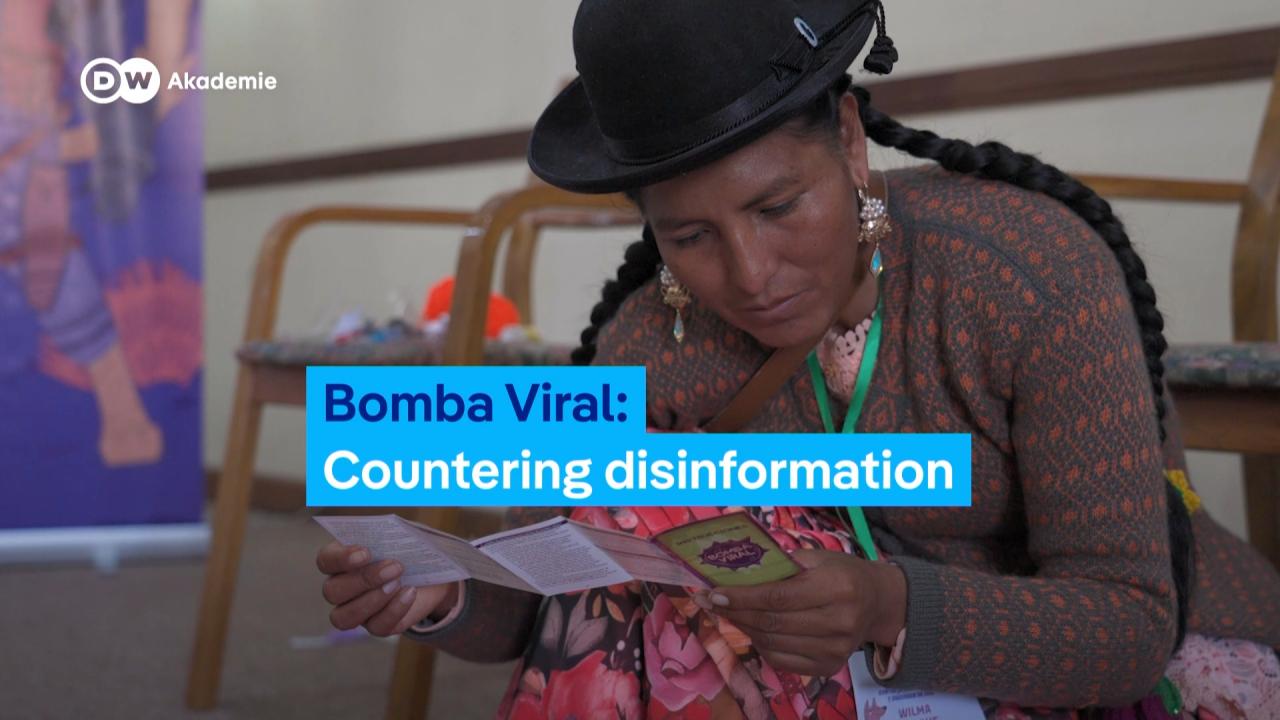
Bomba Viral: a game to counter disinformation
In all, what role can Bomba Viral play in a polarized political environment?
The game can spark dialogue on issues dividing a society. For example, we've brought together groups who appear to be in conflict, such as conservatives with LGBTQ+ activists or feminists, but through the game they were able to talk and find common ground. You see, that’s the most enriching thing that games can offer: addressing differences without resorting to confrontation and building understanding through a fun approach.
Muy Waso is a strategic partner of DW Akademie in Bolivia. The collaborative project is sponsored by Germany’s Federal Ministry for Economic Cooperation and Development (BMZ).


