Thursday, August 20, 2026

What Does Marie-Antoinette Mean to Us Now?


Posthumous portrait of the Queen by Madame Lebrun
Many people are disgusted by the depiction of Marie-Antoinette in the BBC series. My piece for Catholic Answers:

I first visited Marie-Antoinette’s private retreat at Petit Trianon when I was seventeen years old. It was January, but the birds were singing in the gardens. Then and on successive trips, I experienced a strong sense of timelessness. Others have confided to me a similar feeling of enchantment when wandering through the gardens of Trianon.

People frequently ask me why I write about Marie-Antoinette. One of the reasons is that I keep encountering educated people who really think she said, “Let them eat cake.” I continue to encounter Christians who think Marie-Antoinette was killed as punishment for some egregious wickedness or, at least, for unforgivable stupidity. Having read books about her since childhood, I knew she was misunderstood; it was only after a great deal more research that I came to see how completely false are the common beliefs about her.

But the demonization of Marie-Antoinette in the popular mind is necessary to justify the excesses of the French Revolution. When people have a false and distorted view of history, it is difficult for them to grasp the present, and almost impossible to meet the future with any kind of preparedness.

The French Revolution was not necessary, simply because it is never necessary to murder tens of thousands of people. Reform certainly was needed, but reform can happen without mass murder.

Louis XVI was an intrepid reformer. He was not afraid to break with the past and abolish outdated customs while introducing new ways of doing things. Louis was not resistant to change, although that is how he is usually portrayed. The changes were slow but over time might have been effective, had the violent upheavals not swept everything away.

Too often, the violence is represented as a sad but unavoidable means of achieving freedom and democracy. But it is not only that the French Revolution overturned the social order; it was ultimately an attack on the Catholic Church. Many Catholics were killed, especially those peasants who did not want their religion taken away.

The French Revolution has been the blueprint for every totalitarian regime that has followed and has continued to be the model for those wishing not only to destroy the Catholic Church, but all Christian society. (Read more.)


The portrait above was painted posthumously by Madame Lebrun. Here is a letter from Marie-Thérèse Charlotte to the artist, who was a friend of the family:
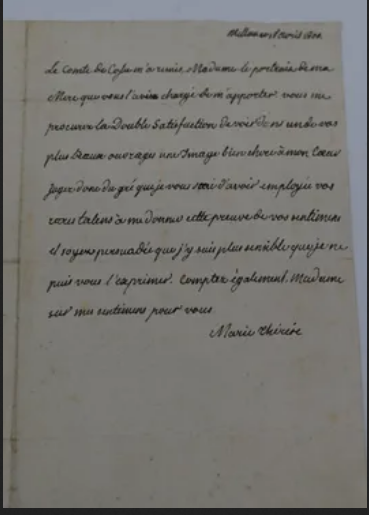

 A letter written by Marie-Thérèse Charlotte to Elisabeth Vigee-Lebrun on April 15th, 1800, regarding a portrait of Marie Antoinette, which was given to Marie-Thérèse by the comte de Cossé. The duchesse wrote that he gave her…

“…the portrait of my Mother that you had charged him to bring me. You give me the double satisfaction of seeing in a more beautiful work an image very dear to my heart. Judge therefore how grateful I am to you for having used your rare talents to give me this proof of your feelings and be convinced that I am more sensitive to it than I can express to you. You can count equally, Madame, on my feelings for you.”

Share

How Beijing Laundered $230 Billion in Exports

 From The Enterprise:

Consider a homeowner who installs a good deadbolt on his front door. A month later, he checks his records and finds that no one has forced the front door since the day the lock was installed. He also finds that his television is gone. The lock worked exactly as designed, which is why the thief stopped using the door. What the homeowner needs is not a better lock but a survey of his windows.

In 2018, President Trump used Section 301 to put a real tariff rate on Chinese goods, a price an importer had to actually pay at the border rather than a figure riddled with carve-outs. Chinese exporters responded, as any rational party would, to the price by looking for a cheaper route. They found one, and the route ran through Mexico, Vietnam, Malaysia, and a few dozen other jurisdictions willing to sell a stitch, a stamp, and a certificate of origin.

On Thursday, the Office of Trade and Manufacturing Policy, Peter Navarro’s shop, published a 25-page report called

The Great Transshipment Scam

. The language was blunt enough that even the Associated Press could not soften it into a story about supply chain diversification. The report describes a global architecture built for one purpose, a lattice of free trade zones, bonded warehouses, processing corridors, and re-export centers. It says plainly that the rerouting “made it look like US imports from China had dropped” while Beijing kept the factories, the workers, the tooling, and the profits. Navarro’s own summary was less clinical. For years, he said, the great transshipment scam has let communist China launder its exports. (Read more.)

Share

Homebuyers Deserve the Facts About Crime and Schools

 From Chronicles:

Nothing is more natural when buying a house than looking into how safe the neighborhood is, and, if you have or plan to have children, whether the schools are any good.

Yet the last Democratic presidential administration tried to prevent real estate agents from answering those kinds of questions because it prioritized “diversity” over safety and education. The Trump administration revoked the de facto gag rule this year, but the damage the Biden administration inflicted is still being felt.

What’s worse, state regulations in New York and elsewhere still prevent real estate agents from speaking freely to homebuyers about crime and schools.

Interfering with homebuyers was a first-week priority for the Biden administration: Six days after he was sworn into office, Joe Biden issued his directive establishing enforcement priorities for the Department of Housing and Urban Development that would scare real estate agents into remaining silent on two of the subjects most important to their clients.

“Diverse and inclusive communities strengthen our democracy,” the executive memorandum began. What mom or dad wants their community to be “inclusive” of failing schools? Who wants diversity to mean mixing criminals with innocent people?

Black families don’t want to live in dangerous or educationally dead-end neighborhoods any more than people of any other color do. (Read more.)

Share

Wednesday, August 19, 2026

The King's Touch

Cult of King Charles the Martyr reflects enduring political divisions -  Anglican Journal
I knew the French and English monarchs prayed over those afflicted with scrofula but I did not know it was done in Scotland. When Charles I was crowned King of Scots in June, 1633, he continued the ancient ceremony. From The Scotsman:
Charles had already been crown by the English in 1626, this was the first coronation in Scotland since that of King James VI in 1567, and more notably, the first time an adult had been crowned as our monarch since that of James IV in 1458, who was 15, not an adult? Okay let’s go further back to King James I, he was 30, happy now? The abbey of Scone, traditional place of coronations up to 1424, had been destroyed, and for this occasion the ceremonial was located in the remains of Holyrood abbey, which had seen the coronation of King James II in 1437.

All that remained of the abbey was the nave, the remainder of the church having been demolished in 1570, and the structure was now restored for the occasion. Charles was baptised in the Chapel Royal at Holyrood Palace in 1600 by David Lindsay, Bishop of Ross, and created Duke of Albany, the traditional title of the second son of the King of Scotland.

[...]

While researching this I found an article about Charles and the “laying on of hands” a ceremony he performed while at Holyrood, a practice said to have been performed by all the Stewart monarchs but discontinued by the Hanoverian’s. Bonnie Prince Charlie though is said to have performed it during the 45. (Read more.) 

This is of particular interest to me since Louis XVI was a direct descendant of Charles I. King Louis treasured the ancient healing ceremony and celebrated it several times a year, not just at his coronation, as described in my book.

More HERE.

Share

Maryland’s Energy Crisis Is a Choice

 From Brian Chisholm:

Maryland’s soaring electricity bills are not a mystery, an accident, or an unavoidable act of nature. They are the predictable result of deliberate policy choices and Maryland families are being forced to pay the bill.

A new fifty-state analysis from Energy Bad Boys exposes a widening divide in American electricity prices. In 2011, average prices in Democratic-led states were reportedly 44% higher than in Republican-led states. By 2025, that gap had widened to 61%. Since 2018, prices in blue states rose 43%, compared with 22% in red states.

That does not prove that party control alone determines a state’s electric bill. Geography, fuel mix, weather, infrastructure, taxes, and market structure all matter. But the pattern is too large and too consistent to ignore: states that prematurely close dependable power plants, restrict natural-gas infrastructure, and impose increasingly aggressive mandates tend to make electricity scarcer and more expensive.

Maryland is a case study in what happens when political ambition outruns engineering and economics. (Read more.)


Share

The 'Real Indiana Jones'

From BBC:

In 1911, a US professor claimed he had discovered the ancient mountain stronghold of the last Incan king deep in the Peruvian Andes. Yet 53 years later, another explorer proved he was mistaken – and shortly afterwards, a BBC crew followed his trail.

"No one now disputes that this was the site of ancient Vilcabamba." So wrote the Yale academic who brought the Peruvian ruins of Machu Picchu to global attention in 1911. Hiram Bingham III was recruited by locals to look for a lost Incan city fabled for its hidden treasures – and he firmly believed that's what he had found.

Yet 50 years later, Bingham's conviction was challenged by another US explorer nicknamed "the real Indiana Jones". In August 1964, Gene Savoy claimed to have found the same lost city – around 60km (37 miles) northwest of Machu Picchu. He believed his expedition had identified the mountain stronghold of the last Incan king at Espíritu Pampa (the "Plain of the Spirits" or Vilcabamba), a set of ruins in remote cloud forests, high above a tributary of the Amazon. 

Just six weeks after Savoy's discovery, a BBC crew followed in his footsteps, travelling by rubber dinghy (and capsizing) on rapids, ascending steep canyon slopes with mules, and hacking through jungle to the site. "Scraps of information they'd picked up on the way made them doubt some of Savoy's claims," revealed the presenter. "But, having come so far, they had to get on and see for themselves."

The stakes were high. Perhaps they would find "the heart of an unknown city, where it seems likely the last Inca emperor gathered the remnants of his people". (Read more.)


Share

Tuesday, August 18, 2026

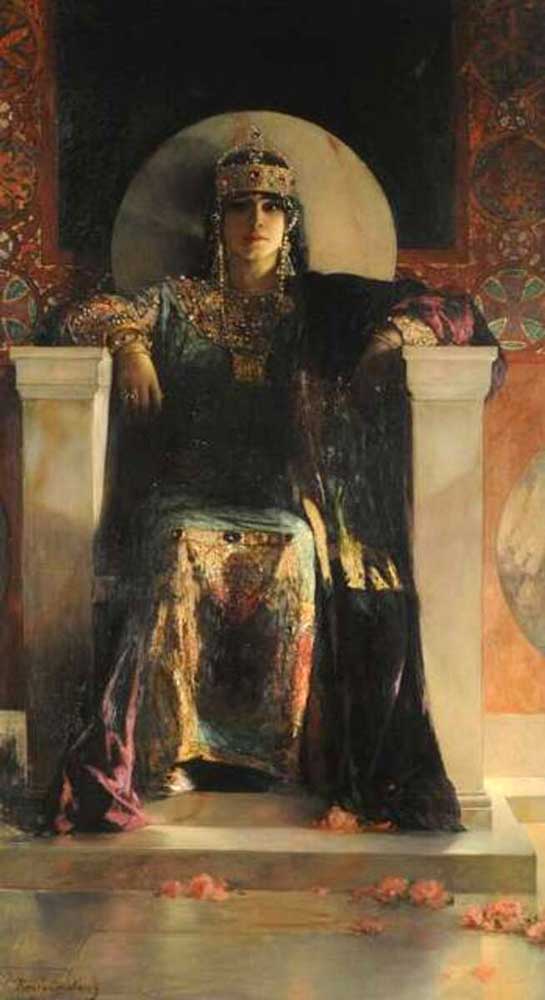
The Remarkable Rise of Empress Theodora

 From Risto Gjorgjiev:

 Born around 500 AD in the vibrant city of Constantinople, Theodora’s early life was far from royal. Her father, Acacius, was a bear trainer for the city’s grand Hippodrome, a colossal stadium renowned for its chariot races and theatrical spectacles. After his untimely death, Theodora’s mother, a dancer and actress, found herself struggling to provide for her three daughters. To make ends meet, young Theodora was thrust into the world of entertainment, becoming an actress and dancer in the very Hippodrome her father had worked.

 The Hippodrome was not just a place of entertainment; it was the beating heart of Byzantine social life. Here, factions clashed, politics played out, and the mood of the populace was gauged. Theodora, with her keen observation, learned to read the crowd’s behavior, understanding their passions, grievances, and loyalties. This knowledge would later prove invaluable.

However, life in the limelight was not without its challenges. Theodora faced societal disdain due to her profession, which was often associated with promiscuity. Her travels across the Eastern Mediterranean exposed her to various cultures and experiences, including a tumultuous relationship with a Syrian official that left her stranded in North Africa.

In a twist of fate, Theodora’s return to Constantinople marked a new chapter in her life. Embracing Christianity, she left behind the world of entertainment and joined a community of devout women. It was during this period of reflection that destiny played its card: she caught the eye of Justinian, the nephew of the reigning emperor and the empire’s most eligible bachelor. (Read more.)

 The Mad Monarchist has a post about one of the most colorful women who ever lived, the Empress Theodora.

Together with her husband Empress Theodora oversaw the rebuilding of Constantinople into one of the most spectacular cities in history. She helped in the building of hospices, churches and refuges for the poor. She is also credited with influencing new laws to protect women, making rape and kidnapping capital offenses, no matter if the woman was noble or common born. Women could not be forced into the entertainment industry or prostitution and could not be put in prison for debts. Instead they were to be placed under the supervision of religious women to work off their debt. This was necessary because of the rape and abuse women often suffered in prison. She cracked down hard on prostitution, buying the freedom of many girls herself, meting out harsh punishment to their captors and setting up establishments to help them get back on their feet in legitimate ways. (Read more.)

Empress Theodora did much to protect women during her husband's reign. From The Collector:

The origins of women’s rights can be attributed to Empress Theodora. Probably her experience as a young woman marginalized by the institutional system of that time pushed her to work on the improvement of women’s rights in the Empire. She elaborated on The Corpus Juris Civilis, a series of juridical reforms included in Roman law, and laid the foundation for a framework for Western legal heritage for women’s rights, including the English Common Law, the American Constitution, and even contemporary international public law. Additionally, under Empress Theodora, rape became punishable by death. No matter their position or status, everyone present during the rape was affected by this rule, and the rapist’s property was handed over to the victim. (Read more.)

Share

The Death of Truth

 From Gavin Ashenden.at New English Catholic:

The death of Professor Jason Arday is a great tragedy, and those who pray will immediately want to pray for his soul, but not just for his own soul, but for the souls of those who manipulated, used and abused him by finding in him a useful instrument for the progressive fantasy of diversity, inclusion and equity.

Suicide always leaves anybody touched by it, which includes those who read about it, with a sense of guilt. We cannot escape the question of whether or not there was anything we could have done to save a life from despair, or whether there was anything we did to contribute to the despair?

And so, in order to face those questions, many of the people who found in Professor Arday a useful tool for their propagandisation of progressive ideology need to divert and deflect the blame to others.

Already the accusations have been made that those who asked questions about the truth were to blame for placing a fragile man under pressure, as if there is some kind of trade-off between personal fragility and claims for truth. (Read more.)

Share

The Absence of Young Male Novelists

 From Chronicles:

Acclaimed novelist Joyce Carol Oates had no issue tweeting that “a friend who is a literary agent told me that he cannot even get editors to read first novels by young white male writers, no matter how good; they are just not interested.” And, without a hint of irony, followed up that statement with “this is heartbreaking for writers who may, in fact, be brilliant, & critical of their own ‘privilege.’” Although she is willing to recognize that young white men may be talented and barred from literary opportunities, she cannot help but equalize the statement with ludicrous notions of “privilege” where there is anything but.

None of this is especially controversial within the industry itself. By 2021, there was not a single white male millennial on the Times’s “Notable Fiction” list; the same was true in 2022, and only one appeared in each of the next two years. Demographic transformation of American publishing is measured, publicized, and, in many quarters, celebrated. The question is not whether the literary establishment has changed, but whether its new priorities have altered the kind of literature it is capable of producing. If the aspiring Roth or McCarthy today finds fewer editors willing to take his manuscript seriously (not because of its prose but because of the demographic profile of its author), that represents more than an injustice to individual writers. It represents a narrowing of the imaginative possibilities of American literature itself.

Beyond the disparities in race among novelists and literary agents lies the much more pervasive racial disparity in short-form magazines where fiction writers can build a portfolio. These magazines brazenly cater to just about every favored identity group imaginable. They offer fee-free submissions for minority groups; they have exclusive windows to segregate who may submit; and they champion these groups as combating historical overrepresentation from white men. This, of course, can only go on so long before these identity groups, themselves, become the overrepresented ones.

The most commonly offered explanation for this obvious discrimination against white men is that publishing is simply “correcting historical imbalances.” An industry that once professed indifference to the identity of the author increasingly treats identity as a meaningful criterion in and of itself. Literary merit is now expected to coexist with representational goals, institutional diversity targets, and a moral vocabulary inherited from Marxist cultural theory. The result is a publishing culture that increasingly evaluates fiction not as art but rather as an instrument of social justice.

What does this mean for us? What does this mean for the West? (Read more.)

Share