Wednesday, April 10, 2013

Suspension of this Blog

Everyone:

My blog has been targeted by someone or someone(s) within the last month. Namely, recent and previous posts are somehow being reported to Mediafire for copyright violations. This is ridiculous as many of my posts are of recordings well over 50 years old and of an interest to a small group of people, namely readers of this blog. Jealousy, spite, maliciousness...I don't know what would motivate someone to wreck my blog. I've seen other bloggers attacked like Bryan over at Shellackophile, Satyr at 78 toeren and Tin Ear at The Music Parlour and to what end. I give them all due credit for starting up again and wish them all the best and godspeed. They are terrific people and they have an incredible love for what they do!

At this point, I need a break and I hope that you all understand. What I do is an amateur endeavor and I pose no threat to professionals or big money interests. Sadly, I just don't want to do this for now  as I'm afraid that I could be targeted and sabotaged even if I post on another file sharing service. What I might do is to offer up recordings on symphonyshare, but I need to give that some more thought.

Anyway, thank you all. I have not been the best blogger since I'm a bit of a loner at heart and I apologize to those folks who have diligent with comments while my responses have been short or not at all.

Fred

Thursday, April 4, 2013

Opera Overtures with Horst Stein and Edward Downes on Somerset


Remember those old Somerset records? You could buy 'em for $1.98 at the local Safeway, Radio Shack or Walgreens. Though meant for mass distribution, many of the performances on them were very fine indeed and here are two examples of rousing overtures. The London Philharmonic is led by Horst Stein and Edward Downes respectively and I'd place these lp's square about 1963 or 4.

Both the conductors featured here did not have especially large discographies and I'm at a loss why that is so. Everything that I have heard by Horst Stein is beautifully prepared and executed (I think his Bruckner 6 is the best out there, he really gets superlative playing from the VPO) while Edward Downes was a noted opera conductor and being so means that he knows where to extract the emotion from these overtures and preludes. His take on Ruslan and Ludmilla is riproaringly wonderful.

You'll enjoy these lps. I grabbed them out of the 3 for a buck pile. What a steal!


DOWNLOAD STEIN

DOWNLOAD DOWNES PART 1

DOWNLOAD DOWNES PART 2

Mediafire is having a problem with this download. ...sigh....and sorry!

Tuesday, April 2, 2013

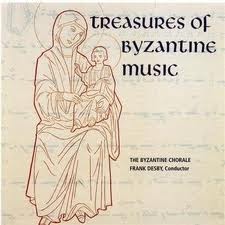
Treasures of Byzantium


I've been reading a lot about the East Roman Empire, or Byzantine Empire, of late. For a good number of years, it has held a certain mystical fascination for me that I don't really know how to describe. During the middle ages, the empire evolved into a state that valued the Hellenic-Roman traditions albeit with an oriental, eastern twist. Indeed, for hundreds of years, it was the centre of culture and taste,  a place that many European principalities looked upon as a model for how a state should look and be governed.

This lp by the Byzantine Choir under Frank Desby captures the mystical, otherworldly nature of the Byzantine state and church, which we so intertwined as to be one organic substance. The chants and recitations here are breathtakingly beautiful and they carry the listener off into another state of being. No wonder visitors to Constantinople often felt that they had entered a place that was somewhere between earth and heaven.

DOWNLOAD

Wednesday, March 20, 2013

Menahem Pressler plays Music for Children of Bartok


Bartok's series of Music for Children contains deceptively simple but imaginative music nonetheless. From MGM E3047, the great Menahem Pressler performs the 39 Pieces based on Slovak folksongs. Now to find volume 1 containing the Hungarian folksongs!

It's a shame that more pianists don't have a go at this genre. I suppose some turn their noses up at the brevity and apparent ease of the writing. It's not virtuoso music and will not have them standing in the aisles. Yet, the charm of these miniatures is that they will bring a smile to the face and your mind will wander, in a positive, childlike way.

What a great artist Menahem Pressler is! Tasteful, immaculately prepared, serious in that he did not approach these pieces in a condescending way. Marvelous!


DOWNLOAD

Tuesday, March 19, 2013

Lukas Foss conducts Sibelius from Buffalo


Here's a wonderful record, one which sort of heralded in a renaissance for the Buffalo Philharmonic in terms of recordings. Lukas Foss leads the BPO in the Four Legends from Kalevala by Sibelius. Cut in 1968, it was a byproduct of the second festival of the arts in the fair city of Buffalo. Nonesuch performed a great service by capturing these musical moments.

I always enjoy listening to Lukas Foss' musicmaking for it is inevitably well prepared and faithful to the score. Unlike his almost exact contemporary and friend, Leonard Bernstein, Foss was not one to interject too much of himself into a score to the point of overkill, nor was he a musician who relied on effect over substance. In short, the results of his work bear the stamp of honesty, integrity and intellect.
Glad I dug this one out while rearranging stuff in the cellar.

DOWNLOAD

Sunday, February 24, 2013

A few to tide me over....


I've had some serious "writer's block" of late which, unfortunately, has made blogging oh so difficult for me. Perhaps I've hit a wall or something, I don't know. Well, as not to deprave my patient and loyal readers, I'm going to to offer up a half dozen transfers that I've had in the can, albeit without commentary...


Note:  The Beethoven and Bruckner are the only stereo recordings here. Enjoy!

Wednesday, February 13, 2013

Sir Thomas Beecham works his magic in Goldmark


An absolutely fantastic record here today! In fact, one of the very best recordings that I have heard in quite a while. Sir Thomas Beecham conducts the RPO in this 1952 lp of Karl Goldmark's delightful "Rustic Wedding" Symphony.

Nobody could coax magic out of the byways of music like Beecham. When he was so inspired, the results were that second tier music sounded vital, impressively important and downright magical. Such is the case here with the Goldmark. This is delightful music, in the spirit of Brahms and Dvorak, but without that extra bit of "zip" found in those composer's best works. That said, the Rustic wedding Symphony contains much beauty, singing string lines and hearty wind parts. Beecham revels in this score, capturing the rustic spirit of the proceedings while ensuring that his principals have their absolute best way with their scores. This record has never been equalled and probably never will because the genius and gifts of Beecham, quite honestly, were unique, irreplaceable and once in a lifetime.  A treasure here for sure!

As a filler, I have included a Camden record of Brahms' second symphony. This lp features the only recording by the "Claridge Symphony Orchestra." there has been debate on who this ensemble really is - some say Fritz Busch and the DRSO and others say Ormandy and the Philadelphia Orchestra. I'll leave it up to you to decide. My opinion is probably Ormandy because the strings are quite creamy here.


DOWNLOAD GOLDMARK

DOWNLOAD CLARIDGE BRAHMS

Thursday, February 7, 2013

Musica Antica e Nuova from the Colt Klavier Collection


Here's an lp from an interesting series that the old Oryx label rleased as part of it's "Colt Klavier Collection" series. This is volume six featuring fortepianist
Celia Bizony leading the Musica Antica e Nuova in a fine program of 18th century music by CPE Bach, Schobert, and JC Bach. This is a "parlor" type program of chamber music with voice that is sure to please the listener as all the pieces are well crafted, enjoyable on the ear and immaculately rendered.

I hope to acquire the other 5 volumes in this series at some point.


DOWNLOAD PART 1

DOWNLOAD PART 2

Wednesday, January 30, 2013

Robert Gerle performs concertos of Delius and Barber


A while back I offered up some playing by the fine Hungarian-American violinist Robert Gerle. On this Westminster stereo lp, Gerle is joined by forgotten American conductor Robert Zeller for an interesting coupling of the Delius and Barber violin concertos. The orchestra, probably totally unfamiliar with this music, is the ubiquitous Vienna State Opera Orchestra.

I admire the programming here however, I think a bit more care could have gone into the presentation. The Delius, for one, is very much a fringe repertoire piece and having it recorded by a Viennese orchestra, not comfortable with the style and lacking in rehearsal time, makes for a somewhat wooden traversal. I think Gerle acquits himself quite well but if he had had an English orchestra with a stronger podium hand, the vinyl production could have yielded more of a winner. In short, what we have here is a solid go at the Delius (much can be said for the Barber as well) but by no means is this definitive.

Alas, an interesting curiosity and my admiration for Westminster at having a go at it.

DOWNLOAD PART 1

DOWNLOAD PART 2

Friday, January 25, 2013

The Richards Piano Quartet play Chausson and Martinu


Regular readers of this blog know that I have a soft spot for chamber music. Here's a very fine L'Oiseau Lyre lp c 1969 featuring the Richards Piano Quartet (named after founder-cellist Bernard Richards) performing the Piano Quartet in A of Chausson and the first piano quartet of Martinu. Indeed, very different styles these two composers, but it works well for the musicians are all top notch (the pianist is the well regarded Bernard Roberts) and they are sensitive to the contrasts between the styles of both composers. Chausson, of course, inhabits that lush world of late 19th century France while Martinu incorporates that spiky, almost jazzy quality that appeared during the 1920's. Neat stuff all around.

I could find no evidence that this record has been issued on cd. What a shame! I guess the Richards Piano Quartet did not have that kind of sexy quality that you get when you throw Barenboim, Zuckerman, Argerich...you get the idea, in the room together.


DOWNLOAD PART 1

DOWNLOAD PART 2

Thursday, January 17, 2013

Charles Munch conducts Martinu and Piston


Here's a transfer on request. I have uploaded the monaural LM series lp of Charles Munch and the BSO in the sixth symphonies of both Walter Piston and Bohuslav Martinu. Typical Munch here, exciting and bracing, full of raw energy. I wish Munch had recorded more by these two composers. He would have made a compelling Martinu cycle, I'm sure.

These recordings date from 1957 I believe.

DOWNLOAD

Wednesday, January 16, 2013

Beveridge Webster plays Rachmaninoff


Someone was looking for Beveridge Webster playing just about anything and well, they are in luck. Webster hypnotically guides the listener through the Etudes Tableaux of the great Rachmaninoff on this mid 60's Dover issue.

From Wikipedia:

Rachmaninoff composed the Op. 33 Études-tableaux at the Ivanovka estate between August and September 1911, the year after completing his second set of preludes, Op. 32. While the Op. 33 Études-tableaux share some stylistic points with the preludes, they are actually very unlike them. Rachmaninoff concentrates in the preludes on establishing well-defined moods and developing musical themes. There is also an academic facet to the preludes, as he wrote 24 of them, one in each of the 24 major and minor keys. Rachmaninoff biographer Max Harrison calls the études-tableaux "studies in [musical] composition"; while they explore a variety of themes, they "investigate the transformation of rather specific climates of feeling via piano textures and sonorities. They are thus less predictable than the preludes and compositionally mark an advance" in technique. Like the piano études of Claude Debussy, Alexander Scriabin, Olivier Messiaen and György Ligeti, the Études-tableaux "summarize their composers' discoveries about the piano and how music for it should be written." Rachmaninoff initially wrote nine pieces for Op. 33 but published only six in 1914. One étude was subsequently revised and used in the Op. 39 set; the other two appeared posthumously and are now usually played with the other six. Performing these eight études together could be considered to run against the composer's intent, as the six originally published are unified through "melodic-cellular connections" in much the same way as in Robert Schumann's Études Symphoniques.

The Op. 39 set of Études-tableaux, written between 1916 and 1917 and published in 1917, was the last substantial composition written by Rachmaninoff while still in Russia, and it shows a marked departure from his previous work. Rachmaninoff had been listening keenly to his contemporaries Scriabin and Sergei Prokofiev, and had studied Scriabin's works to prepare a memorial recital in which Rachmaninoff himself played in Scriabin's honor. Though he was roundly criticized for his overly-analytical approach in his playing and overall lack of capturing the free-flying spirit that Scriabin had summoned so well in his own pianism, the compositional seeds resulting from his studying Scriabin's work had been planted. A melodic angularity and harmonic pungency appeared in these études as well as in his Op. 38 songs, which were written concurrently. The Op. 39 set is considered much more demanding technically than the Op. 33 set, and has been described as extremely virtuosic in its approach to keyboard writing, calling for unconventional hand positions, wide leaps for the fingers and considerable technical strength from the performer. Also, "the individual mood and passionate character of each piece" pose musical problems that preclude performance from those not possessing a tremendous physical technique.

Indeed, one must be a confident and technically assured musician to tacke these pieces and we need not worry where Beveridge Webster is concerned. His stylistic playing is beyond reproach and on display is the most tasteful of musicianship.

DOWNLOAD PART 1

DOWNLOAD PART 2

Wednesday, January 9, 2013

Rene Leibowitz leads Schoenberg's Gurrelieder


I'm very, very happy to have found the VoxBox of this original Haydn Society record. Rene Leibowitz leads French forces in one of the greatest recordings of Gurrelieder ever made. making allowances for somewhat muffled early 50's sound, this performance will convince you that this masterpiece is the product of one of the greatest musical geniuses of all time.

Conductor Leibowitz was the ideal choice to invest the task of bringing Gurrelieder to life. He was long associated with Schoenberg and the second Viennese School of composition (note Gurrelieder is exclusively tonal)  and his commitment to this sprawling, complex masterwork is totally without question. Leibowitz creates a continual line which navigates this work through its monumental length and thick orchestration. The conductor is so utterly convincing and absorbing that all I can say that oh, what magic Leibowitz would have worked with Mahler. Many have used Wagner to describe Gurrelieder but it is most assuredly Mahler and his sound world that serve as an inspiration for this choral and orchestral blockbuster.

This is an essential record, a tribute to the great gifts possessed by Rene Leibowitz.

DOWNLOAD PART 1

DOWNLOAD PART 2

Saturday, January 5, 2013

Carl Bamberger conducts Brahms' Ein Deutsches Requiem


Happy New Year! Been a few weeks since I posted. The busy days around the holidays were followed by a week of a nasty bug which left me with just enough energy to make my way into the office. Ho hum....

To start the new year, I'm offering a wonderful performance, on Nonesuch, of one of my favorite works by any composer, namely the German Requiem of Brahms. Here, the proceedings are directed by the fine German conductor Carl Bamberger. I must tell you that hearing Teresa Stitch-Randall's brief contribution  is worth the admission alone as her lovely, disciplined voice, that excelled in this repertoire, justs grabs your heart and melts your resolve. Gorgeous!

The orchestra, and especially the chorus, give full bodied, urgent accounts of their parts and overall, the effect of the music making is vital and dramatic This might not be the most polished performance but I don't think that would matter to Brahms; the overall product conveys the very human aspect of the work as the composer himself intended.

As a bonus, and to fill better two cds, I transferred a very early Simon Preston Argo lp where he leads the New English singers in motets and he, himself offers up some first rate organ playing too.

Both records are in stereophonic sound.


Followers