Showing posts with label coding. Show all posts

Sep 15, 2013

Librarians as Data Scientists: Data Science for All

Librarians as Data Scientists: Data Science for All


"The ability to take data - to be able to understand it, to process it, to extract value from it, to visualize it, to communicate it - that's going to be a hugely important skill in the next decades. " - Hal Varian, McKinsey Quarterly

I came across the above quote from the Data Scientist Training for Librarians website.  It provides the motivation for librarians - and others- to consider learning more about data science - a field that applies to just about every field of study in some way, as well as most professions.


Credit: Dirk Tiede/DST4L


Librarians are in a good position to become early embracers of data science, as they are interested in information, understand a wide range of scholarly (and not-so scholarly) topics, and serve as the human interface bridging people and ideas. Wearing many hats, they provide resources for people from all walks of life, in community libraries, schools, universities, government, industry, and research centers.  With the power of today's computers and software tools, they have the potential to play an important role in the way we discover, curate, understand, and communicate knowledge. 

Chris Erdmann, the head librarian of the John G. Wolbach Library at the Harvard-Smithsonian Center for Astrophysics, in collaboration with like-minded others, organized the first Data Scientist Training for Librarians (DST4L) course. The first round of the course included a number of noted speakers from a variety of disciplines, and covered a number of topics, as summarized  by Jennifer Prentice (Simmons Graduate School of Library and Information Science Tech Lab) on the course website.

The second DST4L course was opened to all librarians, with a solid list of topics outlined on the syllabus.   The course started with a 2-hour introduction to the course last July, captured in the video below: 


I'd like to share that Chris Erdmann is a member of the Seamless Astronomy Group, a multi-disciplinary collaboration of astronomers, computer scientists, librarians, visualization specialists, and information scientists.  The aim of this group is to research and develop systems that "seamlessly integrate scientific data and literature, the semantic interlinking and annotation of scientific resources, the study of the impact of social media and networking sites on scientific dissemination, and the analysis and visualization of astronomical data and research communities".  

As I looked at the info-graphic posted on the Seamless Astronomy website (below), it occurred to me that this conceptualization could apply to a number of disciplines.  I look forward to learning more about the tools, methods, and processes that this group generates!
Credit: Seamless Astronomy Group

One of the projects that interests me is the WorldWide Telescope, a collaboration between Microsoft Research and the Seamless Astronomy group. The WorldWide Telescope is a visualization software that enables people to explore data and high resolution images stored in the "cloud" through a web browser or computer application. According to Chris Endermann, a student project exploring the use of the new Oculus Rift virtual reality headset with the WorldWide Telescope is in the works.   

RELATED AND SOMEWHAT RELATED

Data Scientist Training for Librarians 
Data Scientist Training For Librarians Course Details

Data Science: What's in it for the New Librarian?
jmstanto, Information Space, 7/16/12

Cracking the Code: Librarians Acquiring Essential Coding Skills Matt Enis, The Digital Shift, 3/6/13 (Links to tutorials)

OpenRefine: Data Scientist Trainings for Librarians Presentation (SlideShare) 
Tom Morris, 3/28/13

Librarians Are Becoming Big Data Experts
John Edwards, BigData Republic, 8/9/13

Code {4}lib Issue 21

Prototyping as a Process for Improved User Experience with Library and Archives Websites
Shaun Ellis, Maureen Callahan, code{4}lib Journal, Issue 18, 10/3/12

Crafting Linked Open Data for Cultural Heritage:  Mapping and Curating Tools for the Linked Jazz Project M. Cristina Pattuelli, Matt Miller, Leanora Lange, Sean Fitzell, Carolyn Li-Madeo, code{4}lib Journal, 7/15/13

Collaborative Librarianship News

Confederation of Open Access Repositories

Public Libraries Add Multimedia Learning to Digital Mission
Nora Fleming, Education Week, 9/15/13

Life of an emerging technologies librarian in the health sciences (must-read)
Patricia F. Anderson, UMSI Monthly, 1/2013


Data and Coding for Journalists


Although journalists aren't librarians, the profession has expanded to include data journalism, a growing field fueled by the visual nature of the web and the increase in popularity of mobile devices in the form of smart phones and tablets. Books and newspapers are still with us, but technology has changed the way journalists do their jobs

I'm not sure if the journalists and librarians are collaborating with each other as they venture into coding and data analysis.   If not, they should!  The links below would be of interest to librarians, journalists, and other knowledge junkies.


Video: Journalism in the Age of Data

Journalism in the Age of Data from Geoff McGhee on Vimeo.

Coding for the Future: The Rise of Hacker Journalism
Maryanne Reed, Media Shift, 5/2/13
The above post includes a number of video and audio clips on the topic, plus a number of links, such as the following:
Data scraping tool for non-coding journalists launches     (Import.io)
Sarah Marshall, Journalism.Co.Uk, 9/9/13

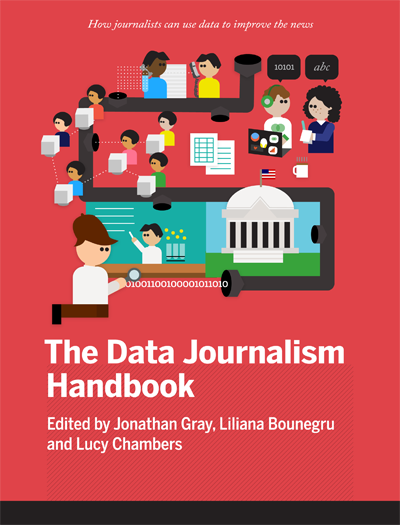
Data Journalism Handbook: A Five Minute Field Guide
Data Journalism Handbook Chapter:  Getting Data


ODDS AND ENDS
A little history about the idea of seamlessness in computing:
The Computer for the 21st Century
Mark Weiser, Scientific American, September 1991 (online draft)


My thoughts on the need for data/information visualization not long after the world-wide financial crisis:
Reflections: Need for Interactive Infoviz for the Financial Biz, Business Leaders, Government Officials, Educators and the Rest of US... 
Lynn Marentette, Interactive Multimedia Technology, 2/1/09


Since I'm a school psychologist (in my day job), I thought I'd slip this in: 
Why every (psychology) student should learn to code 
Matt Wall, Computing for Psychologists, 1/13/13
Many of Matt Wall's links would be of interest to anyone thinking about learning more about technology, data analysis, and related coding.


Jul 27, 2013

Drawing with Sounds, an Interactive Musical Drawing App Created with Processing

This is my first creation using the Drawing with Sounds application. This cause and effect application was created with Processing 1.5.1 and produces musical sounds and patterns, along with random abstract shapes that are triggered through movements of a mouse. The application has been adapted for switch users, making it accessible to those who have motor impairments.

Processing is an open-source programming and integrated development environment that was build on the Java programming that has been easy to learn by people who have limited technical backgrounds. It is used by people from from a range of fields, such as art, music, journalism, and data visualization.

The fact that Processing is easy to use makes it great for people with just a little bit of coding knowledge to adopt a variety of open-source applications and tweak a few of the variables to according to the need.   Using the Drawing with Sounds app as an example, I wanted to change the size of the interactive canvas.  By typing in a few keystrokes,  I changed the original size of the screen from 800 x 800 to something larger, as shown below:


I then typed in another variable for the background color, and was pleased with the results:


The application was developed from Andrew R. Brown's tutorial on "SoundCipher", based on the SoundCipher library for Processing.  According to the description of the application, "The sketch is intended for use....as a sensory stimulus using sound, shape and color to create engagement". 


Below is a videoclip created by Keith Manville, demonstrating what happens when you interact with Drawing with Sounds: 


I look forward to sharing more on this topic in future blog posts.  I'll be sure to include basic "how-to" information for my "low-tech" readers and colleagues who desire to learn a bit more about using and creating basic interactive applications that appeal to young people with special needs.  


RELATED
Note:  SEN is the UK acronym for "Special Educational Needs"

James Winchester, SEN Classroom Blog, 10/31/13

Keith Manville, opensen blog, 10/27/12
"Open-source, Sensory and Interactive Technology in SEN"

(An accessible switch-enabled version of Drawing with Sounds can be downloaded from the above link.)

Free sensory applications built in Processing 1.5.1"Download links for sensory applications built in Processing 1.5.1, designed to assist SEN students in engaging in learning through the the use of ICT, interactive “Smart” boards, touchscreen or tablet technologies.  Our experience is that using applications on these devices or with natural user interfaces such as the Microsoft Kinect can increase the opportunities for engagement and social communication with many students."


I will be posting more information about emerging interactive technologies for special needs in the future. In the meantime, take a look at the following resources:

The SHAPE Project, technologies to enhance learning for young people on the Autism Spectrum
iPadSEN
KinectSEN Wiki
"Using Kinect in Special Schools for Pupils with Severe Learning Difficulties"
iGazeSEN
OPENSEN Videos


May 24, 2013

Summer of Fun and Game Development with Unity

Summer of Fun and Game Development- Unity


I just downloaded the GameAnalytics Unity Package and plan to spend some of my summer break digging deeper into Unity.  I have been experimenting with Xcode stuff and Leap Motion.  

I want to make the most of my 5 weeks "Summer of Code". Unity fits the bill.  It has offers a wealth of wonderful online  learning resources.  

I've explored Unity in the past and loved it, and am very impressed with how it has evolved over the past few years.

I'll add more to this post later!


Mar 11, 2012

Jennifer Pahlka's TED talk: "Coding a Better Government" - how Code for America fellows and others are harnessing social media, mobile apps, and the web.

FYI: Jennifer Pahlka will be a keynote speaker on Tuesday, March 13 at the SXSW (South by Southwest) conference in Austin, Texas. SXSW events and interactive keynotes will be streaming live at http://sxsw.com/interactive/live 

In the above video, Jennifer Pahlka, the founder of Code for America, discusses how "coding" citizens- app developers, web developers, designers, and others are helping government work more efficiently and effectively, drawing on the strength of the internet, mobile web, and social media.  http://www.ted.com/talks/view/lang///id/1381


Participatory citizenship through coding!


RELATED
Code for America Fellowship Program
The Code for America Fellows work in teams for 11 months, during which they receive mentoring, education about municipal government, and the opportunity to develop a web application to help cities - and citizens- solve problems.  The 2012 Fellows are based in San Francisco, and are provided a $35,000 stipend, travel expenses, and healthcare. Although based in San Francisco, the Fellows are assigned to a host city (Boston, Washington D.C., Philadelphia, or Seatle), and spend some of their time on-site.
Code for America Blog

South by Southwest - SXSW -Austin, Texas
"The South by Southwest Conference & Festivals offer the unique convergence of original music, independent films, and emerging technologies. Fostering creative and professional growth alike, SXSW is the premier destination for discovery" -SXSW 


SXSW YouTube Channel

Jun 23, 2010

Updated: Coding for Multimedia Interaction On ( and Around) Screens of All Sizes - with some interesting links

The last time I created an application for a mobile device was about four years ago.  It was in the olden days when most of us knew nothing about multi-touch interaction on any size or sort of display.  Soon after that, I focused my work on large displays, and tried not to get too distracted by the iPhone when it was introduced.

I can't ignore the iPad, as I think it holds a ton of potential for education and supporting people with special needs.

I can't ignore Android, since I have an Incredible. (I'm tethered to a never-ending family contract with Verizon.)

I have to figure things out during my summer break, right?  Brushing up on my "old" coding skills won't move me forward. Soooooo.......

On top of everything else* I'm trying to pack in,  I plan to take a peek at Sencha Touch  http://www.sencha.com/products/touch/, an HTML 5 mobile application framework that allows for Apple iOS and Google Android touchscreen devices.

I am searching for the magic solution that will allow the development of applications that allow for smooth interaction across screens of all sizes, from smartphones to huge displays.

Summer is a great time for dreaming and searching, but it is so short.  Time-saving advice from my readers would be greatly appreciated!  I'm also looking for good information about programming for stereoscopic 3D games for my series of posts about 3D innovations.

*What I'm trying to pack in:
Volunteering for the Society for Information Display, working on a SMARTTable app, exploring ideas for a multi-dimensional  interactive timeline, etc.

RELATED
Parallel Timelines


SOMEWHAT RELATED
FYI:  Recent posts on The World Is My Interface blog
WSJ's Interactive Graphics:  China's Housing Markets, via Innovative Interactivity
The First Self-replicating Cell with a Computer for a Parent:  Synthetic Life
More TED Talks:  Chip Conley's discussion about measuring what makes life worthwhile
Fractals in our world:  "I'm a mathemetician and I'd like to stand on your roof" - Ron Eglash on African Fractals

Coding for Multimedia Interaction On (and Around) Screens of All Sizes

Here is the updated version of post:

http://interactivemultimediatechnology.blogspot.com/2010/06/updated-coding-for-multimedia.html