Friday, November 16, 2012

Unicode 6.2 core specification now available

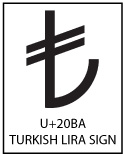
The Unicode 6.2 core specification is now available. The text has been updated to align it with changes to Unicode algorithms and properties that were released in September, including the addition of the newly adopted Turkish lira sign. The release of the core specification completes the definitive documentation of the Unicode Standard, Version 6.2.

For more details, see http://www.unicode.org/versions/Unicode6.2.0.

Friday, October 26, 2012

CLDR Version 22.1 Released

Oct 26, 2012 — Unicode CLDR 22.1 has been released, providing an update to the key building blocks for software supporting the world's languages.

Unicode CLDR 22.1 contains data for 215 languages and 227 territories—654 locales in all. Version 22.1 is an update release, with several important fixes to CLDR 22.0, such as addition of the new Turkish currency symbol, and simpler patterns for fallback timezone formatting (“Los Angeles Time” instead of “United States Time (Los Angeles)”). For details, see CLDR-22.1.

CLDR is by far the largest and most extensive standard repository of locale data, used by a wide spectrum of companies for their software internationalization and localization. It is widely deployed via International Components for Unicode (ICU), and also accessed directly by companies such as Apple, Google, IBM, Twitter, and many others. CLDR is part of the Unicode locale data project, together with the Unicode Locale Data Markup Language (LDML)—an XML format used for general interchange of locale data, such as in Microsoft's .NET.

See the Charts pages for views of the CLDR data, organized in various ways. For more information about the Unicode CLDR project see cldr.unicode.org.


About the Unicode Consortium
The Unicode Consortium is a non-profit organization founded to develop, extend and promote use of the Unicode Standard and related globalization standards. The membership of the consortium represents a broad spectrum of corporations and organizations in the computer and information processing industry. Members are: Adobe Systems, Apple, Google, Government of Andhra Pradesh, Government of Bangladesh, Government of India, IBM, Microsoft, Monotype Imaging, Oracle, SAP, Tamil Virtual University, The Society for Natural Language Technology Research, The University of California (Berkeley), Yahoo!, plus well over a hundred Associate, Liaison, and Individual members. For more information, please contact the Unicode Consortium http://www.unicode.org/contacts.html.

Tuesday, October 16, 2012

Two New Public Review Issues, UAX #9 and UTR #20

The Unicode Technical Committee has posted two new issues for public review and comment.

    http://www.unicode.org/review/

Review periods for the new items close on January 21, 2013.
Please see the page for links to discussion and relevant documents.

Briefly, the new issues are:

PRI #232, Proposed Update UAX #9, Unicode Bidirectional Algorithm

UAX #9 will be updated for Unicode 6.2.1. This proposed update involves a substantial extension of the Unicode Bidirectional Algorithm to allow for the implementation of isolate runs. It also introduces a new X_Bidi_Class property in support of that extension. See the modifications section of the proposed update for information on specific changes to sections in the document.
http://www.unicode.org/review/pri232/

PRI #233, Proposed Update UTR #20, Unicode in XML and other Markup Languages

This Unicode Technical Report will have its references corrected and various other small editorial changes made to bring it up-to-date with Unicode 6.2.
http://www.unicode.org/review/pri233/

To supply feedback on these issues, see http://www.unicode.org/review/#feedback .

Wednesday, September 26, 2012

Announcing The Unicode Standard, Version 6.2

Version 6.2 of the Unicode Standard is now available. This version adds only a single character, the newly adopted Turkish Lira sign; however, the properties and behaviors for many other characters have been adjusted. Emoji and pictographic symbols now have significantly improved line-breaking, word-breaking and grapheme cluster behaviors. The script categorizations for some characters are improved and better documented.

The Unicode Collation Algorithm has been greatly enhanced for Version 6.2, with a major overhaul of its documentation. There have also been significant changes to the collation weight tables, including improved handling of tertiary weights for characters with decompositions, and changed weights for some pictographic symbols.

The newly encoded Turkish Lira sign, like other currency symbols, is expected to be heavily used in its target environment. The Unicode Consortium accelerated the release of Unicode 6.2, to accommodate the urgent need for this character.

For more details of this release, see http://www.unicode.org/versions/Unicode6.2.0/.

Monday, September 10, 2012

CLDR Version 22 Released


Mountain View, CA, Sept. 10, 2012  - The Unicode® Consortium announced today the release of a new version of the Unicode Common Locale Data Repository (Unicode CLDR 22.0), providing key building blocks for software to support the world's languages.

Unicode CLDR 22.0 contains data for 215 languages and 227 territories—654 locales in all. The main focus for this release is to flesh out data items in major languages and locales, yielding an increase of over 100% in the total number of data fields. Other major features include the addition of keyboard mapping data for different platforms, the new Zhuyin (Bopomofo) sort order for Chinese, and script metadata. There are also enhancements to compact decimals (such as formatting 1,000,000 as “1 million” or “1M”) for different languages and to rule-based number formats (such as writing 423 as "four hundred and twenty-three"). For more details, see the CLDR 22.0 Release Note.
CLDR is used to adapt software to the conventions of different languages for such common software tasks as formatting of dates, times, time zones, numbers, and currency values; sorting text; choosing languages or countries by name; and transliterating different alphabets.

It is by far the largest and most extensive standard repository of locale data, used by a wide spectrum of companies for their software internationalization and localization. It is widely deployed via International Components for Unicode (ICU), and also accessed directly by companies such as Apple, Google, IBM, Twitter, and many others. 

CLDR is part of the Unicode locale data project, together with the Unicode Locale Data Markup Language (LDML)—an XML format used for general interchange of locale data, such as in Microsoft's .NET. See the charts pages for views of the CLDR data, organized in various ways. For more information about the Unicode CLDR project see cldr.unicode.org.

About the Unicode Consortium
The Unicode Consortium is a non-profit organization founded to develop, extend and promote use of the Unicode Standard and related globalization standards. The membership of the consortium represents a broad spectrum of corporations and organizations in the computer and information processing industry. Members are: Adobe Systems, Apple, Google, Government of Andhra Pradesh, Government of Bangladesh, Government of India, IBM, Microsoft, Monotype Imaging, Oracle, SAP, Tamil Virtual University, The Society for Natural Language Technology Research, The University of California (Berkeley), Yahoo!, plus well over a hundred Associate, Liaison, and Individual members. For more information, please contact the Unicode Consortium http://www.unicode.org/contacts.html.
Monday, July 23, 2012

Unicode Security Mechanisms, Version 3 Released

Version 3.0 of UTS #39, Unicode Security Mechanisms has been released by the Unicode Consortium, together with a new version of the associated UTR #36, Unicode Security Considerations. Because the Unicode Standard contains such a large number of characters for the writing systems of the world, caution is necessary to avoid exposing programs and systems to possible security attacks. These revised documents describe security considerations for Unicode and specify improved mechanisms for reducing the risk of problems.

Version 3.0 is a major revision. Significant changes include:
  • Mixed Script Detection has extensive revisions to its specification.
  • Restriction Level now has an explicitly defined process.
  • Mixed Number Detection now has an explicitly defined process.
  • Conformance requirements have been extended to include Restriction Level and Mixed Number Detection.
http://www.unicode.org/reports/tr36/
http://www.unicode.org/reports/tr39/

Thursday, July 19, 2012

Version 15 of UTS #18, Unicode Regular Expressions has been released by the Unicode Consortium. Regular expressions are used throughout much of the world's software for matching and manipulating text. UTS #18 provides the foundation for the handling of Unicode text in those expressions.

Version 15 is a major revision. Changes include:
  • Conformance clauses dealing with non 1:1 equivalences were either retracted or modified.
  • A Level 2 conformance clause for full properties was added.
  • New properties, including Name_Alias matching and Script_Extensions, were added.
  • A recommended compact form of Unicode escapes was added: \u{...}.
  • There were many clarifications of the text. See http://www.unicode.org/reports/tr18/tr18-15.html

Monday, July 2, 2012

Dr. Vinton G. Cerf to Keynote IUC 36!

Dr. Vinton G. Cerf, Vice President and Chief Internet Evangelist at Google has just been announced as the keynote speaker for the 36th Internationalization & Unicode Conference. Dr. Cerf has served as vice president and chief Internet evangelist for Google since October 2005. In this role, he is responsible for identifying new enabling technologies to support the development of advanced, Internet-based products and services from Google. Dr. Cerf is widely known as one of the “Fathers of the Internet,” for being a co-designer of the TCP/IP protocols. For details please see the on-line announcement: http://www.unicodeconference.org/e/IUC36-07-02-12.htm