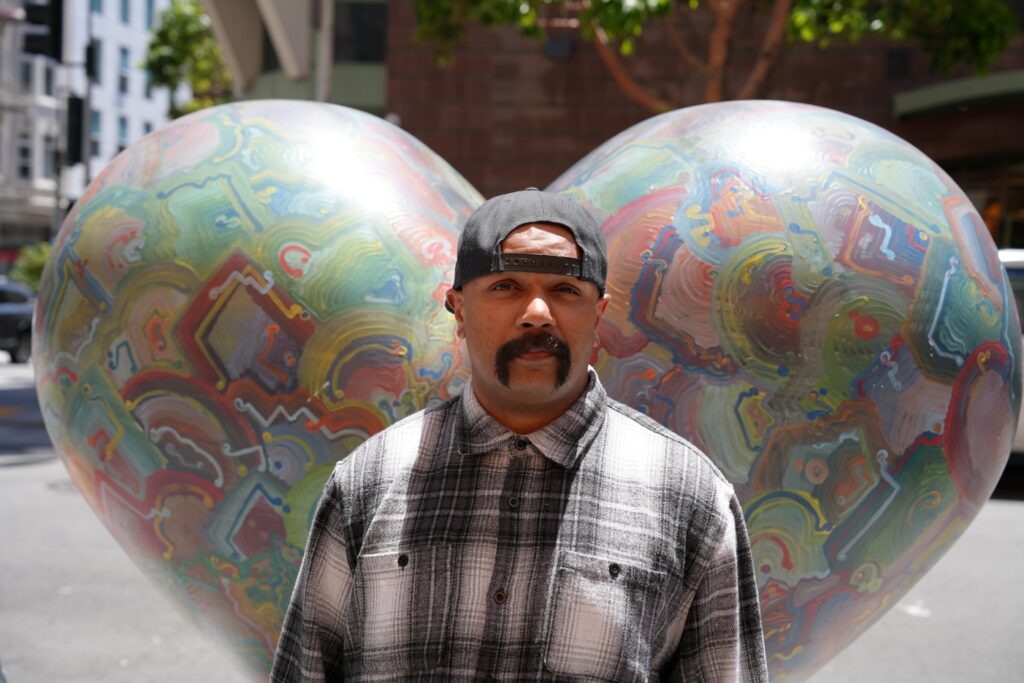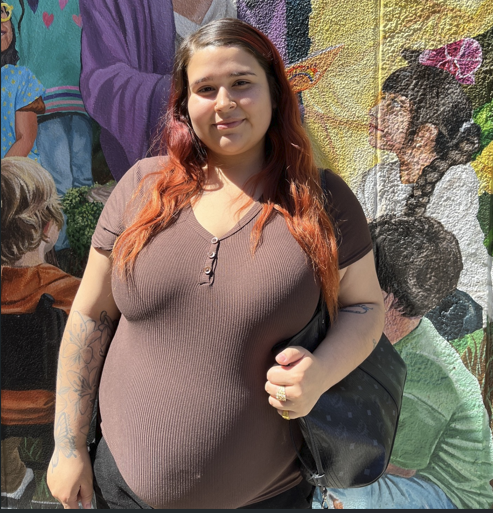
Jennifer Martinez

Growing Up Between Two Cultures 

My name is Jenny Martinez, and although I was born in León, Guanajuato, Mexico, I consider San Francisco my home. I came to the United States when I was about one year old. My father had already moved here, and shortly afterward my mother brought me to join him. Since then, I have spent virtually my entire life in San Francisco and the surrounding area. I grew up in the Tenderloin, surrounded by family, community, and experiences that helped shape the person I am today. 

I am the oldest of five children, with one brother and three sisters. Being the oldest has always been an important part of who I am. In a large family, there is often a lot of responsibility, and from a very young age I learned what it meant to help take care of others. Family has always been one of the most important things in my life. We are very close, and I honestly cannot imagine where I would be without my siblings, my mother, and the support system we have built together over the years. 

My Education and Early Years 

I attended Tenderloin Community School from kindergarten through fifth grade, then KIPP San Francisco Academy for middle school, and later Wallenberg High School. Looking back, I had a positive experience in school. I especially appreciated attending a smaller high school because it felt more personal and manageable. I was able to build relationships with teachers and classmates without feeling lost in a huge environment. 

One of the most significant influences during my childhood was GLIDE’s Family, Youth & Childcare Center (FYCC). My parents enrolled me when I was around five years old, and I remained involved throughout my childhood. Some of my happiest memories come from my time there. I remember the field trips, the after-school activities, the teachers, and the staff members who genuinely cared about the children they served. They weren’t just supervisors. They were mentors and role models. 

Learning, Growing, and Finding Confidence 

One of the things I appreciate most when I look back is how much support I received academically. Math was never my strongest subject, and I often struggled with homework. I remember staff members encouraging me to stay after school for tutoring even when I didn’t really want to. At the time I probably didn’t appreciate it as much as I should have, but today I realized how valuable that support was. I still remember specific lessons and techniques that teachers used to help me understand multiplication years later. That kind of impact stays with a person. 

As a child of immigrant parents, language was another challenge that shaped my experience. At home, we primarily spoke Spanish. Most of my exposure to English came through school and GLIDE. Because I spent so much of my day immersed in English, I eventually became more comfortable speaking English than Spanish. Today, I am bilingual, and I feel grateful for that. Being able to navigate both languages has connected me to my family, my culture, and my community. 

An Unexpected Turn Into Motherhood 

Years later, after graduating from high school, my life took a major turn when I became pregnant with my son, Damian. The pregnancy was unexpected, and I was only nineteen years old when I found out. Like many young women in that situation, I was scared. I wasn’t sure how my family would react, and I worried about how my future might change. 

What I quickly learned, however, was just how strong my support system really was. My mother became one of my greatest sources of strength during that time. When I told her I was pregnant, I expected disappointment or anger. Instead, she responded with love and support. I remember crying because I was afraid, and by the end of the conversation, I was crying because I felt relieved. Knowing that I wasn’t alone made all the difference. 

The Importance of Family Support 

Becoming a mother changed me in ways I never expected. Damien was born in 2022, and from the moment he arrived, my priorities shifted. Thankfully, I had experience caring for children because I had spent so much time helping raise my younger siblings. As the oldest child, I often helped with feeding, changing diapers, bottle preparation, and general childcare. In many ways, I had already developed parenting skills long before I became a mother myself. 

Even with that preparation, raising your own child is different. When you’re helping with a sibling, there is always someone else who takes over. When it’s your own child, the responsibility belongs to you. That realization was both challenging and empowering. It taught me resilience, patience, and a deeper understanding of unconditional love. 

Returning to GLIDE as a Parent 

One of the biggest blessings in my parenting journey has been reconnecting with GLIDE through Damien. Because of my own experience as a child, I always knew that if I had children, I would want them to be part of FYCC. When Damien became eligible for childcare, I applied immediately. Fortunately, he was accepted into the program. 

The impact that decision had on my life cannot be overstated. Knowing that my son was in a safe, nurturing environment allowed me to work and focus on other responsibilities without constantly worrying about his well-being. I trusted the staff because I knew firsthand what kind of care they provide. The program that helped shape my childhood was now helping shape my son’s childhood. 

Watching My Son Thrive 

Today, when I watched Damien learn and grow, I saw many of the same opportunities that I was given. He is learning numbers, letters, language, and social skills. He is becoming bilingual, speaking both English and Spanish, and it’s incredible to see him naturally move between the two languages. He reminds me every day of how important early childhood education can be. 

I also appreciate the ways that FYCC supports families beyond education. Programs that provide necessities like diapers and other resources have been incredibly important, especially as I prepare to welcome my daughter, Danalise. As a growing family, every bit of support matters. These programs reduce financial stress and allow parents to focus more on raising healthy, happy children. 

A Community That Understands Children 

Another thing that stands out to me is the culture at FYCC. The staff are patient, understanding, and compassionate. I’ve seen firsthand how they work with children who may have behavioral, developmental, or learning challenges. Rather than giving up on children, they invest time and energy into helping them succeed. That approach makes a tremendous difference for families. 

Safety is another area where I feel confident. The center takes safety seriously, from its facilities and supervision practices to its communication with parents. As a mother, there is nothing more important than knowing your child is being cared for in a secure environment. 

Lessons Learned Through Parenthood 

Today, I live in Daly City with my family. Until recently, I worked in office administration and organization. As my pregnancy progressed, I stepped away from work to prepare for the arrival of my daughter. Motherhood is currently my primary focus, and I am excited to welcome another child into my family. 

Being a parent has taught me that no one is ever completely prepared. Some days are difficult, and there are moments of uncertainty. But there are also moments that make everything worthwhile. When my son notices that I am having a hard day and tells me I am beautiful or asks if I am okay, it reminds me why being a parent is such a meaningful experience. Those small moments carry enormous value. 

If I could offer advice to other young parents, it would not be to focus on regret or fear. There will always be challenges, but there is something incredibly special about watching a child grow and knowing that they look up to you. The love between a parent and child is unlike anything else. 

A Multi-Generational GLIDE Family 

One thing that makes me especially proud is that my connection to GLIDE spans generations. I attended the program as a child. My siblings attended after me. My son attends now. My youngest sister recently graduated from the preschool program and moved on to kindergarten. We are truly a GLIDE family. 

That continuity says something important about the organization and its impact. Families don’t keep returning generation after generation unless they trust the people, the environment, and the mission.   For me and my family, GLIDE has been more than just a place for my children to thrive. It is a place where they can get the support and nurturing they need from a larger community.  

Looking Toward the Future 

If someone asked me what GLIDE has meant to my life, I would say it has been present during some of the most important stages of my journey. It helped me learn English, succeed in school, make memories, and feel supported as a child. Years later, it helped me become a confident parent by providing care, resources, and opportunities for my own son. The lessons, relationships, and experiences I gained there have stayed with me throughout my life. 

Most importantly, GLIDE has shown me what community looks like. It is a place where families support one another, where children are encouraged to grow, and where people are treated with patience, understanding, and respect. As I prepare to welcome my daughter into the world and continue raising my son, I am grateful to know that my family remains connected to a community that has given us so much over the years. 

GLIDE has been part of my story for nearly my entire life, and I hope it will continue to be part of my family’s story for many years to come. 

61-year old Tenderloin resident Tony Trim describes the impact of The Shop on his life. After coming in for a haircut, he learned about the health education and peer support groups and kept coming back. Tony is in recovery and especially appreciates having peer support around relapse prevention. He says, “I’ve put walls up, but being around men who have been on the same journey as me… it makes me feel not ashamed that I’ve been through this, you know what I mean? There’s nothing but love here.

The Shop Behavioral Health Services enhances GLIDE’s “The Shop” by adding licensed counselors and a peer specialist delivering assessment, therapy, crisis support, and recovery planning to address urgent behavioral health needs of underserved populations, particularly Black/African American men 50+.

GLIDE wishes to thank the Saint Francis Foundation for a $200,000 grant in support of GLIDE’s “The Shop” Behavioral Health Services Project. 

sja erik preciado
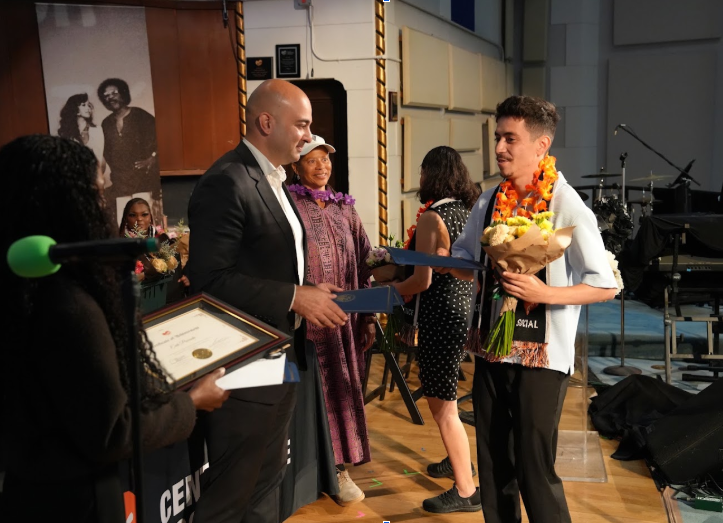
Supervisor Bilal Mahmood (L) presenting graduation certificate to Erik Preciado (R)

GLIDE’s Social Justice Academy (SJA) is a fellowship for people who have navigated tough times, and provides advocacy opportunities and skill training. Lawmakers benefit from hearing the lived experiences of the people their policies are intended to serve. Today we spotlight SJA fellow Erik Preciado, whose cohort was sponsored by a grant from Kaiser Foundation Hospital Fund for Community Benefit Programs at the East Bay Community Foundation. From suffering early hardship in childhood, to choosing community service as a young man, to obtaining an internship with Supervisor Bilal Mahmood, Erik has had an incredible journey– and he’s just getting started.

Erik originally encountered GLIDE as part of a group of LGBT+ people who volunteered with our Meals program. As a college student studying Social Justice with an emphasis on Chicano Studies at Chabot College, Erik thought the program was the perfect match. 

The role of community during social crisis 

“I really enjoy walking down streets of Tenderloin and speaking with people who are unhoused and people who are dealing with addiction. When you speak and connect with them, you see they are people who are just like you and I. There shouldn’t be any form of intimidation against them, because they have good hearts and are part of the community,” Erik said.   

While at SJA, Erik learned about the weakness of governmental safety nets, and how grassroots organizations like GLIDE and others fill in the gaps. “Those organizations are made up of people who have experience with crises. People who know what it’s like to be unhoused, or experience behavioral  health and access issues.  People with those life experiences better understand how to support people in those same situations– which is sometimes lacking with politicians.”

Erik commented on how the average person believes governmental safety nets are strong and well-established and well-developed; but it’s not true. There are many bureaucratic obstacles to navigating EBT, Section 8 Housing, and other services. Erik believes that community involvement is vital to improving and strengthening safety nets.

Meeting with lawmakers and growing advocacy skills

Over the course of the program, Erik loved being able to show up to San Francisco City Hall and the State Capitol in Sacramento to advocate for transitional age youth, immigrants, and unhoused people. He advocated for budget allocation in the Tenderloin going towards behavioral health and overdose prevention. He also supported SB 1422, which protected Medi-Cal for undocumented adults, and AB 2161 which protected Medi-Cal coverage for low-income Californians.

Specifically, Erik was able to meet with Supervisor Myrna Melgar and Supervisor Bilal Mahmood in the course of his advocacy, who both made a wonderful impression on Erik. Describing Sup. Mahmood, Erik mentioned: “He was very attentive to issues we were bringing up around his district. He let us have a space where we could share our voices and concerns about behavioral health.” Erik applied for a September 2026 internship at Sup. Mahmood’s office– and was accepted!

Understanding systemic issues promotes forgiveness and love

An important piece of context Erik brings to policy discussions is his childhood experience with how the War on Drugs affected Mexico. U.S. policies often led to military hardware being in the hands of those who did not use it responsibly, causing an atmosphere of violence.  When Erik was twelve, his father was murdered, and it left a deep impression on his young life. He sees his father’s death as related to the USA’s choice to practice mass criminalization on people south of the border. 

But Erik spoke words of forgiveness: “At the end of the day, it’s not really the fault of the people who murdered my father. It’s the fault of the systemic issues that trap people, and force them to do these things. It was not right. It was horrifying to go through that. But it’s the systems that need to change.”  

Erik went on to say how inspired he was by GLIDE’s motto of unconditional love. “Unconditional love is not just loving the people you surround yourself with every day. It’s also sharing love and help with people who do not share your political views– even people who have hurt you in some type of way. When people are in crisis, that’s not a time to be teaching them morals and ethics– that’s a time to lend a helping hand.”  Erik’s voice echoed that of Reverend Cecil Williams, who focused on helping people that churches usually reject. 

A hopeful future, big dreams

When asked how SJA contributed to his self-image and personal development, Erik explained SJA had made him more in touch with his own feelings and those of other people. SJA also boosted his confidence around understanding policy and discussing controversial issues.

In the future, Erik wants to volunteer with the HIV Advocacy Network, and support immigration rights and immigrant justice however he can.  He also wishes to fight for the LGBT+ community, for the undocumented community, and for BIPOC people. “All communities who have been kept out of power, I want to continue to empower them,” Erik said.  

In the long term, Erik would like to start a small nonprofit to help people in the small town where he grew up: Tecolotlan, Mexico. He would love to provide scholarships to people from his town and open an LGBT+ center for them. To support Erik in starting his own nonprofit someday, follow @lgbtqmasteco on Instagram: he will begin posting there when he is ready to work on building the nonprofit.

Erik is grateful to his SJA teachers, whom he describes as “extremely special, pillars of the community—not your orthodox teachers: they have very unique personalities who are extremely compassionate and resourceful.” He is also grateful to his fellow cohort members, who inspired him with their own tales of overcoming hardship. 

Erik has often faced housing insecurity over the course of his life, but today he is feeling optimistic.  Not only does he have an internship lined up, he’s also been working as a community organizer with the Working Families Party.  “I have turned the energy of sadness and anger into really helpful things for myself and the people around me,” said Erik. “I got back into college at a 3.91 GPA despite struggling through high school. 

In the future, Erik dreams of going to law school, running for election, and helping to shape policy. We’re all rooting for him here at GLIDE!

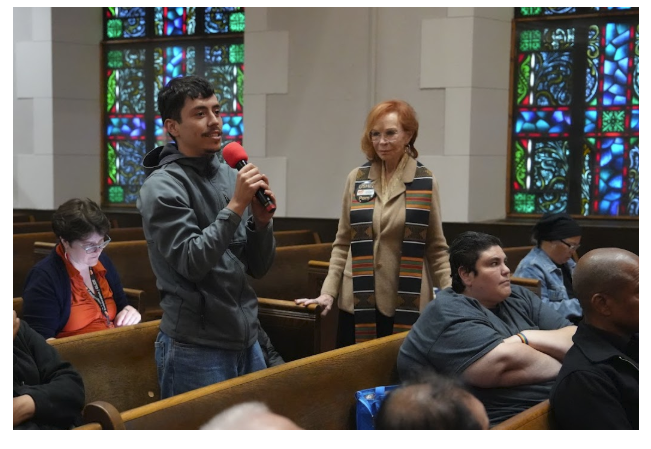
This summer, GLIDE welcomed a group of Black2SF interns for a day of community service and conversation. Black2SF is a summer program for undergraduates from Historically Black Colleges and Universities (HBCUs) to receive hands-on work experience and connect with the city’s cultural and civic life.

An educational panel for our HBCU visitors included GLIDE staff Naeemah Charles, Francesca Delgado-Jones, Je Ton Carey, Minister Marvin K. White, and Murtala Lanval, as well as Christopher Powell from Code Tenderloin and Arieann Harrison from The Marie Harrison Community Foundation. Each shared their approaches and strategies for making San Francisco a better place.

Then the floor opened for an extensive discussion about the students’ experiences in San Francisco, the conclusions they’d drawn, and the questions they’d been left holding.

San Francisco Felt Different — In a Good Way

Several students said their first impression of the city was how free people seemed to be themselves. One student, comparing it to home, put it simply:

“The DC area is pretty corporate, for lack of a better word—everything is monotone, monocolor, fits in a cookie cutter. But here everyone expresses who they are emotionally, in their clothes, their hairstyle, and how they talk.”

Another student connected that openness to her own family:

“I have a gay dad, and I come every year to San Francisco for Pride. I love how everyone can walk around and be whoever they are. I love how the policies are set up so people have room to give input in governmental systems.”

That student went on to ask the panel a question that would shape much of the conversation: whether religion—such a central part of Black cultural identity—has helped GLIDE’s community connect across differences and support one another.

Reverend Cecil Williams Built a Sanctuary for a Common Fight

Marvin K. White answered with a story from GLIDE’s history. When queer communities and Black communities were both being targeted by police, Reverend Cecil Williams invited both groups into the sanctuary at Glide Memorial Church. The two communities didn’t always see eye to eye—but Reverend Cecil understood that, for either group to survive, they needed a common fight.

“The inclusiveness of San Francisco, the rights that you see, the freedoms—those are hard-won by people, by movements,” Marvin told the students. “At Glide Memorial Church, we believe the more we can come together across difference—spiritual difference, racial difference, generational difference—the stronger we are together!”

Struggle Looks Different in Every City — But It’s Still There

Other students spoke candidly about how visible poverty and homelessness felt in San Francisco compared to home. A student from Atlanta admitted:

“My first impression of SF was seeing a lot of struggle—stuff I’m not used to seeing, like people all over the sides of the streets. I know that’s a common sight in cities, but here it looks different.”

Students from Atlanta and Washington, DC, compared notes on why homelessness looks so different from city to city.

“Atlanta is spread out, so the struggle is underground rather than in public spaces,” one student observed, while another noted that policy in DC had literally removed the unhoused population from public view.

A student placed at Zuckerberg San Francisco General Hospital, working in the psychiatric unit, asked the panel directly why the city has so many social services compared to what she’d seen elsewhere. Arieann Harrison answered that San Francisco’s programs have been built through decades of grassroots community effort. Then she offered the students something more than an answer—a charge:

“When times get hard, you need to pivot, bump your head, pivot, recover quickly, and run toward the future. When you go out into the world, how many of you are waiting for someone to pass you the torch? Don’t wait for someone to pass you the torch. Grab it, pick it up, and run with it.”

Build a Chair If There Isn’t a Seat at the Table

Freddy Martin told students that, in his experience, change always starts with a spark—one person, or a small group, deciding:

“This isn’t right. This is too much. There’s something else that needs to be done, and I’m going to do it.”

That kind of resolve takes grit and perseverance, he said, especially when funding is difficult to secure. GLIDE fights to secure funding every year. His advice:

“You have to say you’ve had enough, talk to other people who have also had enough, and just create waves. If there ain’t a seat at the table, build a chair.”

Je Ton built on that point, urging students not to be shy about naming what their community needs.

“You have to be able to toot your own horn, offer the proof: this is why we need it, this is the impact. The worst thing to do is take up a seat and do nothing. If you’ve chosen to be in a seat, it requires you to do work on behalf of all of us.”

Naeemah Charles reminded students that no single person has to carry the whole struggle alone.

“In coalition spaces, not everybody should be doing the same thing—divide up the work. Sometimes people miss that when they get into this work, thinking they have to be everything or do everything. Not everyone has to be Martin Luther King Jr. or Angela Davis giving speeches. You need everyday organizers—people scheduling, doing logistics, making flyers, and making calls.”

The Struggle Is a Marathon — And These Students Are Ready to Run

By the end of the day, the students who arrived unsure of what to expect from the Tenderloin left with something to carry home to their own campuses and communities: a reminder that nobody has to wait for permission to pick up the torch.

GLIDE is proud to partner with programs like Black2SF that connect the next generation of Black leaders to our community.

Brandeis students Michael Lezak
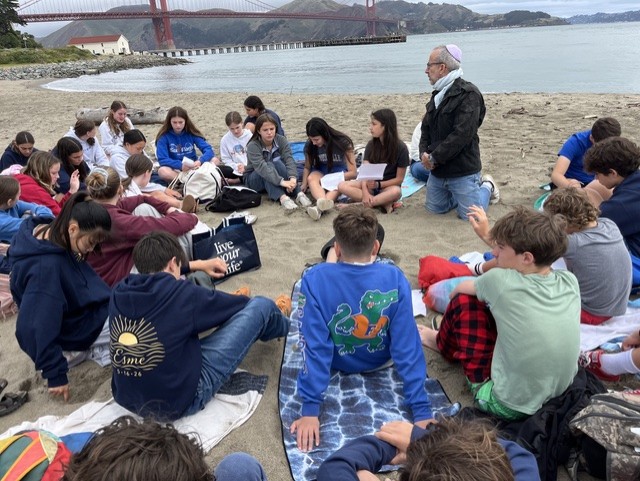
Rabbi Michael Lezak with Brandeis students in Crissy Fields

                                                                                                                   הָ֭רֹפֵא לִשְׁב֣וּרֵי לֵ֑ב וּ֝מְחַבֵּ֗שׁ לְעַצְּבוֹתָֽם׃ 

‘The One who heals their broken hearts and binds up their wounds.’

-Psalm 147:3


It’s an overcast Monday morning at Crissy Field last August. I’m kneeling in the sand. The mighty Golden Gate Bridge towers behind me. In front of me are 50 bubbly and brilliant seventh graders from the Brandeis San Francisco School who are in the opening days of their school year. They are seated in concentric circles around me. I met these students at this awe-inspiring location to get to know them a bit, to help them imagine the year ahead: the learning, the growing (physically, mentally, spiritually) and to talk deeply about holy+healing service+learning that they would be doing at GLIDE in the coming year. 

They asked great questions. And they could not contain their excitement to come volunteer at GLIDE. After some good conversations, these students, in their bathing suits, walked into the waters of the San Francisco Bay for a Jewish ritual called ‘mikvah’ which is a purposeful immersion in living waters.  We brought them to the Crissy Field to put a sacred stamp on the beginning of their school year. 

Rituals, at their very best, help us to mark time, to take soulful inventory of what is good and not good in our lives, to measure our growth and to point us toward making commitments to living more focused, purpose-filled lives. The Brandeis teachers and I had planned out a robust year of ritualized learning and serving for the seventh graders and their families.

In the ensuing nine months,

  1. These students came to GLIDE to learn from GLIDE staff and clients and to serve lunch together nine separate times
  2. Families from each grade came to serve breakfast at GLIDE one Sunday each month
  3. Brandeis families came together to make sixty Welcome Home boxes (that contain needed household items) for newly-housed GLIDE clients who’ve come off the street or out of incarceration and into housing.
  4. Parents from the community learned together regularly about GLIDE’s holy+healing work. Many of them showed off their best dance moves at GLIDE’s Holiday Jam.

In April, Brandeis’ Head of School Dan Glass and three of his amazing educators joined GLIDE’s 12th Alabama Justice Pilgrimage. It was an astonishing blessing to have them on the bus with us. Needless to say, the time we spent with them and 30 others on the ground in Alabama was simultaneously heart-breaking for the brutal stories we encountered about the history of racial terrorism in America…and profoundly inspiring thanks to the sessions we had with so many righteous, life-affirming, fiercely devoted justice activists, artists and educators who met us along the way. This justice pilgrimage was so inspiring for us all that we are working together on a plan to bring Brandeis 7th graders on a future Alabama Justice Pilgrimage.

This deepening partnership between GLIDE and Brandeis is what I call a justice covenant: a deep, enduring, soulful and commitment between loving individuals and communities that empowers us to collectively work to heal civic and societal wounds that have festered for way too long in this blessed yet troubled city and country of ours. When we gather together regularly, when see the Tzelem Elohim, the Image of God in one another’s eyes, we can’t help but remember that we need each other and that we are in this holy+healing work together.

In early June, I gathered back at Crissy Field with these Brandeis seventh graders, who had invested so much soulful time at GLIDE and in the Tenderloin this past year. By now, I knew their faces. I could see how each of them had grown physically this past year….what blessing. Once again, the bridge was at my back and their gorgeous faces were gathered tightly around me.

I asked them to reflect on this past year. How had they grown? How had their time at GLIDE impacted and inspired them? My GLIDE heart swelled from the stories they shared about how much they had grown because of the recurring, transformational time they had spent in the Tenderloin.  

One student shared with me a story about serving french fries to a GLIDE client saying ‘It was really special that I could be serving food to the less fortunate while I was having an interesting conversation with someone I had never met before…I remember when Rabbi Lezak told us the difference between feeling uncomfortable and unsafe. The difference has made me stop and pause when I am on the street and see an unhoused person. I feel totally confident walking past them now while before I felt less so. I have been much more appreciative of how fortunate I am since our first visit to Crissy Field. I also see unhoused people in a different way than I did before. I plan to keep volunteering at GLIDE with friends and family.”

After the students shared their stories, we said a blessing together and, like they did at the beginning of their school year, they walked into the waters of the San Francisco Bay to put a ritual stamp on the end of their school year. They screamed with delight when their growing bodies met the cold water of the bay.  

At GLIDE, we define a pilgrimage as ‘a journey of personal spiritual discovery that forever changes you.’ It is abundantly clear that the Brandeis students and families made recurring pilgrimages into GLIDE and the Tenderloin this year that forever changed them. 

This is but one of many sacred, justice-covenant partnerships we have built through GLIDE’s Center for Social Justice. We are partnering with other schools, congregations and organizations to build similar pilgrimages together in the coming months and years.

We hope you will join us.

Rabbi Michael Lezak


leg kick queer house of pride 2026

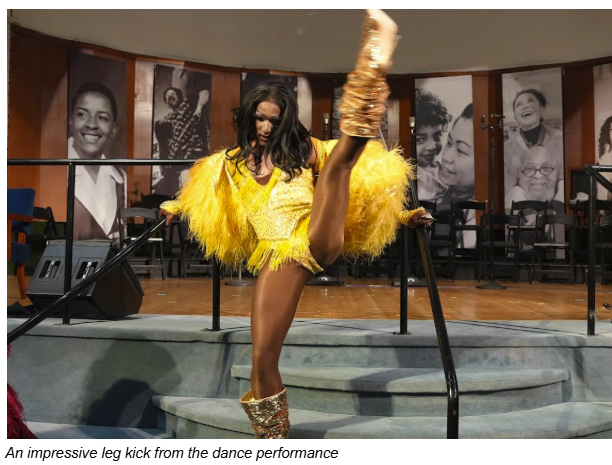
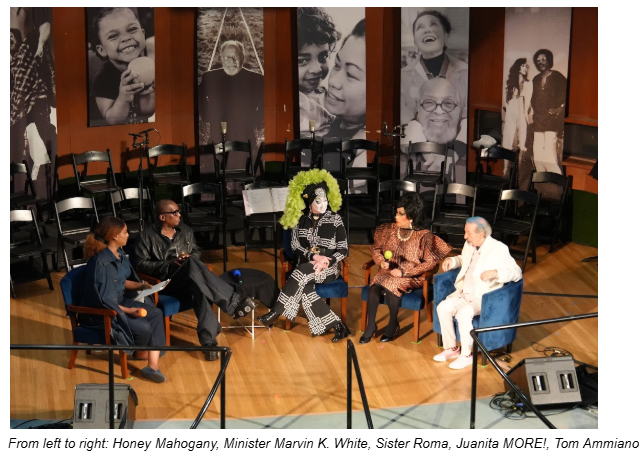
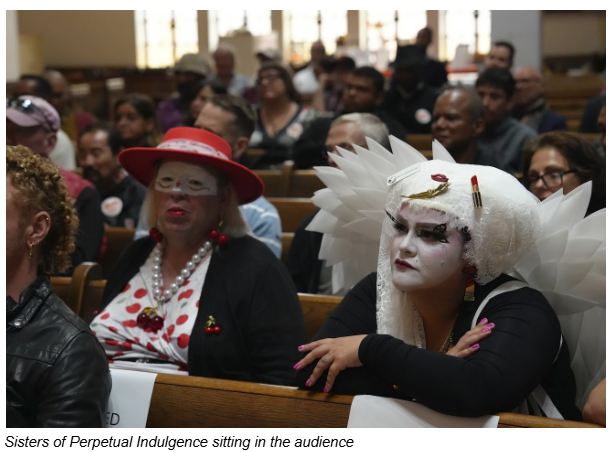
In celebration of Pride Month, GLIDE’s Center for Social Justice and the Sisters of Perpetual Indulgence co-hosted a powerful panel on queer history and futures, called “House of GLIDE.” The evening was also graced by a gorgeous dance performance from Sir JoQ and Crew.

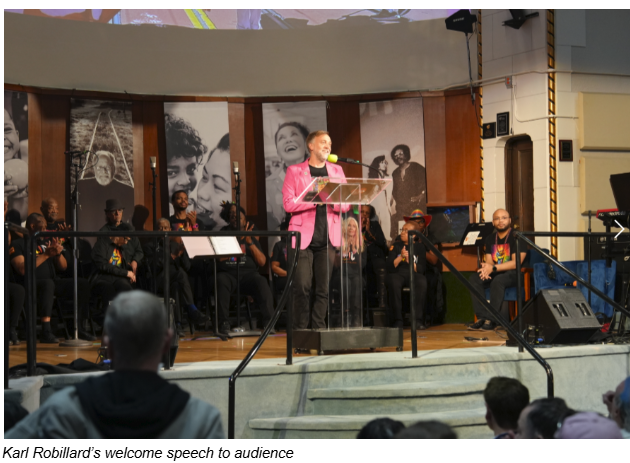
Karl Robillard, GLIDE’s Chief Communications and Public Affairs Officer, welcomed the audience with a powerful personal story. “My friend and I were just two gay boys traveling to San Francisco, sixteen hours before Matthew Shepard was brutally killed and murdered,” he said, referencing the homophobic murder in 1998 of a gay student in Wyoming that led to hate crimes prevention legislation. 

“You can imagine how we felt when we heard the news,” said Karl.  “But as soon as we arrived in San Francisco, we made a beeline to the Castro.  And there, right in front of the Bank of America, there was an altar of flowers to Matthew Shepard piled so high.  I saw that altar and immediately thought to myself, ‘I am home.’ And 28 years later, I still feel that.”

karl robillard house of pride 2026

The role of joy in building community

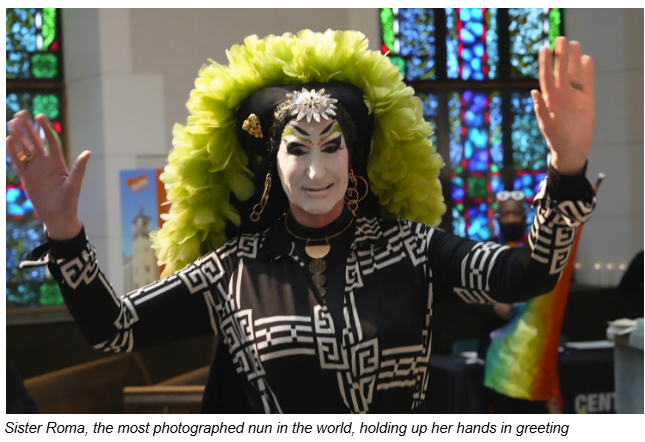
The Glide Ensemble sung “Unspeakable Joy,” and Minister Marvin K. White was applauded for his historic decision to permanently fly the Pride flag on Glide Memorial Church. The charismatic Sister Roma from the Sisters of Perpetual Indulgence commented, “Being with all of you and hearing unspeakable joy from choir really makes me think, ‘I need to go to church.’ There’s so much crap around us all the time. We need joy!”

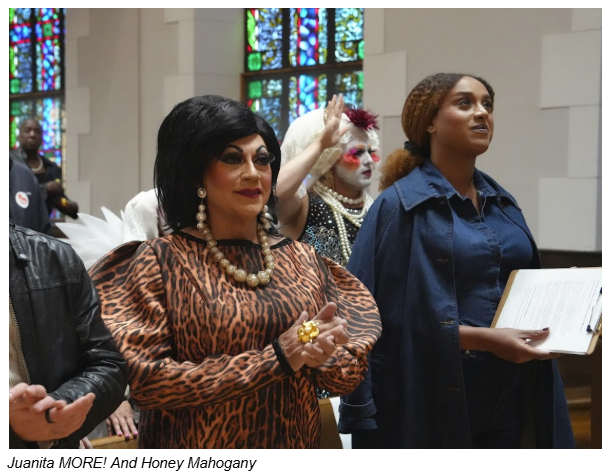
Honey Mahogany, Director of the Office of Transgender Initiatives for the city of San Francisco, reminded the audience, “Pride has always been about more than celebration: it’s been about survival, resistance and chosen family.”  

Juanita MORE!, gorgeous in a stunning dress reminiscent of a monarch butterfly, testified to the power of San Francisco’s queer community: “There’s a group of people I met at Booty Call Wednesday.  We grew up together, came out together, transitioned together, and they are still my chosen family.” 

The importance of queer solidarity

Honey Mahogany also reminded us, “It was not so long ago that we were not allowed to gather in spaces. That was the reason for the Compton’s Cafeteria and the Stonewall Riots.  It used to be that when we gathered, we would be thrown in paddywagons, our names published in newspapers. Now they are trying to take us back to those times.  So it is more important than ever that we gather together, shine together, be loud, proud, weird, queer and trans together.”

tom ammiano hosue of pride 2026

The panelists inspired us with reminders of how queer communities have triumphed over fear and hatred for centuries.  Minister Marvin K. White said, “The project to run queer people out of church is because we are powerful… They run us out and tell us there’s no way back in because they are afraid of us!  My faith is about getting people back to their power.” 

How queer history informs our present 

Sister Roma described how hate crimes around Dolores Park inspired her dive into politics in 1987. Flyers with a pink triangle (the symbol Nazis forced on gay people during the Holocaust) and the slogan, “Stop the violence,” went viral. 39 years later, the Stop the Violence campaign is still going strong, with safety whistles and mutual aid.

Another successful campaign initiated by Sister Roma was the #MyNameIs campaign, a protest of FB’s policy which forced use of legal names instead of real names. This was particularly harmful to trans people due to the emotional trauma caused by deadnaming, but it was also unsafe for others, such as domestic violence survivors whose abusers could suddenly find personal information about them by looking up their legal name. 

Juanita MORE!, known for throwing fabulous parties that raised money for LGBT+ causes, talked about the importance of joyful activism during times of grief and struggle.  “In 1992, I was living through the AIDS crisis,” she said. “I was grieving a boyfriend who had passed away four months ago. Drag gave me the freedom to reconnect with my community.”

Tom Ammiano reminisced about the years when Regan and the right wing wanted God in the classroom but were also cutting school funding. Engaging in political struggle helped him feel empowered during bad times. 

He also spoke about the importance of making all struggle intersectional with class struggle. “What this church does addresses something that is missing from a lot of politics– even the gay politicos miss it.  GLIDE looks at the class issue– at not letting the ruling class diminish the humanity we all feel. If that’s spiritual, then I’m spiritual!” He then described how the intersectional lens used by GLIDE’s co-founder Reverend Cecil Williams helped unite black and gay communities around the shared issue of police violence. 

The power of hope in challenging facism

All panelists spoke about the fear and tension queer folks experience in the current political atmosphere.   “The Sisters of Perpetual Indulgence have always been a litmus test for the First Amendment,” Sister Roma said. “In the past we have felt the Constitution was rock solid protection. Right now it feels more tenuous, it feels like there’s a very thin wall separating us from facism, it feels those rights and protections could be swept away with a stroke of a pen from an executive order.” But then she laughed and added that the Sisters of Perpetual Indulgence have always been committed to speaking their minds despite the risks. 

Minister Marvin K. White urged people to find strength in spirituality, inside or outside traditional religion.   “You might find your spirituality in the awe of the night sky, in walks by the ocean, in the affirmation that lives on your refrigerator, on the dance floor, or in love itself. Spirituality is inherent. Once you practice it, it expands. It takes up more room than your body once you pay attention to it.   If you think about their hate more than you think about your love, then they win. It’s a distraction.  Remember we have survived everything they have thrown at us.  Inside or outside organized religion, we are powerful, and we are here to love.” 

The panel closed with questions from the audience– a young activist seeking advice on how to navigate the balance between assimilation and resistance was the first to speak up.

Tom Ammiano advised him to consider civil disobedience, to never shy from confrontation, for example, “take on the gay community when they are being racist.” The important thing, he clarified, was to have a group who thought the same as you on social justice issues. “Remember that even as you are searching for other people, they are searching for you!” Honey Mahogany advised the young activist to join many groups in order to receive a variety of perspectives. “Don’t be boxed in or defined by one specific group,” she advised.  

We went away from the night with hope, inspiration, joy, energy, and delight for the struggle ahead.

dance performance house of pride 2026

On Saturday May 16th, musicians from many faith organizations (including Glide Memorial Church, City of Refuge UCC, and Oakland Interfaith Gospel Choir) joined together for a day of teaching, fellowship, and artistic exchange, funded by the generous gift of the Haas Foundation.

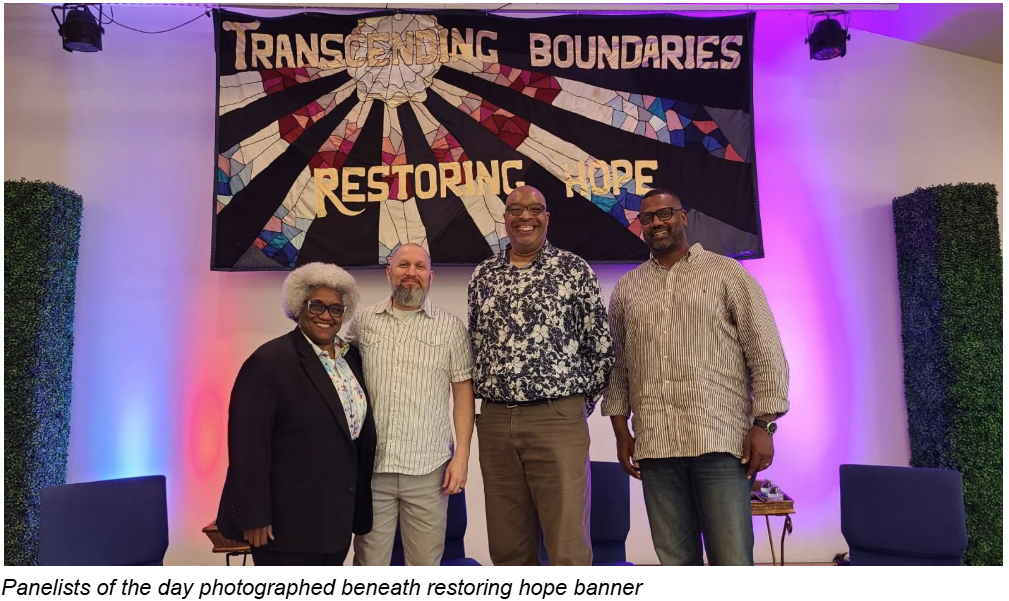
Teachers included Mark Montgomery French and Zoë Ellis from Glide Memorial Church, Eric Gilbert from the First Covenant Church of Oakland, artist Nona Brown, Derrick Hall the Music Minister at Allen Temple, Dr. Rusty Watson, the Minister of Music at City of Refuge and Love Center Ministries, and Linda Tillery, from the Cultural Heritage Choir, among others. In this post we’d like to share a few gems from this amazing event. The famed UCC Bishop Yvette Flunder opened with a welcome and blessed the event.

Bishop Flunder encouraged the gathered musicians by telling them:Songs and singings are at the forefront of every great social movement– both in Biblical times and today! Movements stay moving in large part due to MUSIC.” Bishop Flunder then sang, “I Ain’t Gonna Let Nobody Turn Me Round,” (coincidentally, the very song Zoë Ellis had planned for Glide Memorial Church’s Celebration the next day!) 

Then the participants received joyful, energy-filled lessons from musicians Nona and Rusty. When asked why they chose music ministry, they both replied, “I didn’t choose it– it chose me.”  

Rusty told an inspirational story to encourage the  participants present. When he first entered music leadership as a young man, he had anxiety about winning attention and acknowledgement for his work. After all, this is a world where most young artists are told they have the obligation to self-promote!  

But Rusty’s mentor at the time gave him a wonderful piece of advice:  “Stop worrying about YOU and start worrying about God and the work you’re doing. The rest will come.” After Rusty released his anxiety and just let it go, that’s when his reputation and fame began to grow organically. The lesson: our creativity is able to spread its wings when we are given permission to release our egos. 

Lunch was catered by Rico Pabon from CaliRican Catering, a Puerto Rican catering company owned by a musician and a social justice activist! The  participants enjoyed a spectacular fellowship lunch where they formed new friendships across many different music ministries in the Bay Area.

panelists resonance roots 2026

After lunch, Mark Montgomery French interviewed musician Tammy Hall, Eric Gilbert (Worship Director First Covenant Church of Oakland), and Derrick Hall (The Worship Arts Director at Allen Temple in Oakland) about the role of music in inspiring personal and social change. You can watch the panel here.

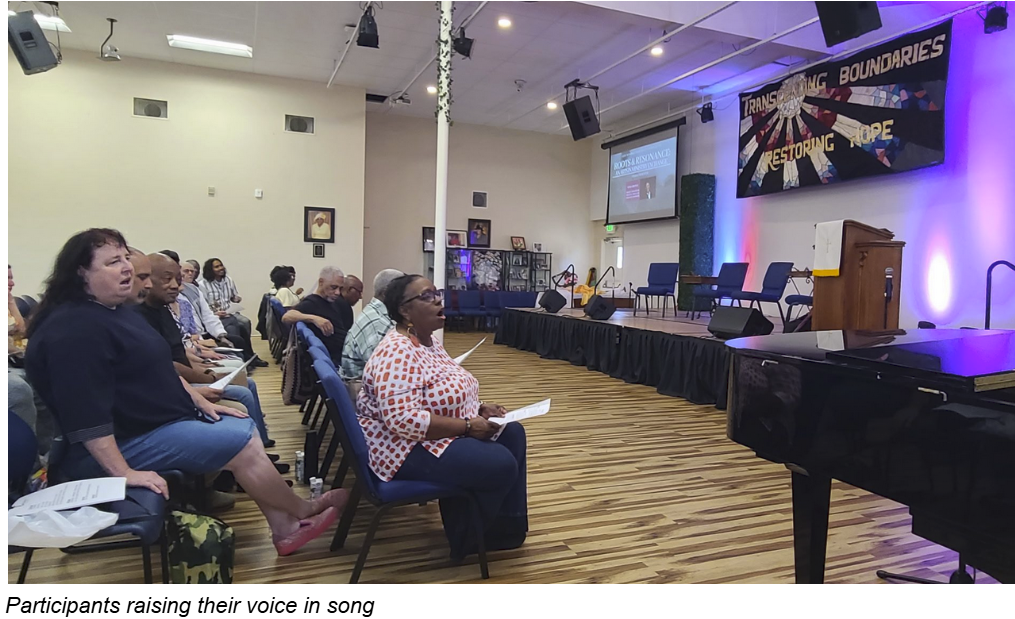
The grand finale of the day was a stunning lesson in music and music history from Linda Tillery, who taught the musicians field hollers, prison work songs, and old spirituals, educating them on the roots of Black music history in America.  A moment when the workshop participants perfectly blended together three different spirituals into one glorious melody was absolutely magical. 

participants in song 2026 roots and resonance

One of the best moments for Glide Memorial Church’s Director of Music Ministries came the next day, when she spoke to Jay, a new alto in the choir, about how they enjoyed Roots and Resonance. Jay reflected on the role that music ministry played in personal transformation. “Bishop Yvette talked to us today about how the battle is often fought with music,” they said.  “For me, the battle is often fought inside, and I feel alone. But my spirit felt less alone after this event.”

“It doesn’t get much better for me as a Director than that,” said Zoë Ellis, reflecting with satisfaction on Jay’s remark. “Community was built that day.” Special thanks to the City of Refuge audiovisual team whose help was instrumental for producing this event.

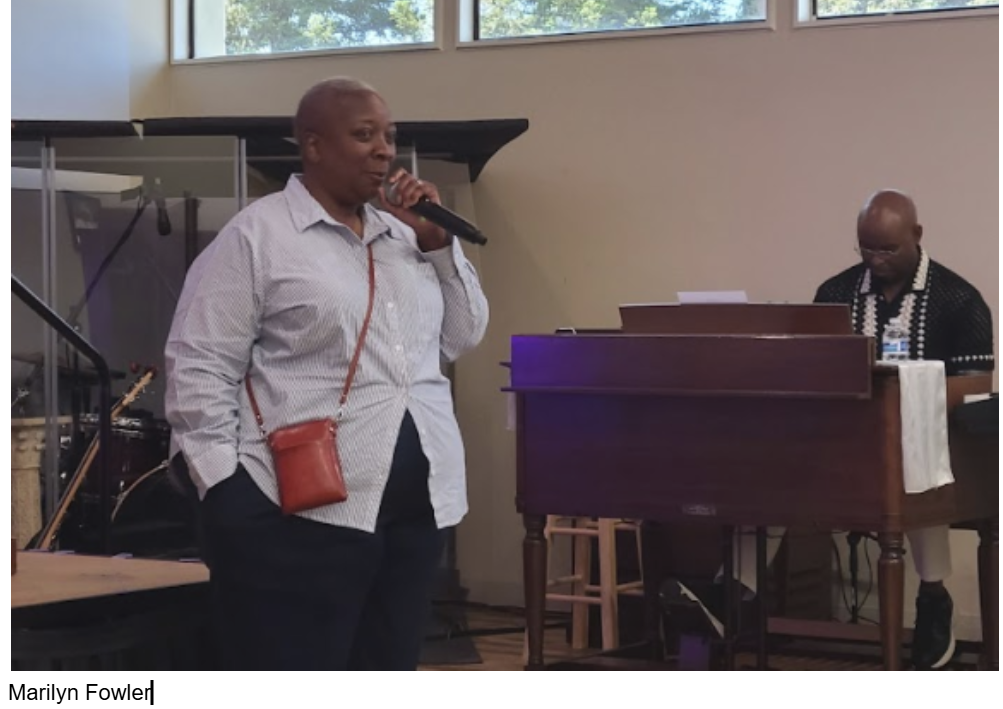
Special thanks to Marilyn Fowler, a lay minister at City of Refuge who was instrumental in organizing this event.

marilyn fowler roots resonance 2026
muhammed drug recovery journey 2026

“Ten years I gave to my dependency.” 

Muhammad Karuo says it honestly, when reflecting on a chapter of his life he wishes he could get back. 

Originally from Compton, California, Muhammad moved to San Francisco looking for a fresh start. But he was still carrying out the weight of mental health challenges, periods of being unhoused, and meth dependency. 

For a long time, he didn’t think there was anything wrong with the way he was living. 

“I always thought of myself. I don’t have kids, so I didn’t see any harm in how I was living,” he said. 

Eventually, Muhammad decided he wanted something different. 

After connecting with GLIDE’s Health Empowerment and Access Treatment (HEAT) Program, he began working with HEAT Coordinator Nathan Bronson. Nathan helped him get connected to resources, including Electronic Benefits Transfer (EBT) benefits, mailing address, and treatment services. 

On January 30, with support from HEAT and Bronson, Muhammad entered Walden House, a residential treatment program where he spent three months focusing on himself and the changes he wanted to make. It was the first step toward leaving behind a lifestyle that had defined much of the last decade. 

“GLIDE, through their support, taught me to care for myself,” Muhammad said. “It was time for me to change. I always thought of myself. I don’t have kids, so I didn’t see any harm with how I was living. Ten years I gave to my dependency.” 

After graduating from Walden House, Muhammad moved into a step-down program on Treasure Island. The supportive housing program gave him a stable place to live while he continued treatment and adjusted to life outside of residential care. 

Nathan says the accomplishment belongs to Muhammad. 

“I’m proud of him,” Nathan said. “He did the work, and he has made a way for himself.” 

Today, Muhammad is continuing the work he started. The new beginning he came to San Francisco looking for is finally starting to take shape. 

larissa social justice 2026

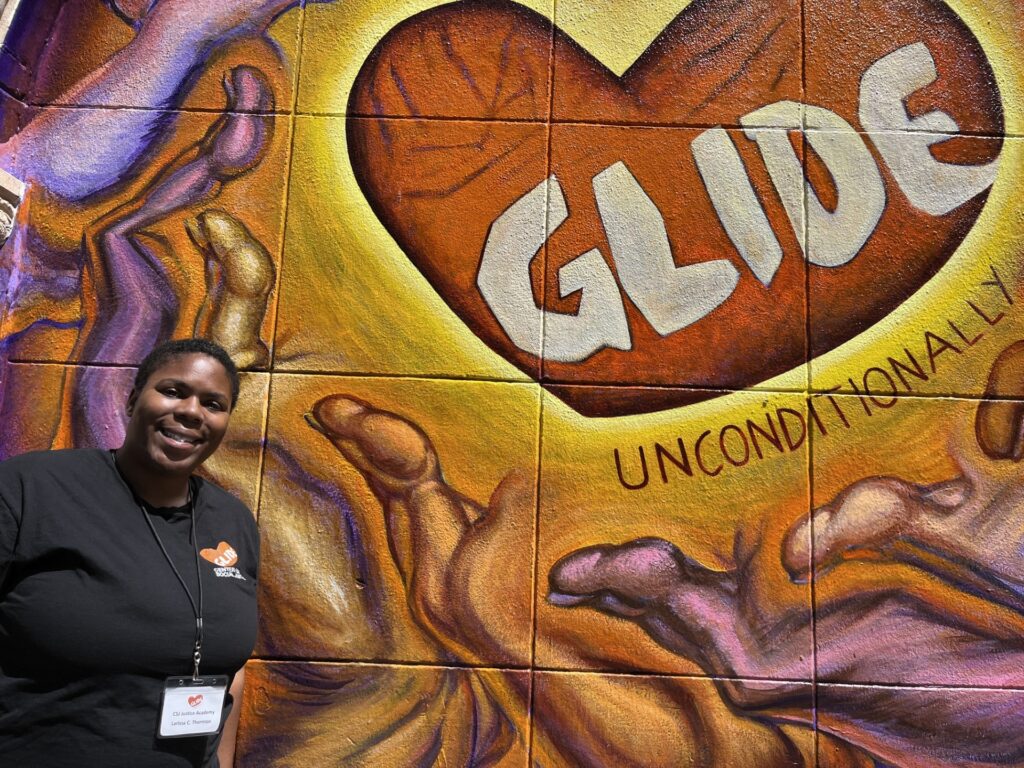
My name is Larissa Candice Thornton. 

I’m a Bay Area native, but in 2015 I moved to San Francisco seeking something I wasn’t sure I could find anywhere else: a chance to rebuild my life. I was struggling with mental health challenges and substance use, and what began as a problem with alcohol eventually progressed to harder drugs. I’d heard San Francisco offered services and support for people facing the same struggles, and I came here hoping recovery might be possible for me too. 

I first connected with GLIDE through the Free Meals program. I attended church services, received a Tuberculosis test at GLIDE’s Health Hub so I could access shelter services, and became familiar with the support available there. As I began rebuilding my life, I wanted a way to give back to the community that helped me. I started volunteering with the Free Meals program, serving breakfast and helping at GLIDE’s Thanksgiving event. Then I got an email from the Center for Social Justice and announced that a new cohort was forming. The message explained that participants could learn how GLIDE advocates for its programs, build skills for personal and professional growth, and become more involved in social justice work. That caught my attention! 

By then, I had been in recovery for about a year, and today I’m proud to say I’m 20 months clean. I had already participated in community efforts like Drug-Free Sidewalks and had spoken at City Hall against budget cuts, but I wanted to understand more about how change happens—how organizations advocate, influence policy, and secure funding to save lives. 

The Social Justice Academy (SJA) showed me how I could be involved in creating legislative change. It showed me how my lived experience could become a tool for advocacy and how much my voice mattered. 

SJA moments of learning 

I traveled to Sacramento to advocate for policy changes and funding for public health services, including health access centers. I learned how to use my personal story to explain why these services matter and how they help people recover. Being able to say, from my own experience, “This is a service that we need,” was incredibly powerful. 

The work of the Health Hub saves lives because it keeps people connected to care, even when they’re not ready or able to stop using. Those services helped me through some of the hardest periods of my life. Instead of being judged, I was met with compassion and practical support. That gave me the space to reflect on my choices, recognize how far I had come, and move towards recovery. 

Another memorable experience was visiting San Francisco City Hall and meeting with supervisors. Before the Academy, I didn’t even know who many of the supervisors were, let alone that I could speak with them directly. What surprised me most was learning that our stories weren’t just welcome—they were important. The supervisors wanted to hear directly from people affected by the issues they were discussing. Our experiences mattered to them when they made policy decisions. 

It felt surreal to go from seeing public officials on television to sitting across from them and having real conversations. These are people who advocate for LGBTQIA+ communities, social services, and residents facing some of the city’s greatest challenges. They care about people struggling with addiction, illness, poverty, and homelessness, and they understand that everyone deserves a chance in life. 

For the first time, I felt like some of the hardest experiences of my life could be used to help other people. Meeting State Assemblymember Matt Haney was especially meaningful. After listening closely to all the Social Justice Academy advocate’s stories, he shared thoughtful feedback. 

I spoke with him about GLIDE’s Health Empowerment and Access services, including Narcan distribution, hepatitis C prevention, and drug-testing strips. These services help people stay safe while they’re struggling, and they often become the first step toward recovery. Meeting people where they are in life gives them the chance to make safer choices, reflect on the impact of substance use, and eventually move toward healing and recovery, just as I did. 

A way forward thanks to GLIDE 

To me, GLIDE stands for unconditional love. When you don’t love yourself, when you feel hopeless and directionless, that love can change everything. It starts with a warm hello, a hot meal, medical care, or someone simply treating you with dignity. Over time, that care helps you begin loving yourself again, taking better care of yourself, and believing that a different future is possible. 

Looking ahead, I want to continue volunteering with the Free Meals program and remain involved with GLIDE’s Center for Social Justice. I want to attend more rallies, speak at City Hall, and continue advocating for resources that reach the people who need them most. One day, I would even love to serve on the San Francisco Board of Supervisors and use my experiences to help shape policies that support vulnerable communities. 

I’m currently studying social work, and once I earn my associate degree, I hope to apply what I’ve learned and be able to support others as a case manager. That would mean everything to me. 

One person who has deeply inspired me is Regina Wells Rashida Oji. She taught me the importance of “rest as resistance” and the value of caring for myself spiritually, mentally, and physically. Through grounding exercises and reflection, she showed us how to center ourselves before speaking and how to channel our energy into meaningful action. 

Regina taught us that caring for ourselves isn’t separate from advocacy—it’s what makes advocacy sustainable. When we’re grounded, we’re better able to communicate our values, stand firmly in our convictions, and show up fully for our communities.

What does GLIDE mean to me? 

When people ask what GLIDE has meant to me, I always come back to this: GLIDE will love you until you can love yourself. GLIDE meets you where you’re at and helps put you on a path toward a life that feels meaningful and worthwhile. No matter what you’re facing, I want people to know there is hope and there is life beyond the struggles of today. 

Sometimes it begins with something as simple as being seen as a human being, sharing a hot meal, receiving medical care, accessing harm reduction services, or attending a church service. Those experiences restore your spirit. They remind you that you matter and that a future is still possible, even when life feels overwhelming. 

When your basic needs are met and you’re supported in the present moment, you begin to imagine more for yourself. You start believing that you deserve healing, opportunity, and joy. GLIDE helps people get there, and I will always be grateful for that. 

I wholeheartedly recommend the Social Justice Academy to anyone interested in advocacy, leadership, and self-empowerment. It can transform how you see yourself. You go from being someone who feels invisible, someone people won’t even look in the eye, to recognizing the power of your own lived experience. 

Today, I know my story matters. I’ve created a YouTube channel where I share how I navigate mental health and substance abuse challenges. I’ve learned that every person deserves to be seen, heard, and given the opportunity to thrive. That’s what GLIDE gave me, and it’s what I hope to help provide for others in the years ahead.

cory booker

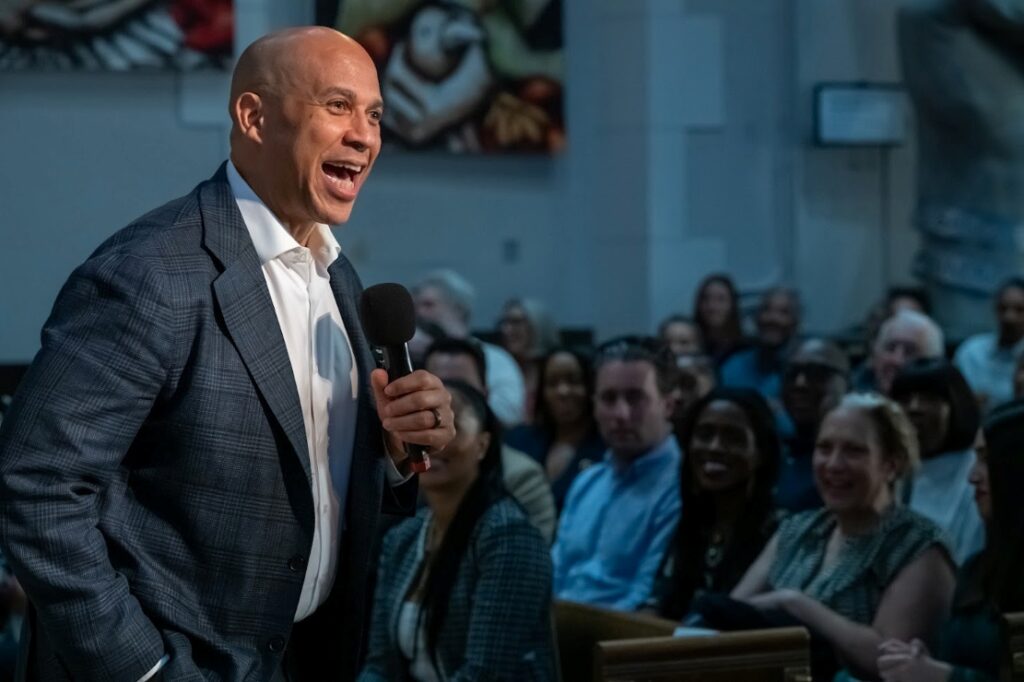
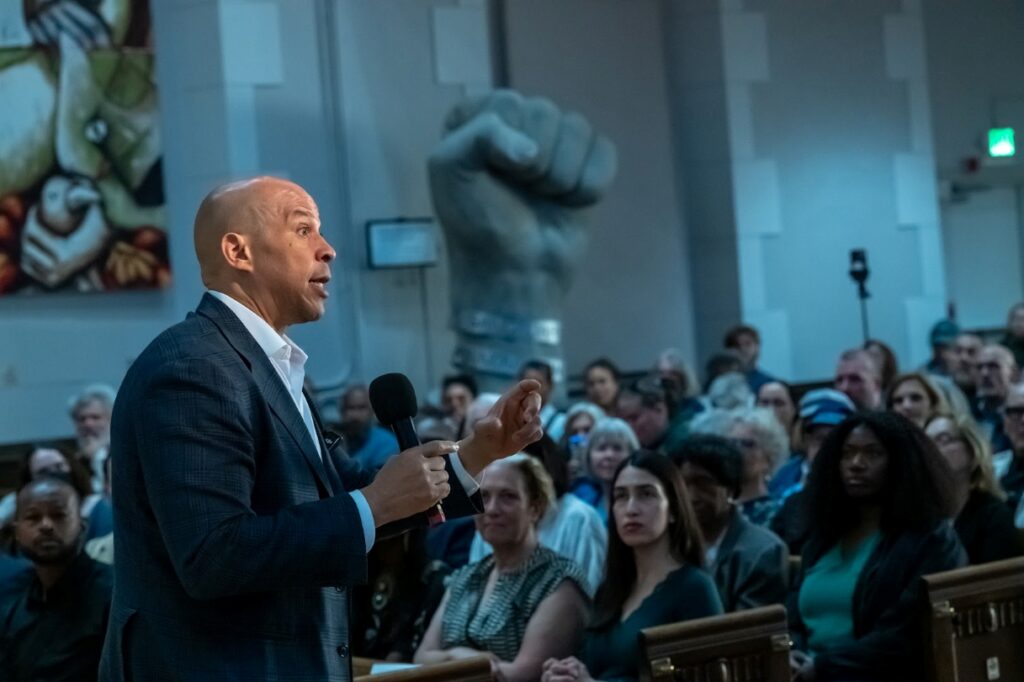
U.S. Senator Cory Booker grew up in a middle class suburb but chose to live in a housing project while governing Newark. So when Assemblymember Matt Haney welcomed Sen. Cory Booker to the GLIDE stage, he observed, “If Sen. Booker lived in San Francisco, he would probably live a couple blocks from here,” acknowledging the senator’s solidarity with those most in need.  

 Mentored and inspired by a tenant organizer

Sen. Booker opened with stories about the mentor who shaped him as a young man: Ms. Virginia Jones, a neighborhood elder, no more than five feet tall, but with an unforgettable presence. President of the local tenant organization, deeply respected in the low-income community he served, she rapidly deflated his savior complex.

When he described the neighborhood to her — the abandoned buildings, the drug use, the graffiti — she stopped him cold. “Boy, you need to understand something,” she told him. “The world you see outside of you is a reflection of what you have inside of you. If you’re one of those stubborn people who every time you open your eyes, you see love, you see hope, you see possibility, you see the face of God — then you could help me make a difference.”

That lesson became the foundation of Sen. Booker’s political life. “People like to say, ‘Thank you for what you did for Newark,'” he told the audience. “But I say you’ve got it backwards. Newark saved me. The community of people saved me, taught me lessons of meaning, dignity, courageous empathy, connectivity, and love.”

Watch our Cory Booker highlight reel!

“Stay faithful,” the secret to resilience in trauma

Then Sen. Booker shared one of the most harrowing moments of his life: two years after losing a closely contested mayoral race, a shooting broke out in his neighborhood. He ran toward it. He found a young man with bullet wounds in his chest, put his hands on the wound, and begged him to stay alive. The young man died.

Later, alone in his apartment, Sen. Booker stood in front of a bathroom mirror trying to scrub the blood from his hands — even after it was gone. “Something ruptured in me in a way that it’s never ruptured before,” he said. “I never felt my heart fill with such darkness. I felt rage and anger — that we are a nation that swears an oath of liberty and justice for all. But where is the justice when children in our communities are dying and it doesn’t even make the newspaper?”

The next morning, he stepped into the lobby of his building and found Ms. Jones. She opened her arms. He ran to her like a little boy and broke down crying.

“She held me and let me cry,” Sen. Booker said. “And then she started saying two words over and over again — words that I still say on the Senate floor when we’re banging our heads against implacable walls of resistance: ‘Stay faithful. Stay faithful. Stay faithful.'”

Those words, he told the crowd at GLIDE, belong to all of us — words of a people who, generation after generation, have worked to make a nation that did not love them, BECOME a nation truly of love.

“Hope is not a feeling —  it’s an act of conviction” 

Sen. Booker challenged the audience to refuse normalization of the crises around us. “We should not normalize people who fear calling an ambulance because of the cost,” he declared. “We should not normalize that people have to choose between paying their rent and paying for their prescription drugs. We should not normalize that daycare is more expensive than college tuition.”

He pushed back against those who try to dismiss social safety nets as radical policies.  “Call me radical if I believe children should have food, great public schools, and housing over their heads. Call me radical if I believe there should be no homelessness in America — because we literally say in our national anthem that we’re the home of the brave.”

On the love agenda — a phrase Dr. Gina raised in the context of GLIDE’s values — Sen. Booker was emphatic: “A love agenda has sharp policy implications. Policies rooted in love for one another are more economically sound than policies that are not. The neglect and the lack of investment in loving our community costs us as a society so much more.”

Policy recommendations, from eviction prevention to tax fairness

GLIDE President & CEO Dr. Gina Fromer asked Sen. Booker what he’s doing to support the unhoused, and he came prepared with specifics. He called for a national right to counsel in eviction proceedings, citing research showing that legal representation reduces eviction rates by 75%.

“Someone being evicted because they’re $1,000 behind on rent will cost a city far more than $1,000 once they’re unhoused,” he explained. “It is so much cheaper for a community to keep someone in a home than to deal with the consequences of homelessness.”

He also proposed a renter’s tax deduction modeled after the mortgage interest deduction, arguing that renters — who are disproportionately lower-income — deserve the same tax benefits that homeowners receive.

On the broader economy, he outlined a two-pronged vision: passing five anti-corruption laws to get corporate and billionaire money out of politics, and restructuring federal taxes so that no American earning under $75,000 pays federal income tax. “Make work pay again,” he said simply.

He also cited a striking statistic: 97% of federal agricultural subsidies go toward highly processed foods, while only about 7% support healthy options. “A Twinkie is cheaper than an apple not because of the free market, but because big food has rigged the system. We’ve created structures that build in the things that are more expensive for our health and our communities.”

You are not powerless: the story that made a Senator.

The event closed with an incredibly powerful story.  Dr. Gina raised the issue of voting rights — something GLIDE engages with deeply through its annual Alabama Pilgrimage— and asked what people can do when the system feels rigged against them.

Sen. Booker answered with a story. On March 7th, 1965 — Bloody Sunday — a white lawyer in New Jersey named Marty Friedman was watching a protest in Selma, Alabama. He watched a protester who was trying to defend his mom from being beaten by police get shot to death. The lawyer saw the brutality and felt the pull to act. But he had just started a law firm– he couldn’t just hop on the plane to Alabama to defend protesters. So at first, he felt powerless.

But then he made a decision that Booker called one of the greatest decisions he’d ever heard of: “I’m not going to let my inability to do everything undermine my determination to do something.”

He started doing one extra hour of pro bono civil rights work each week in New Jersey. He partnered with Ms. Lee Porter of the Fair Housing Council. Together, they spent years documenting and fighting housing discrimination — placing Black families and white families at the same homes to expose the gap in treatment.  In 1969, they helped a family from the South move into a New Jersey neighborhood that had turned them away. A mother, a father, a two-year-old, and a baby in a crib moved into that home.  

“Forty-four years later,” Booker said, his voice rising, “the baby from that crib became America’s fourth Black person ever elected to the United States Senate. That baby was me. I am here because one man said: I AM NOT POWERLESS.”

The crowd erupted with applause, truly inspired.  You can read more about this story in an excerpt from Cory Booker’s past book, or you can order his most recent book, Stand.  

View more photos of Cory Booker at GLIDE!

 GLIDE is honored to be a space where conversations like this happen — where political leaders, community members, and changemakers sit together and commit to a more just, loving, and courageous world. If you want to be part of that work, consider joining our Justice Warriors and staying connected to GLIDE’s advocacy.